
Appraised · WWII HISTORY TOURS
World War II History Vienna Old Town Private Walking Tour
This tour is interesting because Vienna’s Old Town still carries visible clues to how Europe slid from one world war into the next, with Nazi terror written into the street-level story. You start at Morzinplatz, then move through places like the former Hotel Metropol area and the monument zone near the Vienna State Opera, where history is not just explained, it is pointed out in real locations.
I love the way the private guide turns dates into something you can stand in. Guides like Peter are praised for explaining everything in detail and answering questions, and Sanda gets credit for being very professional. I also like the focus on specific people and policies, including Adolf Hitler and Ernst Kaltenbrunner, not just vague war talk.
One possible drawback: the topics are heavy, including Nazism and the Holocaust, so you should be emotionally ready for a serious walk, and the route is on foot for about two hours.
Key Things I’d Watch For On This Walk
- Morzinplatz start point tied to Nazi terror and the former Gestapo headquarters area
- Real landmarks used to explain the chain from Franz Ferdinand to annexation, then bombing and liberation
- Holocaust Memorial and Remembrance Stones worked into the route, not treated as an afterthought
- Inner Stadt pacing that keeps room for questions, with guides reported to be patient and adaptable
- Monuments at Heldenplatz and near the Opera that connect WWI, WWII, and the city’s memory
Stepping Through Vienna’s WWII Timeline, One Corner at a Time
If you only visit Vienna for palaces and music, this tour changes your angle fast. You still get beauty, but you also see how the city functioned during dictatorship, occupation, propaganda, and terror. The best part is the clarity: you get a guided timeline linking major events leading up to World War I and then World War II, with Austria’s role explained in plain terms.
What makes the experience feel worthwhile is that you do not just read plaques. Your guide uses the street setting to explain how violence and ideology spread through daily life. You will also hear about Austrofascism, German-occupied Austria, and how Nazi rule reshaped what people saw, said, and survived.
This is also a private format, so the visit is built around conversation. Reviews highlight guides answering lots of questions, and one review notes patience even with a small child in the group. If you like to understand how things connect, this kind of walking narrative tends to stick.
More WWII history tours in Vienna:
- Vienna: World War II Historical Walking Tour
★ 4.8 · 1,772 reviews - Historical Hitler Walking Tour of Vienna
★ 5.0 · 887 reviews - Vienna: Underground WWII Bunker Ticket and Guided Tour
★ 4.4 · 79 reviews
Morzinplatz And the Victims Memorial: Why the Start Point Hits Hard
Your tour begins in front of the Memorial to the Victims of Nazi Terror at Morzinpl. 4, in Vienna’s 1010 district. It is not a random monument. The guide uses this spot to set the emotional and historical tone, right away.
From here, you learn about the area’s darker role. In 1939, the former Hotel Metropol in this vicinity was used as the Gestapo headquarters in Vienna. That matters because it turns the idea of Nazi power from something abstract into something local. You see how the machinery of terror sat near everyday life, not out in some distant fantasy.
A good guide makes this kind of opening work by tying it to what comes next. Instead of leaving you with facts and silence, you get a sequence: how World War I’s aftermath helped set the conditions for the 1930s, how annexation unfolded, and why the war’s later stages reached deep into Vienna.
Practical tip: this portion can feel intense. If you are sensitive to Holocaust and Nazi terror topics, plan your timing so you are not running on fumes. Wear comfortable shoes and bring a bottle of water, because the route is designed to keep moving between key points.
Inner Stad Walk: Propaganda, Daily Life, and the Names You Hear for a Reason
After the opening, the tour moves through Vienna’s Inner Stadt, the Old Town core where buildings, street layouts, and landmark sightlines make it easier for your brain to map events. The guide focuses on how politics shaped ordinary life under German occupation.
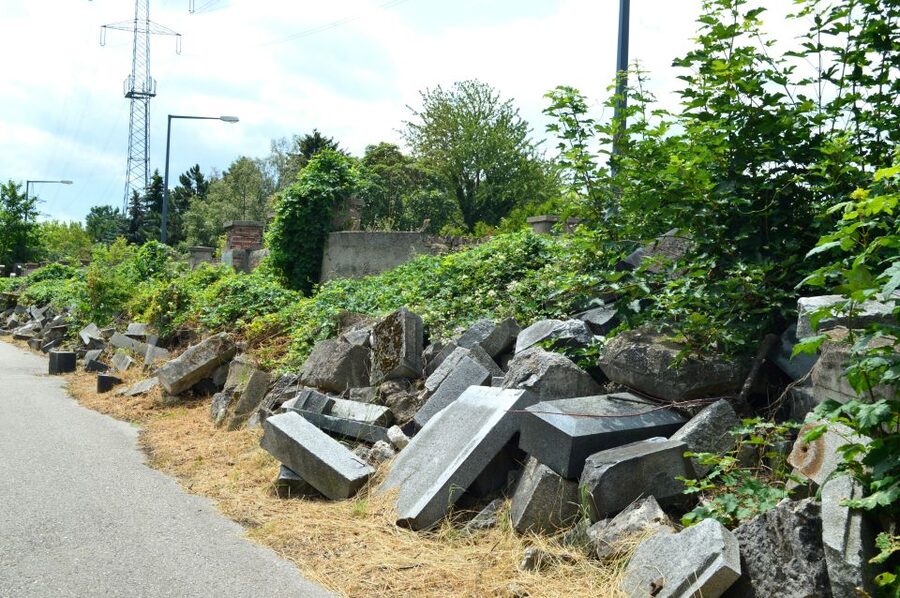
You will examine the timeline and causes and consequences of World War I and World War II, but you will also get the human layer: what it meant to live under propaganda, and how Nazi ideology targeted specific groups. The tour description explicitly includes the tragic fate of Vienna’s Jewish citizens, so your guide brings you past the Holocaust Memorial and also Remembrance Stones along the way.
This is one of the more valuable parts of the walk, because Holocaust remembrance is often treated as a single stop. Here, it is woven into your route through the political geography of the city. That helps you understand that persecution was systemic, not random, and that memory is placed where people once experienced harm.
Your guide will cover major figures linked to Austrian Nazism, including Adolf Hitler and Ernst Kaltenbrunner. Mentioning names is not the same as storytelling, though. The good guides in the reviews are praised for answering questions and explaining at detail level, which is exactly what you want with individuals like these. You are trying to understand responsibility and mechanisms, not just recognize a famous surname.
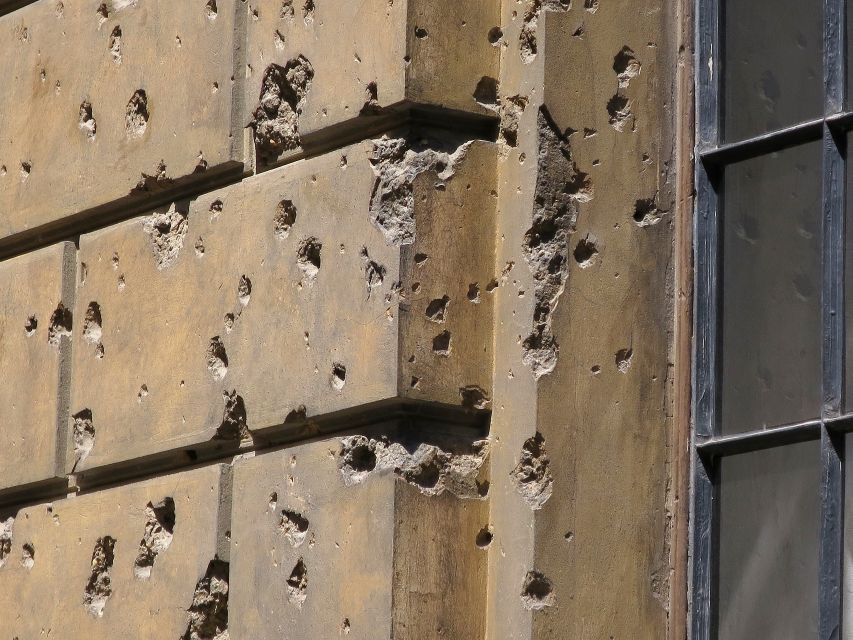
Also, pay attention to architectural context. One review notes hints at historically still-visible architectural witnesses that you would not find alone. That is the real edge of a guide here: spotting what the city is quietly showing you, so your photos capture meaning, not just scenery.
Hofburg and Heldenplatz: When Imperial Vienna Meets 20th-Century Memory
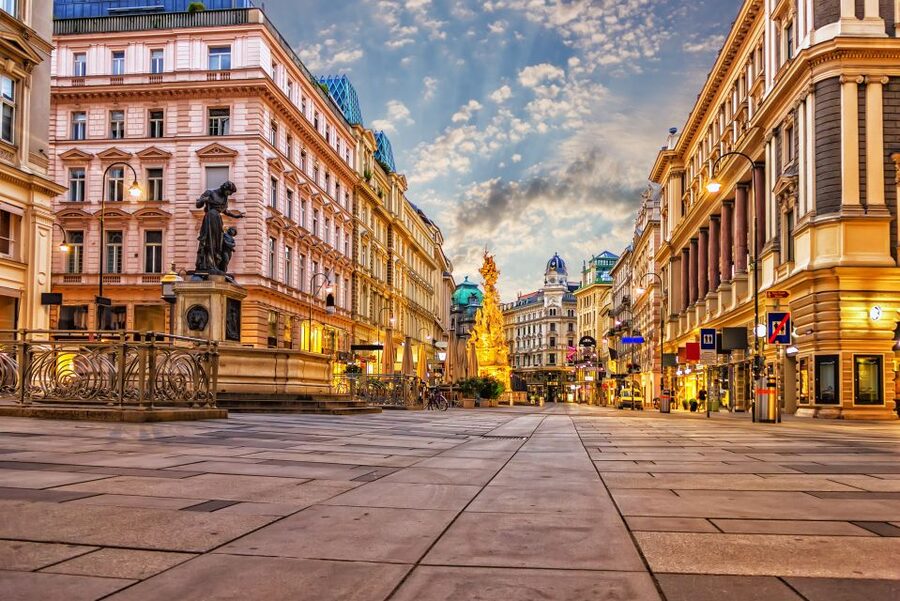
As the walk continues, you reach the Hofburg area. You will see the imperial palace complex of Hofburg from the outside, along with the Memorial Crypt dedicated to victims of World War I and World War II in Heldenplatz.
Even if you are not going inside any rooms, this stop works because it frames the shift from imperial identity to modern catastrophe. Hofburg represents older power and older legitimacy. Heldenplatz, with its memorial space, represents the later reality that empires and states could not stop mass violence and total war.
Your guide ties this setting back to the earlier parts of the tour. The idea is not to treat monuments as isolated artworks. Instead, you connect them to what you heard at Morzinplatz and later at the Holocaust remembrance points.
If you enjoy this style of history, you will like how your guide connects symbolism and timing. World War I is not just backstory. It becomes a stepping stone in explaining how World War II could happen. This stop is where that structure becomes tangible.
More walking tours in Vienna:
- Vienna: Guided Walking Tour of City Center Highlights
★ 4.7 · 4,989 reviews - Vienna: Vienna Central Cemetery Guided Walking Tour
★ 4.8 · 3,307 reviews - Vienna: Guided Walking Tour of City Highlights & Hidden Gems
★ 4.9 · 2,180 reviews - Vienna: Viennese Underworld Guided Walking Tour
★ 4.7 · 1,865 reviews
Burggarten and Franz Joseph I: Understanding Austria’s Long Shadow
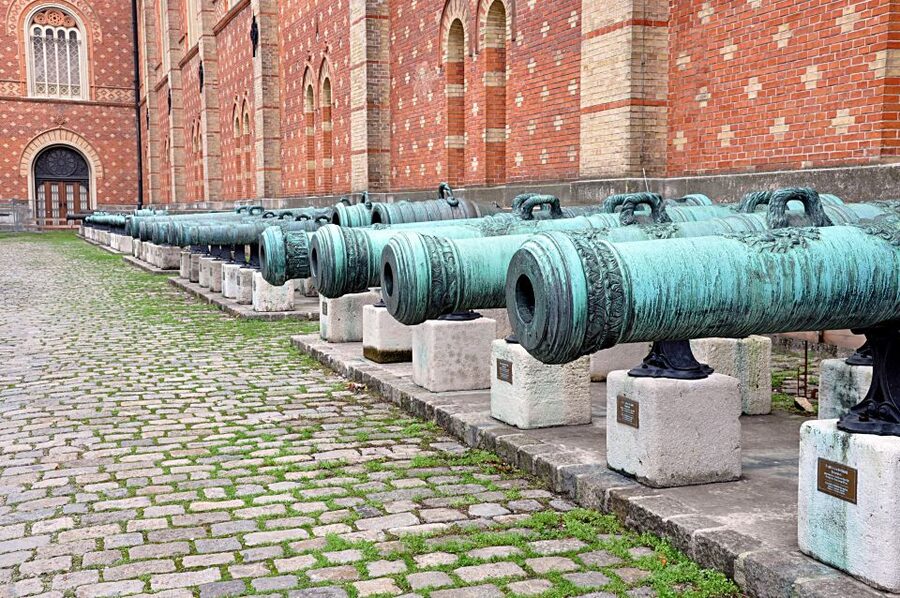
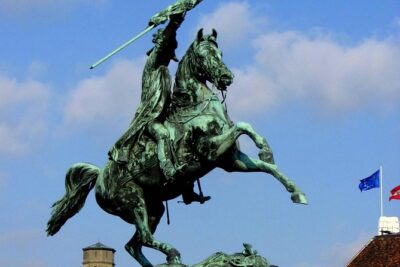
Next up is the monument to Emperor Franz Joseph I in Burggarten. You might think this would be a detour from World War II themes, but it is actually useful. Franz Joseph I is tied to an Austria that predates Nazism, and that contrast helps your guide explain how a society’s political and cultural habits do not vanish overnight.
By including this monument, the tour nudges you to think about continuity and change. Empires age. Institutions evolve. People carry old assumptions into new crises. That is part of how Europe repeatedly rebooted tragedy in the 20th century.
The best guides use this kind of stop to add nuance without getting lost. You should expect your guide to link Franz Joseph’s era to the instability that followed, and then to the road toward the later conflicts that you are walking through.
If you are short on patience for purely commemorative stops, keep an eye on how your guide connects this back to the broader narrative. A strong guide makes these minutes feel like part of the timeline, not a background postcard.
The Monument Against War and Fascism Near the Vienna State Opera
The walk ends at the Monument Against War and Fascism near the Vienna State Opera. This location adds a final layer because the Opera area is connected to Vienna’s wartime experience, including the 1945 bombing and damage.
Why I like this ending: it forces you to stop at a point that is not just about remembering victims, but also about rejecting the systems that created war and fascism. After hearing about terror and occupation, the city’s memorial language becomes a statement, not only a record.
It also gives you a visual anchor for your last thoughts. If you continue your day in the area, you will be walking among the city’s cultural identity while knowing what happened to it during the war.
This matters for your understanding of place in Vienna. You are not leaving history behind. You are carrying it into the most beautiful streets.
Private Guide Quality, Language Options, and the Pace That Lets You Ask Questions
This is a private walking tour, and that changes the feel. You get a 5-star licensed guide who is fluent in the language you pick. The tour offers a long list of languages, including English, German, Italian, French, Spanish, Russian, Polish, Chinese, Japanese, Croatian, Portuguese, and Arabic.
In practice, this matters for how deep you can go. If you speak one of these languages, you can ask follow-up questions without your comprehension slowing down the story. You also avoid that frustrating moment where you understand the big picture but miss the nuance.
Reviews also point to strong guide management. One review specifically praises Frau Heuberger for adjusting to individual wishes and for balancing tour explanation with breaks, even during extreme heat. That is not a small detail. Two hours on foot is manageable for most people, but heat and fatigue can kill the learning experience. A guide who thinks about shade and pacing helps the tour land better.
What about group size? The tour limits group size to 1-25 people per guide, so you can ask questions and still hear the guide well. If you are traveling with friends, this format is a good fit because you can stay together without feeling like you are in a cattle line.
How Much Is $214 for a 2-Hour WWII Walking Tour?
At $214 per person for a 2-hour private tour, the price is not bargain-basement. But it can still feel like good value if history is your thing and you like explanations that fit your questions.
Here is why the cost can make sense:
- You are paying for a licensed, fluent guide who handles both the big narrative and the sensitive details.
- You are getting a route that strings together multiple memorials and historically meaningful places, from the Gestapo headquarters connection near Hotel Metropol to Holocaust remembrance points, then to Heldenplatz and ending near the Opera.
- Private means less waiting, more interaction, and better tailoring to what you want to understand.
The main cost risk is basic: if you prefer self-guided sightseeing and you only want quick facts, you might feel the price is high. But if you want the story connected, guided, and contextualized, this price becomes easier to justify.
If you are traveling as a couple or a small group, you also avoid the feeling of repeating questions for other people who will not care. You get a real conversation.
Who This Tour Fits Best, And Who Might Want a Different Plan
I think this tour fits best if you meet a few conditions:
- You want World War I and World War II explained in a coherent Vienna setting, not in separate museum chunks.
- You like learning from a guide who can answer questions and connect names, events, and consequences.
- You want to see memorials and Holocaust remembrance points with context.
You might want to think twice if:
- You need a lighter, relaxed walk today. This route is not casual.
- You are not ready for Nazi terror and Holocaust material, even though the tour frames it respectfully.
If you are traveling with kids, it can still work. One review noted the guide had patience while traveling with a small child, and the guide managed stops along the way. That said, it is still a serious subject route, so use your own judgment for ages.
Should You Book This WWII Old Town Private Walk?
Book it if you want Vienna history that feels grounded and specific. The combination of Morzinplatz, the connection to Gestapo headquarters near the Hotel Metropol area, Holocaust remembrance stops, and then Heldenplatz and the monument near the Opera gives you a clean timeline you can walk through. You also get the kind of guide performance that reviews highlight, including detailed explanations, strong professionalism, and an ability to adjust pace and attention when needed.
Skip it if you want only scenic highlights or if you are hoping for a casual stroll. This is a history tour with emotional weight. If that is okay with you, you will likely leave with a clearer picture of how Vienna’s 20th-century reality unfolded, block by block.
FAQ
How long is the World War II History Vienna Old Town Private Walking Tour?
The tour lasts 2 hours.
Where do I meet the guide?
Meet in front of the Denkmal der Opfer des Faschismus (Memorial to the Victims of Nazi Terror), Morzinpl. 4, 1010 Wien, Austria.
Is this a private tour or a shared group?
It is a private group tour, with a guide handling groups up to 1-25 people per guide.
What languages are available for the live guide?
The live guide is available in English, German, Italian, French, Spanish, Russian, Polish, Chinese, Japanese, Croatian, Portuguese, and Arabic.
What WWII-related places and monuments will I see?
You will visit key locations and monuments such as the memorial in Morzinplatz linked to Nazi terror, sites in Inner Stad including the Holocaust Memorial and Remembrance Stones, the Hofburg area (exterior only) and the Memorial Crypt in Heldenplatz, and the Monument Against War and Fascism near the Vienna State Opera.
Can I get a full refund if I change my plans?
Yes. You can cancel up to 24 hours in advance for a full refund.
More History Tours in Vienna
- Vienna: Time Travel and Magic Vienna History Tour
★ 4.6 · 3,879 reviews - Vienna Historic Center Small Group Walking Tour
★ 5.0 · 1,746 reviews - Time Travel-Magic Vienna History Tour Ticket
★ 4.5 · 1,099 reviews - Skip-the-Line Schonbrunn Palace Guided Tour and Vienna Historical City Tour
★ 3.5 · 940 reviews
Recently reviewed around Vienna
- Vienna: Winery and Wine Tasting Tour with a Wine Expert★ 5.0 · 5 reviews
- Vienna: Wine Tasting Tour★ 4.8 · 61 reviews
- Vienna: Vienna under the Nazis, Private Walking Tour★ 1.8 · 3 reviews
- Vienna: Wine Tasting E-Bike Tour★ 4.9 · 46 reviews
- Vienna: Concert by the Vienna Baroque Orchestra★ 4.6 · 56 reviews
- Vienna: Unforgettable Private City Tour★ 5.0 · 7 reviews
- Vienna: Swarovski DIY Workshop Experience★ 5.0 · 9 reviews
- Vienna Supreme Orchestra at Palais Niederösterreich★ 4.8 · 10 reviews
WWII History Tours, side by side.
Private Vienna Highlights History Walk — WWII and Post War Vienna
Read our review →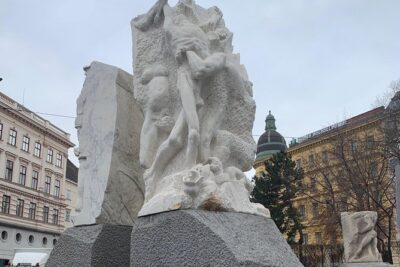
Lists this tour appears in