
Appraised · WWII HISTORY TOURS
Private World War II Walking Tour in Vienna
Vienna looks polished and postcard perfect today, but this private WWII walk shows you the city’s role in the Nazi rise and the war’s aftermath, street by street. I like that it is truly private, with a state-certified guide who can adjust the pace to your group, and guides such as Lisa, Nando, and Hernando are often praised for how they handle questions.
What I also really like is the way the route hits key places like Heldenplatz and Jewish Square, plus several inner-city stops that tie Vienna before, during, and after WWII into one coherent walk. One possible drawback is that this is heavy subject matter, including the life of Adolf Hitler and the growth of the Nazi party, so it may not suit you if you want a light, casual sightseeing day.
Key things to know before you go
- Private group, up to 15 people means you get a guided conversation instead of a big-bus lecture.
- State-certified guide style matters here, with many strong remarks about humor, pacing, and answering lots of questions.
- Heldenplatz and Jewish Square are central stops for understanding how the war era touched public space and community life.
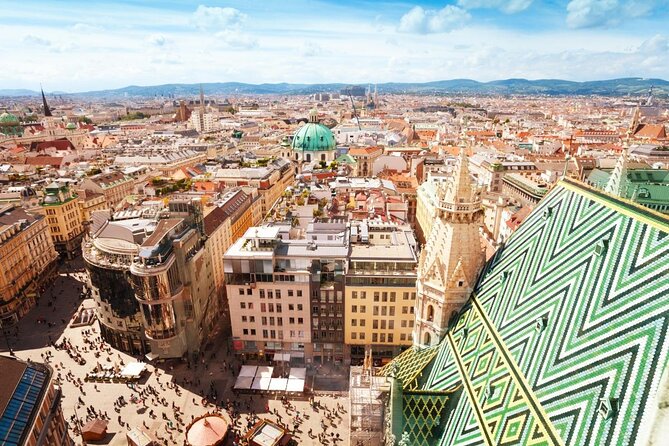
- Ends at St. Stephen’s Cathedral so you can fold the walk into your broader day of sightseeing.
- Pickup can work if you stay in the inner city, which saves time on arrival.
- English tour with a mobile ticket keeps things simple once you reach the meeting area.
Walking Vienna’s WWII story, stop by stop
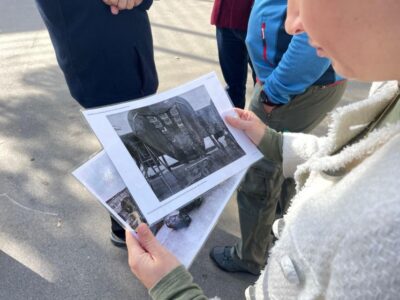
This tour is built for people who want more than a quick photo around the big monuments. You walk through Vienna’s inner city and connect the dots between daily life, politics, and how the war shaped the city. The tone is educational, but it is not detached, since your guide covers the rise of the Nazi party and the life of Adolf Hitler as part of the broader Vienna story.
The guide starts by setting the scene for Vienna before, during, and after WWII. That matters, because without the timeline, a lot of the sites can feel like disconnected landmarks. With the context, you start to notice how public buildings, central squares, and memorial-style locations reflect choices people made, and choices people suffered.
The walking pace is usually comfortable for a 2 hours 30 minutes tour. That length is short enough to keep your attention, but long enough for the guide to explain why each stop matters and to answer your questions as you go. This is also the kind of tour where your group can shape the route to match interests, so if you care more about propaganda and politics, or more about community impact, you can often steer the discussion.
More WWII history tours in Vienna:
- Vienna: World War II Historical Walking Tour
★ 4.8 · 1,772 reviews - Historical Hitler Walking Tour of Vienna
★ 5.0 · 887 reviews - Vienna: Underground WWII Bunker Ticket and Guided Tour
★ 4.4 · 79 reviews
Price and value for small groups, not solo budgets
The price is $451.79 per group, up to 15 people, and it is a private tour. That sounds steep if you picture paying per person like a museum entry fee. But for Vienna, the private format changes the math.
If your group stays near the top end (up to 15), the cost per person becomes far more reasonable than many solo-priced tours. If you travel as two or four, it is still a solid value if you want a guide who can tailor the pace and answer questions without splitting your attention across a crowd.
I also think the value is in the format. You are not just checking boxes. You are walking from place to place with a guide who can connect the sites, and you have the flexibility to focus on what you want, at a pace that does not feel rushed. That is hard to get with large group tours.
Where to meet and how the 2.5 hour walk flows
Your start point is at Helmut-Zilk-Platz / Albertinapl. 2-3, 1010 Wien. Your tour ends at St. Stephen’s Cathedral, Stephansplatz 3, 1010 Wien, which is convenient because it slots neatly into the rest of a sightseeing day.
Pickup is offered in a practical way: if your hotel is in the inner city, the guide can meet you directly at your hotel and start from there. If you are staying outside that area, you should expect a message prior to your tour with the exact meeting location. That reduces the stress of trying to guess where the guide will be.
The tour is near public transportation, which helps if you do not want to rely on taxis. You also get a mobile ticket, so you are not hunting for paper confirmations when you are on the move. And because it is a private group, you do not have to wait for strangers to catch up.
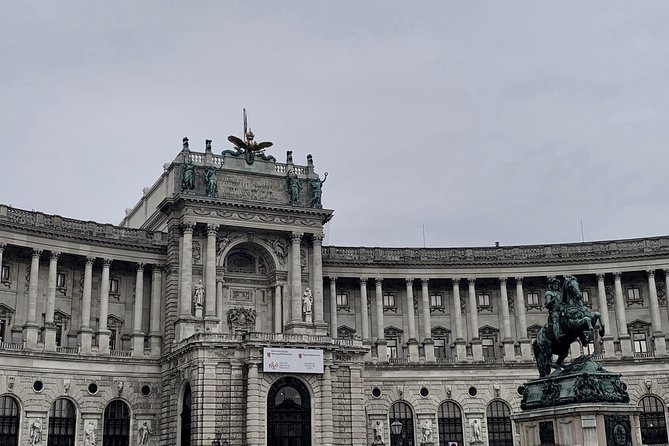
Heldenplatz: where public space meets the WWII era
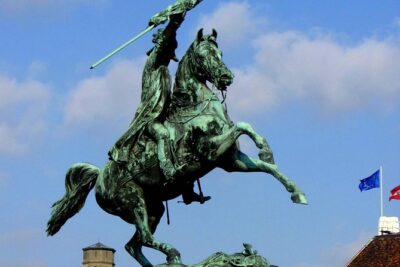
Heldenplatz is one of the stops that anchors the whole experience. This is the kind of square where power and politics were made visible in everyday life. Your guide uses it to explain Vienna’s position in the WWII story, and how people would have experienced these public spaces during the years leading up to the conflict.
I like starting with a big, recognizable location. It helps your brain map the city quickly. After your guide frames the setting, the walk starts to feel less like random sightseeing and more like a moving lesson through the center of Vienna.
A quick practical tip: in central squares, it can be noisy and crowded in parts of the day. If you like having your guide explain without distractions, plan to be ready to pause for a few minutes at a time, and keep your phone put away unless your guide tells you otherwise.
More walking tours in Vienna:
- Vienna: Guided Walking Tour of City Center Highlights
★ 4.7 · 4,989 reviews - Vienna: Vienna Central Cemetery Guided Walking Tour
★ 4.8 · 3,307 reviews - Vienna: Guided Walking Tour of City Highlights & Hidden Gems
★ 4.9 · 2,180 reviews - Vienna: Viennese Underworld Guided Walking Tour
★ 4.7 · 1,865 reviews
Jewish Square: understanding the WWII impact in the center of town
Next you move to Jewish Square, a stop that shifts the focus toward community and the human stakes behind the political story. Your guide discusses how Vienna was affected across the war years, including what changed for Jewish communities.
This stop is emotionally weighty by nature, so I would treat it as more than a photo stop. Give yourself a minute to slow down and listen. If you ask questions, this is also the kind of place where the guide can help you connect what you see to what happened historically, without turning it into a dry lecture.
If you are the type who likes to understand both events and consequences, this is likely a highlight for you. It is where the tour’s WWII lens becomes personal and immediate, even though you are still walking through a familiar-looking city center.
The inner-city cathedral stop: finishing with a major landmark
Your tour includes a Gothic cathedral in the heart of the inner city, and it ends at St. Stephen’s Cathedral. That ending location is smart. You get a major, visually striking landmark right where you can keep exploring after the tour without needing to transit again.
As a closing note, this works well for people who want to feel the contrast. You spend the day learning about the WWII years, and then you end in one of Vienna’s most iconic spaces. The city is still the city, but now you see it with a fuller context.
Practical idea: after you finish, take a short break near Stephansplatz before you jump into your next plan. If you add a museum or another long stop right away, the day can tip into information overload. A little breathing room helps the stories stick.
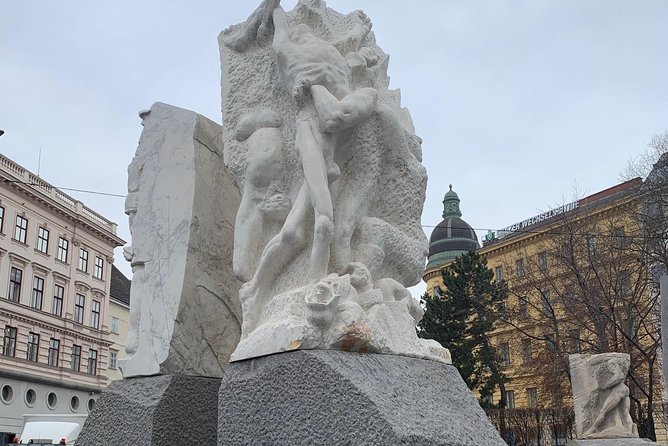
Karl Lueger Monument and the political thread in Vienna
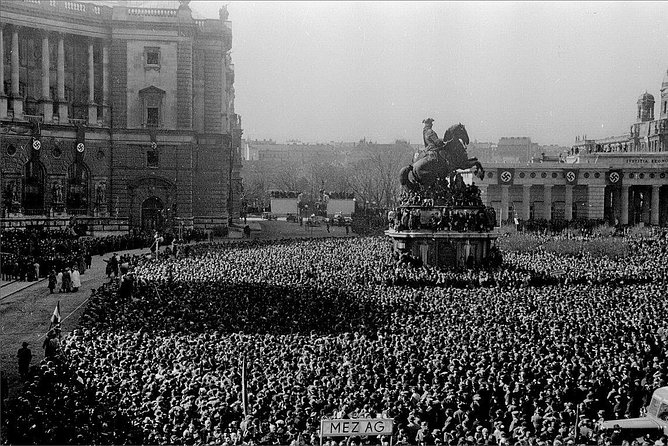
You also visit the Karl Lueger Monument. Your guide connects this kind of civic marker to the broader themes of politics and the lead-up to WWII in Vienna. Even if you have heard the name before, a guided explanation helps you place it inside the timeline your tour is building.
Monuments can be tricky without context. They can look like decorative city history until someone explains the role they played in public memory and political climate. Here, that context turns the statue or memorial into part of the narrative rather than just background scenery.
If you like architecture and street-level history, this is a good stop to lean into questions. The guide’s job is not only to point, but to connect why this moment in Vienna matters to the WWII story you are tracing.
Why the guide makes or breaks this tour
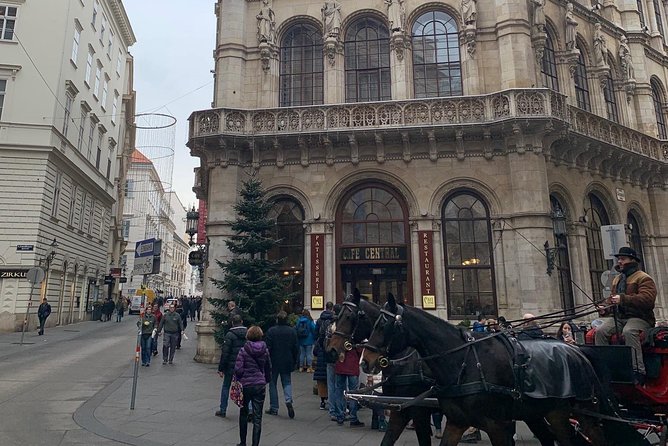
This is a private tour, so the guide is the product. The strongest praise points to guides who combine clear English with humor and with the ability to answer questions without making you feel rushed. You will also notice repeated comments about guides explaining history with grace and humility, which is a big deal for WWII topics.
Names you might hear in the guide rotation include Lisa, Nando, Marco, Hernando, and Reinhard. One person even suggested asking for Lisa for a lively, fun style. Another emphasized that Nando could handle a lot of questions while still adding city context beyond WWII.
What I’d watch for as you book is not just friendliness, but whether the guide communicates in a way that fits your learning style. If you like a bit of back-and-forth, ask questions early. If you prefer structure, ask the guide to keep the timeline clear as the walk progresses.
What this tour feels like for different travel styles
If you love WWII history but you do not want to sit in a classroom, this fits well. You get facts, timelines, and interpretation, but you are moving through real places. The private setup also helps if you are traveling with a mix of interests, since your guide can customize the itinerary to your pace and focus.
If you are not a history person, you can still enjoy it if you stay open to the city’s political story. Vienna is full of visible layers, and even a short walk can reveal how the past shapes what you see today. That said, if you prefer strictly lighter themes like food, art, and music, this tour may feel too intense.
This is also a good choice if you like asking questions. Some tours are “walk, listen, move on.” Here, the format supports deeper conversation, especially at stops where the meaning of a square or monument needs explanation.
Timing, planning, and weather reality
The tour runs about 2 hours 30 minutes. That length is long enough that you will want to wear comfortable shoes and dress for the weather. Vienna weather can shift fast, and central streets can feel colder or wetter than you expect.
Booking is typically done about 48 days in advance on average, which tells me this is a popular slot. If you are planning around specific days, especially during peak season, it is wise to lock it in early rather than waiting.
If rain hits, the best move is to show up with a jacket and a plan to keep moving. A walking tour still works when the city is damp, as long as you are dressed for it. The goal is to keep the flow and not spend the day stuck waiting for perfect conditions.
Who should book this WWII walking tour in Vienna
Book this if you want a private, inner-city walk focused on Vienna’s role in WWII, with clear explanations and a guide who can tailor the pacing. It is especially good for people who enjoy connecting history to specific places, and who want to end at St. Stephen’s Cathedral so the day does not unravel into logistics.
Consider skipping if you want a purely relaxing sightseeing day or if WWII content would feel too heavy for your mood. This tour directly addresses the life of Adolf Hitler and the rise of the Nazi party, and it includes stops tied to Jewish history in Vienna.
Should you book this WWII walking tour?
Yes, if your trip has room for context. This tour turns Vienna’s center into a guided timeline, not just a set of monuments. The private format, the state-certified guidance, and the flexible pacing make it a strong fit when you want to learn without feeling trapped in a rigid group schedule.
If you do book, do it with comfort in mind: wear good walking shoes, be ready for emotionally serious themes, and bring at least a few questions about what you are seeing. That is when the experience really pays off.
FAQ
How long is the Private World War II Walking Tour in Vienna?
It lasts about 2 hours 30 minutes.
How much does the tour cost?
It costs $451.79 per group, with a maximum group size of up to 15.
Is this tour private, or will I be with other people?
It is a private tour/activity, and only your group will participate.
What language is the tour offered in?
The tour is offered in English.
Is pickup available?
Pickup is offered if your hotel is located in the inner city. If not, the provider will contact you before the tour with the exact meeting location.
Where does the tour start and end?
It starts at Helmut-Zilk-Platz (Albertinapl. 2-3, 1010 Wien) and ends at St. Stephen’s Cathedral (Stephansplatz 3, 1010 Wien).
What is the cancellation window?
You can cancel for free up to 24 hours in advance for a full refund. Changes within 24 hours of the start time are not accepted. Service animals are allowed, and it includes a mobile ticket.
Recently reviewed around Vienna
- Vienna: Mozart, Beethoven, & Strauss Private Tour★ 5.0 · 4 reviews
- Vienna: Musical Tickets ROCK ME AMADEUS – THE FALCO MUSICAL★ 4.8 · 15 reviews
- Vienna: Mozart Concert with Dinner and Carriage Ride★ 4.8 · 25 reviews
- Private Melk Hallstatt, Salzburg tour from Vienna★ 4.9 · 22 reviews
- Vienna: ‘Armenia In The Heart Of Austria’ Tour★ 5.0 · 6 reviews
- Vienna: Luxury Vintage Fashion Walking Tour★ 3.4 · 8 reviews
- Vienna: Kunsthistorisches Museum Guided Tour incl. admission★ 4.9 · 32 reviews
- Vienna: Mozart Private Guided Tour★ 5.0 · 4 reviews
WWII History Tours, side by side.
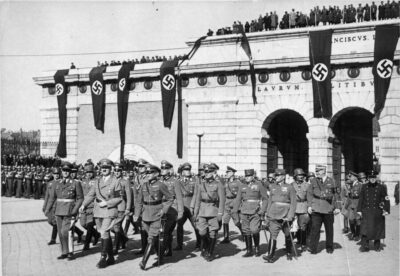
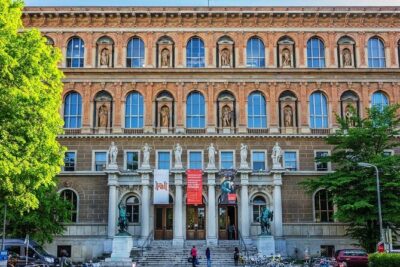
Private Vienna Highlights History Walk — WWII and Post War Vienna
Read our review →
Lists this tour appears in