
Appraised · VIENNA WALKING TOURS
Vienna: Vienna under the Nazis, Private Walking Tour
This is not the usual Vienna parade of gilded facades and imperial music. This walk puts the spotlight on the years Vienna was part of Hitler’s German Empire, from March 1938 to April 1945, when the city lost so much and so many. What I like most is how it uses real street-level locations to explain how power worked, and how you get clear, practical context instead of a generic lecture. One drawback to consider is that this tour is serious in tone, and it asks you to look at places tied to terror and persecution.
I also appreciate that the format is private and adjustable. Your guide can shape the walk around your interests, so if you care more about Jewish persecution, propaganda, or daily life under the regime, you can steer the emphasis. The guide behind this experience is David Sterrer, and the best part is that he connects the historical landmarks to what life could feel like in Vienna when violence and fear were part of the system.
Key things you should know before you go
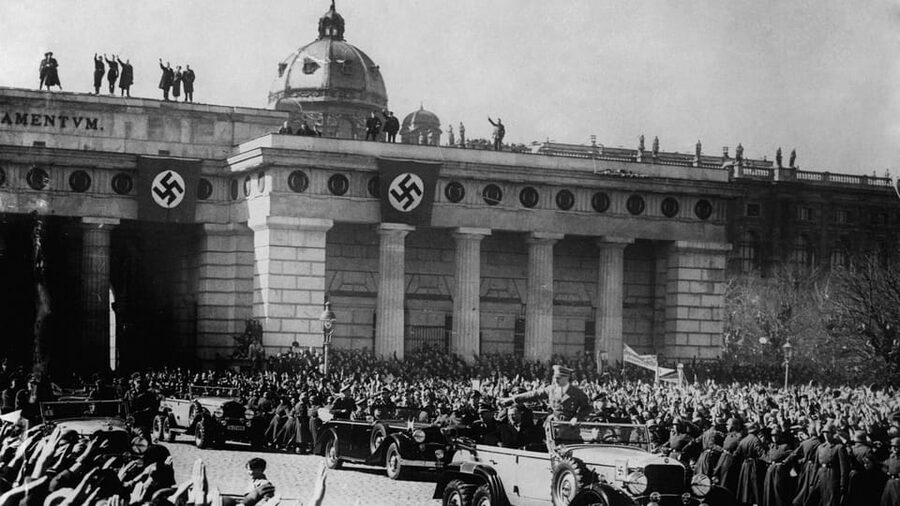
- Heldenplatz first: the announcement balcony area tied to the annexation of Austria to Nazi Germany
- Hofburg to Kohlmarkt: visible traces of how Jewish-owned businesses were stolen through aryanization
- Memorial-focused stops: Am Hof and Judenplatz for the people executed and the Holocaust in Vienna
- Metropole aftermath nearby the Danube canal: a post-World War II created square and a surviving monument tied to Gestapo history
- End point with a message: finishing at a major monument against war and fascism in Vienna
- Private, 150-minute pace: enough time to cover a focused route without feeling rushed
A Vienna walk that trades palaces for power and persecution
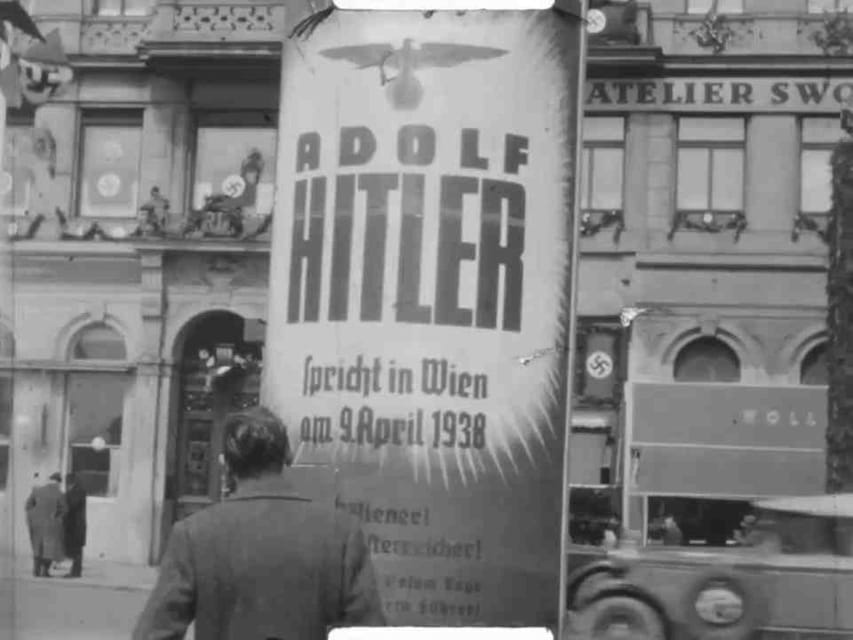
Vienna under the Nazis is hard to see if you stick to the postcard version of the city. The big idea here is simple, you walk where the regime acted, organized, and enforced control, then you match what you see with what it meant for real people.
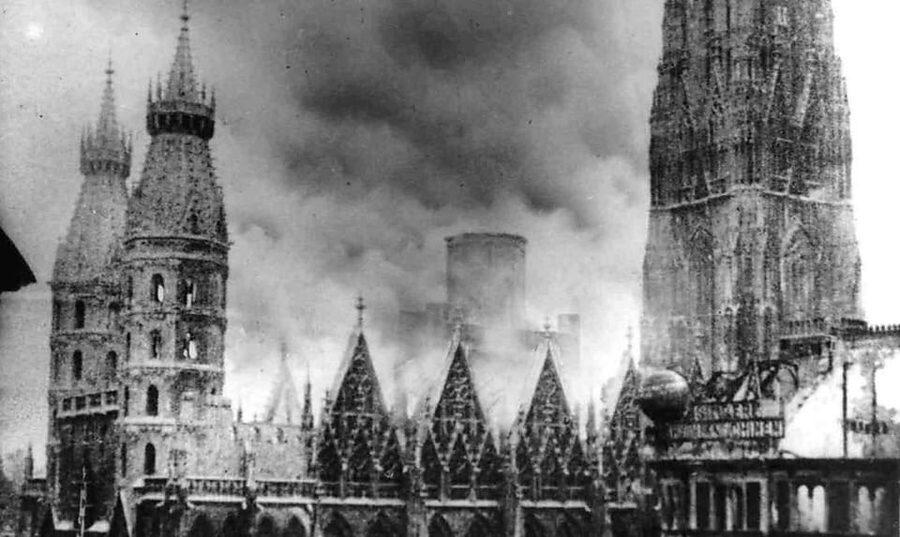
You start with a framing you can carry with you as you go. Hitler called Vienna the Pearl of the Reich for a reason, and the regime wanted it to feel like more than a conquered city. Then you learn what happened by the end of the war, with huge destruction across the city and enormous loss of life. The guide also points you toward the scale of murder, including the figure that about 70,000 Jewish people in Vienna were murdered during the Nazi period.
This tour is also built to avoid the cookie-cutter “moral lecture” style. Instead, it aims for insight, meaning you get the who, the how, and the why, grounded in locations you can still find on foot.
More walking tours in Vienna:
- Vienna: Guided Walking Tour of City Center Highlights
★ 4.7 · 4,989 reviews - Vienna: Vienna Central Cemetery Guided Walking Tour
★ 4.8 · 3,307 reviews - Vienna: Guided Walking Tour of City Highlights & Hidden Gems
★ 4.9 · 2,180 reviews
Meeting at the Archduke Charles monument, then straight to Heldenplatz
You meet at the Archduke Charles monument, the rider holding a flag. It is a good way to start, because you are anchored in a specific Vienna spot right away, not at some vague central meeting point.
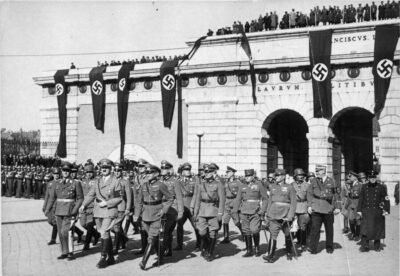
From there, the route takes you to Heldenplatz, a square tied to Hitler’s public announcement of the annexation of Austria to Nazi Germany. That alone changes how you read the surroundings. Even if you already know Vienna’s imperial landmarks, this stop forces a different question: how did the regime stage legitimacy in a city famous for ceremony?
This is where you should pay attention to the guide’s framing. The point is not to shock you with slogans, it is to show you how public space becomes political theater. And once you understand that, every next stop feels more logical.
Practical note, this kind of walk works best when you keep your phone away and let the guide set the rhythm. Expect a focused conversation, not a silent sightseeing shuffle.
Inside the Hofburg to Kohlmarkt, seeing how aryanization worked in real places
After Heldenplatz, you head through the Hofburg complex, then toward Kohlmarkt. This stretch matters because it connects Nazi-era power with a city that previously ran on imperial institutions and prestige.
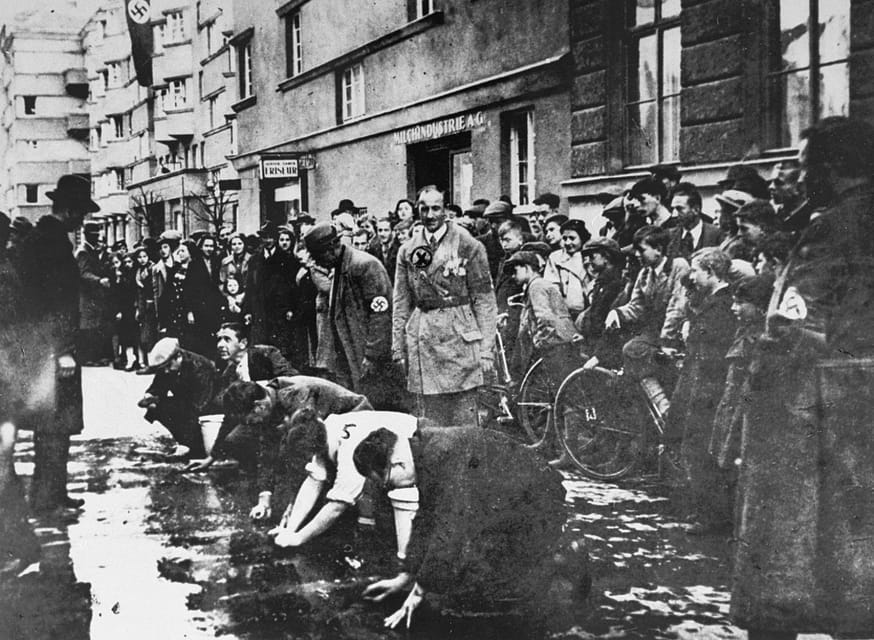
Kohlmarkt is where the walk turns from propaganda to property and economics. The guide shows you houses connected to victims of aryanization, the practice that enabled the stealing of Jewish businesses. The value here is that you do not just hear a definition. You look at real addresses tied to loss, and you start to understand how discrimination could be enforced through everyday business and law-like processes.
A benefit of the private format is that you can ask follow-up questions. If you want to understand how early Nazi rule changed social life fast, you can ask. If you want to know how people reacted, supporters versus opponents, the guide can bring that thread into the story.
A consideration, this stop can feel emotionally heavy. If you prefer light historical walks, you may find this portion challenging. If you want to understand the mechanism of oppression, it is one of the most important parts of the whole experience.
Memorial stops at Am Hof and Judenplatz: names, resistance, and the Holocaust in Vienna
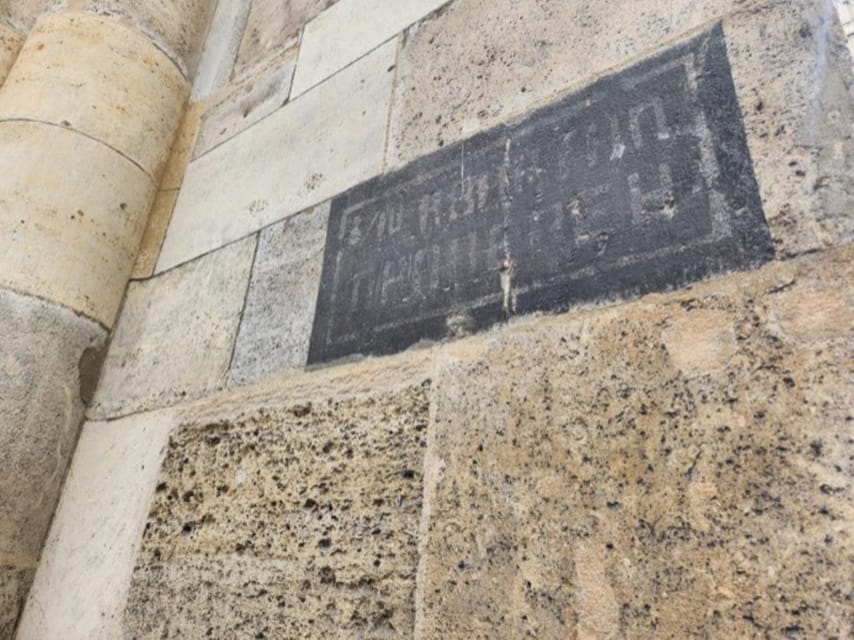
Next comes Am Hof, where you see a memorial to the firemen executed for resisting Nazi terror. That detail matters because it breaks the oversimplified story that everyone simply went along. Even if the regime was brutal, there were people who resisted, and the city remembered them in stone.
Then you move to Judenplatz, which holds a Holocaust memorial monument to the Holocaust in Vienna. This stop is less about architecture appreciation and more about how memory is placed into the everyday route through the city. It can also give you a grounded sense of scale. When you hear the number of people murdered, it is one thing. When you stand near a memorial that is specifically tied to Vienna, it becomes much more tangible.
What I like about how the tour handles these memorials is the balance. It does not treat them as a checklist item. It uses them as signposts in a narrative, helping you connect earlier Nazi actions to later consequences.
A few more days out around Vienna worth comparing
- Vienna: Private Walking Tour with a Local Guide
★ 4.6 · 1,420 reviews - Vienna: Private Walking Tour with a Guide
★ 4.7 · 962 reviews - Vienna: Wine Tasting Experience in a Private Wine Cellar
★ 4.8 · 413 reviews - Private Day Tour Trip Salzburg Hallstatt and Melk from Vienna
★ 5.0 · 388 reviews
Down by the Danube canal: the Metropole destruction and the Gestapo-era monument
The walk then shifts toward the area by the Danube canal. You see a square created after the hotel Metropole was destroyed at the end of World War II. The site is known for something darker: it was infamous for having been Vienna’s Gestapo headquarters, and a monument remains.
This is a powerful stretch because it is about aftermath as much as it is about the original crimes. The tour uses the space itself to help you grasp the continuity between violence, occupation structures, and what the city had to face afterward.
If you are trying to understand how Nazi systems worked, this is one of the stops that pulls the threads together. You get a clearer picture of where fear was generated and enforced, not just where speeches were made.
Tip for your own planning, keep your attention steady here. Even when you think you understand Nazi history, the location-specific perspective is what makes this tour different from a museum visit. You are looking at the city’s physical record of how power operated.
War scars around Hoher Markt and reminders near St. Stephen’s Cathedral
At Hoher Markt, you can still see clear World War II damages to Vienna before heading toward Saint Stephen’s Cathedral. This part of the tour is useful even if you mainly came for Nazi-era details, because it shows what war did to the city’s fabric and daily life.
Then you head toward Saint Stephen’s Cathedral, where the guide points out more reminders of the war and the Nazi regime. I like this approach because it keeps you from thinking history sits only in designated monuments. The past is attached to places you already recognize.
A small practical consideration, you will be outside for much of the walk and you will want your shoes to be comfortable. This tour is 150 minutes, but memorial-heavy walking tends to make time feel slower. Pace yourself, take a breath when a stop hits hard, and let the guide steer you to the next point.
From the Nazis organizing the old town to the Albertina finish
The tour continues with a stop at a nearby building from which the Nazis organized the old town of Vienna. Even without extra theatrics, this kind of location helps you answer one of the tour’s central questions: who carried out the system, and how did it get organized on the ground?
Finally, you end near the Albertina, at a main monument against war and fascism in Vienna. Ending here works well, because it gives you a closing thought instead of cutting off mid-story. You get a destination that encourages reflection on what happened and what the city chose to remember.
If you are the kind of person who likes your tours to end with a coherent message, this finish is satisfying. It also helps you transition back to enjoying Vienna afterward, because you are not stuck in the mood of the last stop.
Price and value: why $258 per group can be worth it here
The price is $258 per group up to 15, with a 150-minute duration and a live English guide. On paper, it can look pricey if you compare it to a public group tour. But here is the value logic that matters:
- You get a private format that can be adjusted based on your interests. That means you are not forced into a one-size-fits-all script.
- You also get a very specific theme, Nazi Vienna, anchored in exact places like Heldenplatz and the memorials connected to the Holocaust in Vienna.
- The guide, David Sterrer, is praised for connecting historic sites to what it was like to live and work in Vienna during the era.
So the real question for you is group size. If you come as a small group, you are paying more per person than a big public tour. If you can fill more seats in the group cap, it becomes much easier to justify.
One caution based on past problems reported for this experience: there have been cases where the tour did not happen as scheduled due to a guide not showing up, and there were delays in communication on short timelines. I would plan to confirm day-of details and make sure you have a solid contact plan in case anything changes.
How the private pace works in 150 minutes
This is a 150-minute walking tour, so you are looking at a focused stretch of central Vienna. Private groups usually mean fewer interruptions and more room for questions. The tour’s structure is also built for momentum, meaning you move from speech-related locations to persecution and memorial sites without large gaps.
I’d suggest you come with at least one curiosity ready. For example, you can tell the guide you want the answer to how the regime treated Jewish people in the early days, or you can ask about who supported the Nazis and who did not. That kind of input helps turn a historical walk into something personal and memorable.
Emotionally, you should also be prepared. The tour touches places connected to murder and terror, including the Gestapo headquarters site and the Holocaust memorial stop. It is not meant to be casual.
Who should book this Vienna under the Nazis tour
This is a great match if you want history that is grounded in place. You enjoy walking tours where the streets teach you, not tours where you just take photos and move on. It is also a solid pick if you like nuance, including the uncomfortable parts like aryanization and how resistance existed alongside brutal enforcement.
It may not be the best fit if you are traveling mainly for imperial glamour, or if you want a light, upbeat morning in Vienna. This walk is serious by design, and you should choose it because you want that seriousness.
Should you book it?
Book it if you want a focused, location-driven understanding of Vienna under the Nazis, from Heldenplatz to memorials and the Gestapo-era history tied to the Metropole aftermath. The private format, the ability to customize, and David Sterrer’s attention to how Vienna’s people lived and worked during the period are major upsides.
Skip or reconsider if you need a guarantee of perfect logistics on a tight schedule. There have been verified situations where the tour was not delivered due to the guide not appearing. If your dates are flexible, this is less stressful. If your schedule is strict, I’d plan extra buffer and confirm details in advance.
FAQ
How long is the Vienna under the Nazis private walking tour?
The tour runs for 150 minutes.
Where do we meet for the tour?
You meet at the Archduke Charles monument, the rider holding a flag.
Is the tour private or group-based?
It is a private group tour.
What language is the tour guide speaking?
The live guide speaks English.
How much does the tour cost?
The price is $258 per group, up to 15 people.
Can the tour be customized?
Yes. The tour is adjusted to your interests.
Does the tour focus on a moral lecture?
No. It is designed as insight into this era, not a moral lecture.
What is the cancellation policy?
You can cancel up to 24 hours in advance for a full refund.
Is reserve and pay later available?
Yes, you can reserve now and pay later.
Who provides the tour?
The experience provider is David Sterrer.
Recently reviewed around Vienna
- World War II History Vienna Old Town Private Walking Tour★ 4.8 · 9 reviews
- Vienna: Winery and Wine Tasting Tour with a Wine Expert★ 5.0 · 5 reviews
- Vienna: Wine Tasting Tour★ 4.8 · 61 reviews
- Vienna: Wine Tasting E-Bike Tour★ 4.9 · 46 reviews
- Vienna: Concert by the Vienna Baroque Orchestra★ 4.6 · 56 reviews
- Vienna: Unforgettable Private City Tour★ 5.0 · 7 reviews
- Vienna: Swarovski DIY Workshop Experience★ 5.0 · 9 reviews
- Vienna Supreme Orchestra at Palais Niederösterreich★ 4.8 · 10 reviews
Vienna Walking Tours, side by side.
Guided Walking Tour of City Center Highlights
Read our review →
Guided Walking Tour of City Highlights & Hidden Gems
Read our review →
Vienna Historic Center Small Group Walking Tour
Read our review →
Lists this tour appears in