
Appraised · WWII HISTORY TOURS
Private Vienna Highlights History Walk — WWII and Post War Vienna
This private Vienna walk through WWII and postwar landmarks is interesting because it connects the city’s big scenic sights to the political messages written into buildings and squares. I like the hotel pickup that saves time on arrival, and I like how the route ends at Judenplatz with the Nameless Library Holocaust memorial. The main drawback to consider is that you cover a lot of ground on foot in around 3 hours, so plan for steady walking and a few emotionally heavy moments.
What makes it worth it for me is the group setup. You get a private licensed guide in English, with room to steer the pace and focus, starting at 09:30 or 14:00. If you prefer slow museum time, this is more of a history-and-architecture story walk than a sit-down deep study.
Key points at a glance
- Hotel pickup plus a private group of up to 10 means less logistics stress and more questions answered
- Belvedere Gardens and terraces put you on the kind of viewpoint where political ideas were staged
- Soviet War Memorial and the Nameless Library at Judenplatz anchor the WWII and aftermath story
- A quick Ringstraße tram ride helps you cover more ground while still seeing key landmarks
- Practical pace for a 3-hour window gives you major highlights without trying to do everything in one day
A 3-hour Vienna story of WWII, occupation, and rebuilding
This tour is built like a timeline you can walk through. You start with a palace view tied to Austria’s postwar identity, then move to Allied memory markers from 1945, and you end in places where the city remembers what it lost.
You’ll see Vienna as more than postcards. Squares, gardens, and church façades are used like public messaging. Your guide ties those messages together so the architecture makes sense instead of just looking pretty.
The vibe is respectful, but not neutral. WWII and the Holocaust are part of the route, including the Nameless Library at Judenplatz, and St. Stephen’s Cathedral’s April 1945 damage. If you want only light sightseeing, you might feel these stops weigh more than the average walk.
More WWII history tours in Vienna:
- Vienna: World War II Historical Walking Tour
★ 4.8 · 1,772 reviews - Historical Hitler Walking Tour of Vienna
★ 5.0 · 887 reviews - Vienna: Underground WWII Bunker Ticket and Guided Tour
★ 4.4 · 79 reviews
Hotel pickup and logistics, without the usual time tax
One of the best parts is the start-to-stop convenience. You get hotel pickup included, and the tour meets guests at hotels and vacation rentals in town, Reichsbruecke pier, or major train stations like Vienna Hbf and Vienna West. It’s also offered in English and uses a mobile ticket.
What you should plan for is transport on your own between some areas. The tour does not include public transport to and from attractions, and there is no hotel drop-off. You do get one short tram ride along the Ringstraße during the day, which helps connect the sightseeing, but you should still be ready to pay for any other transit you need.
The walking level is described as moderate. In practice, that means comfortable shoes matter, and you will be on your feet more than you might expect for a 3-hour tour.
Upper Belvedere terraces and gardens: where power turns into postwar identity
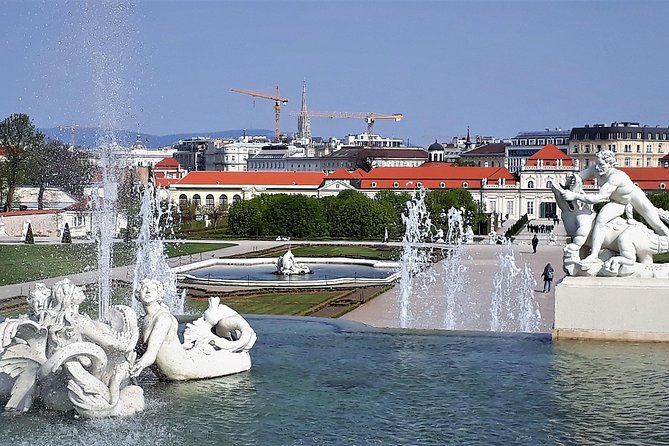
The route begins at the Belvedere complex, starting with the gardens and viewpoint at the Upper Belvedere side. The setting is big, open, and dramatic. Prince Eugene, the military genius behind the original ambition, never ruled, but his palace project became a symbol later on.
Here’s the key idea you’ll hear: the palace and its terrace views connect imperial ambition with Austria’s later postwar stance. In 1955, the location becomes part of the symbolic birth of Austria’s Second Republic. You can feel that shift while standing on the terrace and looking outward, because your guide reads the space as politics made physical.
Then you move along the baroque garden axis toward the Lower Belvedere. This part is easy to underestimate if you only think of gardens as pretty scenery. Your guide treats the design like a statement about order, hierarchy, and how power wants to be seen. Even if you’re not a garden person, the logic of the layout is usually what makes it click.
A small practical note: admission is listed as free for these Belvedere segments. Still, expect to spend time outside, in sun or cold depending on the season.
Schwarzenbergplatz: the Soviet memory marker in the heart of the city
From Belvedere, the tour heads to Schwarzenbergplatz. The focus here is the Soviet War Memorial, the monument tied to 1945 and the Red Army soldiers who died in the fight that ended Nazi rule in Vienna.
This stop matters because it complicates the word liberation. Your guide frames it as something that can coexist with occupation in memory and public space. It’s a reminder that history is not only what happened, but also how cities choose to remember what happened.
The time on this stop is short, around 10 minutes. That’s enough to understand the monument’s message and why it’s placed where it is, but you won’t have a long quiet hour for contemplation. If you want more, you might return later on your own.
More walking tours in Vienna:
- Vienna: Guided Walking Tour of City Center Highlights
★ 4.7 · 4,989 reviews - Vienna: Vienna Central Cemetery Guided Walking Tour
★ 4.8 · 3,307 reviews - Vienna: Guided Walking Tour of City Highlights & Hidden Gems
★ 4.9 · 2,180 reviews - Vienna: Viennese Underworld Guided Walking Tour
★ 4.7 · 1,865 reviews
Hochstrahlbrunnen and the French Embassy: Allied powers, different architecture
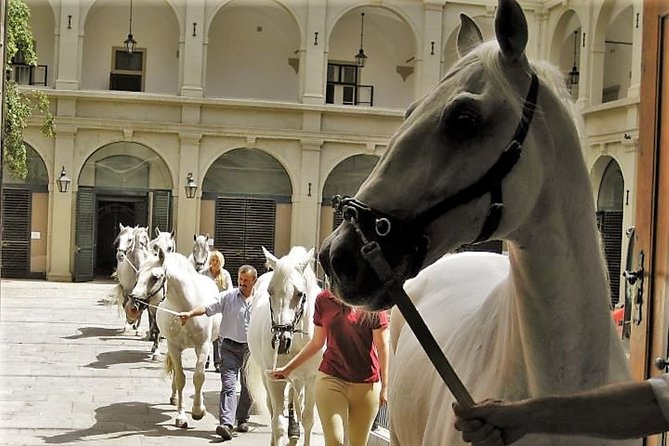
Next you stop at the Hochstrahlbrunnen fountain area near the French Embassy. The fountain is the type of Vienna detail that often gets missed if you rush. It’s described as a monumental celebration of Vienna’s alpine tap water, framed by the French Embassy.
This is another stop that looks like a photo stop until your guide explains the framing. It’s a visual comparison of two Allied powers, each with architectural choices that send their own message about identity and seriousness.
This is also a good mid-tour break in the story. You’re still in WWII and postwar territory, but the angle shifts to how diplomacy and infrastructure can show up in public art and design.
The Ringstraße tram ride: from wartime destruction to rebuilt prestige
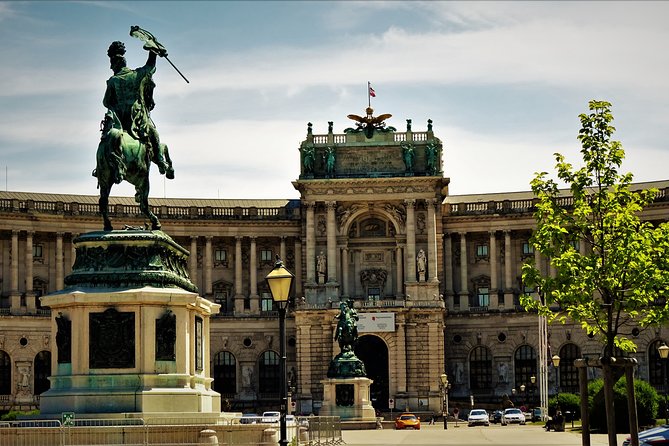
A short tram ride takes you along the Ringstraße. This is Vienna’s 19th-century prestige project, the big circular boulevard that signals status and city identity.
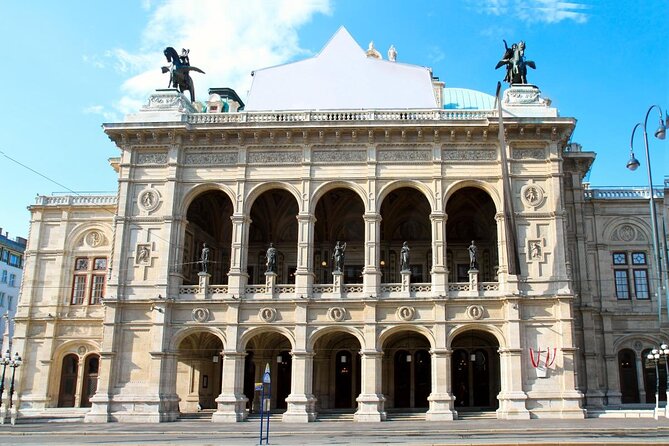
During the ride, you pass the rebuilt State Opera. That moment is easy to miss if you only think of the Opera as a famous building. Your guide points out the wartime destruction and the rebuild as cultural continuity, not just construction.
For you, the tram segment is a smart trade. You cover more distance without adding extra walking time, and you get to read the street as a whole plan, not isolated landmarks.
If you’re traveling with kids or anyone with limited stamina, this transit break can be a relief. You still stay in the story, but your legs get a short rest.
Burggarten and the Mozart viewpoint, plus the Hitler rejection footnote
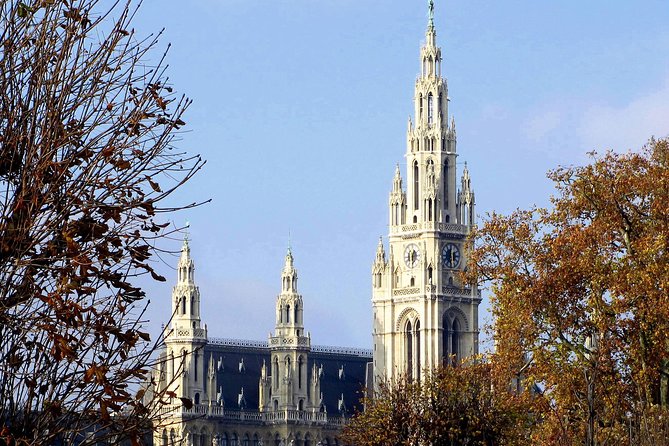
You then arrive at Burggarten, where Mozart presides in the garden that once belonged to the imperial court. It’s a beautiful setting for a lesson about how the monarchy used art and public space.
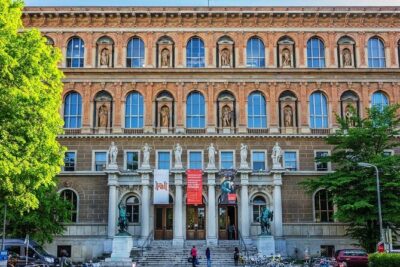
Just steps away is a link to the Academy of Fine Arts, tied to a famous rejection of a young Adolf Hitler. Your guide uses this as a footnote that history turned into something huge. It’s a heavy topic delivered in a light-looking place, which is part of what makes it memorable.
This stop also works well for first-time visitors. If you want a single snapshot of Vienna’s classic court style, Burggarten does it quickly.
Time is short, about 5 minutes. Treat it as a focused story stop, then let the garden moment sink in while you keep moving.
MuseumsQuartier Wien and FLak towers: war infrastructure you can still see
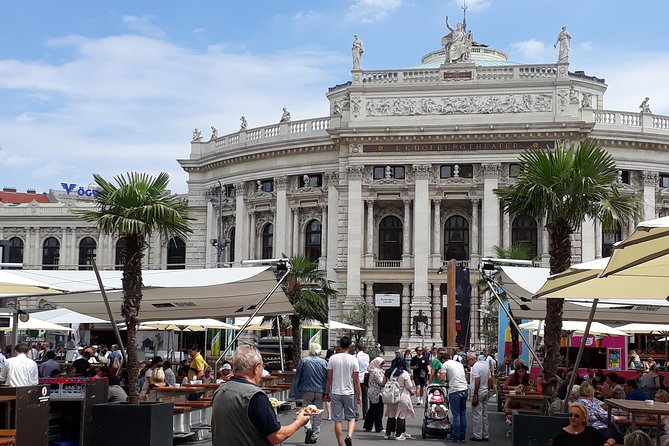
The tour shifts to MuseumsQuartier Wien. Maria Theresa’s presence anchors the square, with twin museums framing the area.
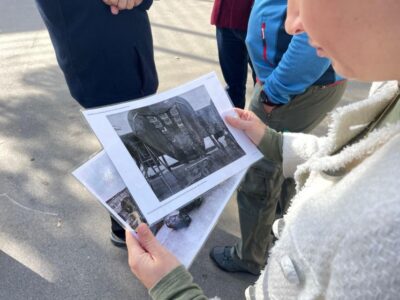
In the background, your guide points out one of Vienna’s six FLak towers. These are described as indestructible concrete witnesses to the city’s militarized final months.
This is a great moment for you if you like your WWII history grounded in physical reality. You’re not only hearing about events. You’re looking at the leftover hardware of the final stretch of war.
The stop is around 10 minutes. Again, it’s not a slow museum hour. But for a 3-hour overview walk, it’s a strong way to get a visual clue that Vienna remembers war in concrete as well as in monuments.
Heldenplatz and the Hofburg: Anschluss speeches and seven centuries of power
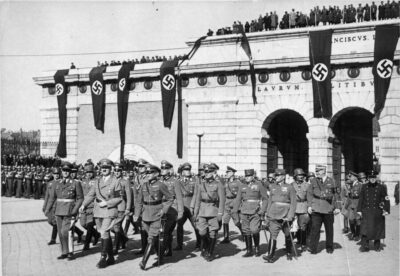
Heldenplatz is one of those squares that feels like it has a memory. It hosted imperial ceremony and military pride, including the March 1938 Anschluss speech.
Your guide connects the square to what it became after that moment, then widens out to the surrounding civic power cluster. Parliament, city hall, museums, and the Burgtheater shape the frame, creating a panorama where culture and state authority sit side by side. The message here is fragility, how quickly a place can switch from pride to pressure.
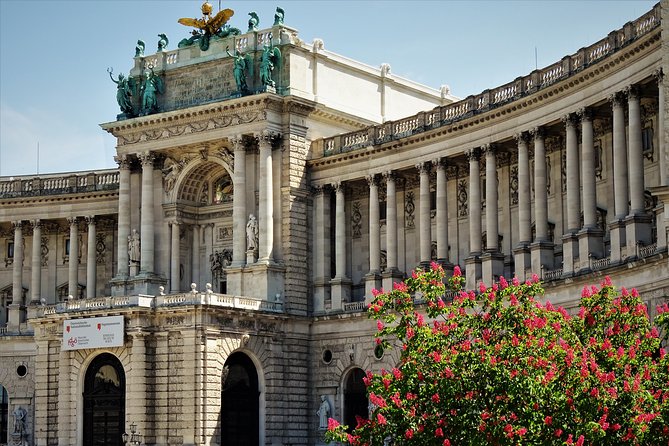
Then you move to the Hofburg. This palace-city served as the seat of power for seven centuries. Your guide reads it as an evolving institution, from dukes and emperors to the modern presidency.
This part is where you really understand Vienna as an administrative machine, not only a beauty contest. The exterior can look like pure imperial grandeur, but the story is about who used it, when, and how the role changed over time.
The route also includes a short segment where imperial façades meet ecclesiastical grandeur and today’s luxury boutiques. It’s a reminder that Vienna balances ceremony, commerce, and spirituality. For many visitors, it’s the first time these three layers feel linked rather than random.
Judenplatz Nameless Library, Pestsäule plague column, and St. Stephen’s Cathedral
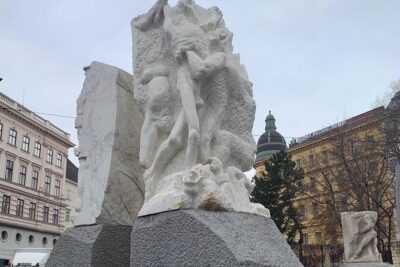
The most emotionally important stop comes at Judenplatz. Here you visit the Holocaust memorial called the Nameless Library. It commemorates 65,000 Austrian Jews murdered in the Shoah.
Your guide also notes the site’s earlier Jewish community, a medieval community destroyed in 1421. That context changes how you see the memorial. It’s not only about WWII, it’s about erasure and the long memory of loss.
Next is the Colonna Della Peste, the Pestsäule plague column. This is the counter-Reformation in marble, described as art and devotion used to reclaim the city after crisis. It’s a reminder that Vienna has faced multiple disasters, and public monuments were one way the city processed fear and recovery.
Finally, you reach St. Stephen’s Cathedral, Vienna’s Gothic heart. The story here turns tragic in April 1945, when parts of the cathedral burned due to looters setting fire to nearby shops. It’s a stark detail, and your guide keeps it grounded and respectful.
These last stops are free of admission in the tour notes. They also act like moral punctuation marks. After palace politics and war monuments, you end in remembrance and consequence.
Price and value for a group of up to 10
The price is listed at $342.40 per group, up to 10 people, for about 3 hours. That pricing makes sense if you’re traveling as a duo, family, or small group, because the cost is not per person in a strict way.
For you, the value is not only the guide. It’s the structure. You get a private licensed guide, hotel pickup, and a route that links WWII and postwar landmarks without you needing to piece it together yourself.
If you were to DIY it, you’d spend time figuring out the best order, plus dealing with transport and figuring out what to look for at each stop. This tour hands you the connections, like why the Belvedere gardens are read as political order or why the Soviet memorial sits where it does.
One more value point: you get a flexible itinerary. That’s important with serious topics. You might want one stop to last longer, or you might want your guide to explain how one site connects to the next.
Who this WWII and postwar Vienna walk fits best
This tour fits best if you want a guided overview that connects architecture, politics, and memory. It’s also ideal if you’re short on time, first-time in Vienna, or the type of traveler who likes your sightseeing with context.
It might not be ideal if you want a light, romantic stroll only. The Holocaust memorial and the cathedral wartime damage are part of the route, and the theme is not subtle.
It also works well when you want private attention. Guides linked to this tour are often praised for being friendly and organized, and for answering questions beyond the strict script. Some names you might see associated with this experience include Brigitte, Alex, Walter, Andrea, and Hannes, each noted for a personal, conversational approach and strong pacing.
And yes, if you appreciate practical local tips, guides are often the ones who help you plan what comes next in your day, like where to stop for food afterward.
Should you book this private Vienna highlights walk?
Book it if you want Vienna with meaning, not just marble. The hotel pickup, private pacing, and the clear WWII to postwar storyline make it a strong use of limited time.
Skip it if your day needs only easy, upbeat sights, or if you prefer museum tickets and quiet interiors instead of outdoor landmarks and memorials.
If you do book, come ready to walk, keep your phone charged for the mobile ticket, and give yourself permission to sit with the heavier stops for a minute before you move on.
More History Tours in Vienna
- Vienna: Time Travel and Magic Vienna History Tour
★ 4.6 · 3,879 reviews - Vienna Historic Center Small Group Walking Tour
★ 5.0 · 1,746 reviews - Time Travel-Magic Vienna History Tour Ticket
★ 4.5 · 1,099 reviews - Skip-the-Line Schonbrunn Palace Guided Tour and Vienna Historical City Tour
★ 3.5 · 940 reviews
Recently reviewed around Vienna
- Vienna: Mozart Concert with Dinner and Carriage Ride★ 4.8 · 25 reviews
- Vienna: Mozart, Beethoven, & Strauss Private Tour★ 5.0 · 4 reviews
- Vienna: Musical Tickets ROCK ME AMADEUS – THE FALCO MUSICAL★ 4.8 · 15 reviews
- Private Melk Hallstatt, Salzburg tour from Vienna★ 4.9 · 22 reviews
- Vienna: ‘Armenia In The Heart Of Austria’ Tour★ 5.0 · 6 reviews
- Vienna: Luxury Vintage Fashion Walking Tour★ 3.4 · 8 reviews
- Vienna: Kunsthistorisches Museum Guided Tour incl. admission★ 4.9 · 32 reviews
- Vienna: Mozart Private Guided Tour★ 5.0 · 4 reviews
WWII History Tours, side by side.
Lists this tour appears in