Appraised · TOURS
Vienna: ‘Armenia In The Heart Of Austria’ Tour
Vienna is usually sold as imperial palaces and grand boulevards. This tour turns the Mekhitarist Monastery into a real-life pocket of Small Armenia right in the city center. I love how the visit mixes church art with serious scholarship in the Mekhitharis Library. I also love the human tone, with Father Vahan setting a welcoming vibe and answering questions in a warm, direct way. One thing to consider is the pace: in just 2 hours, you will see a lot of highlights, but you will not have time to linger in every corner.
You meet at the main entrance of the monastery, join a small group of up to 10, and follow a live guide who speaks Armenian, English, and German. Expect to move from the church to the chapel and monastery spaces, then through the library and museum, ending with a Mechitharine liqueur tasting that connects the art and history to everyday tradition.
Key Points You Will Actually Remember

- Maria Schutz Church (1874) and standout altar art that ties Armenian protection themes to major European artists
- The Loretto-Chapel picture Mary with the Rose, linked to the 1683 siege of Vienna
- A refectory moment with the Feeding of the Five Thousand, painted by Ludwig Ferdinand Schnorr von Carolsfeld
- Mekhitharis Library numbers that are hard to ignore, including thousands of Armenian manuscripts and huge publication holdings
- Collections beyond books, like coins, ceramics, carpets, and Armenian artworks, including Aivazovsky paintings
- Mechitharine liqueur tasting that finishes the tour with a practical taste of monastery culture
Why This Armenian “Small Armenia” Tour Works in Vienna
What makes this experience interesting is that it is not a one-room cultural stop. You are walking through a monastery complex where Armenian faith, art, and knowledge overlap in the same physical spaces.
I like that the tour is built around specific places with clear stories. You start with the history of the Mekhitarist Congregation in Vienna, then move through church interiors, a chapel, the refectory, and finally the museum and library. In other words, it is not just a checklist of sights, it is a guided route through how a community preserves identity.
You also get the benefit of a small group. With a limit of 10 people, the guide can slow down when a question comes up, instead of rushing everyone through like a factory line. That matters most when you are looking at art and symbolism that can be easy to miss if you only skim labels.
Other things people book around Vienna:
- Vienna: Vivaldi’s Four Seasons Concert in Karlskirche
★ 4.7 · 14,951 reviews - Vienna: Schönbrunn Palace & Gardens Skip-the-Line Tour
★ 4.7 · 7,739 reviews - Vienna: Light of Creation Votive Church Immersive Light Show
★ 4.8 · 6,779 reviews
Entering Maria Schutz Church and Seeing 1874 Replace the Old Cappuccino
The tour begins with context, and it matters. You will hear how the Mekhitarist Congregation became established in Vienna, and how their presence shaped what you are about to see inside the church.
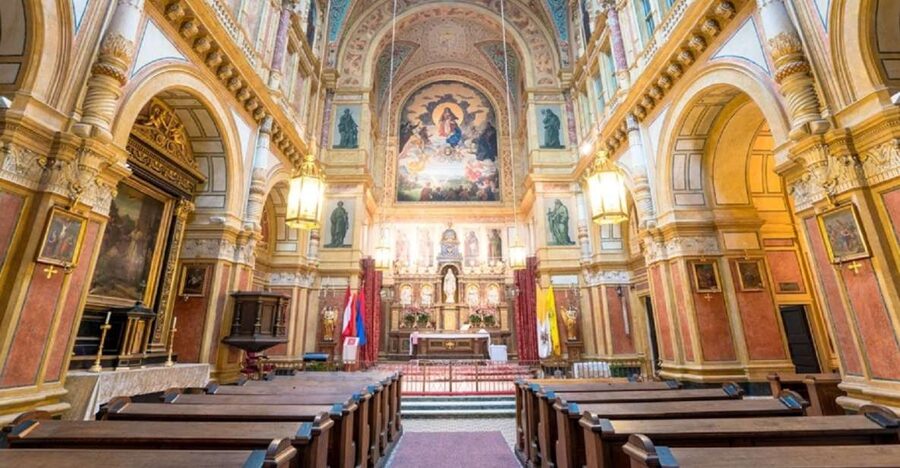
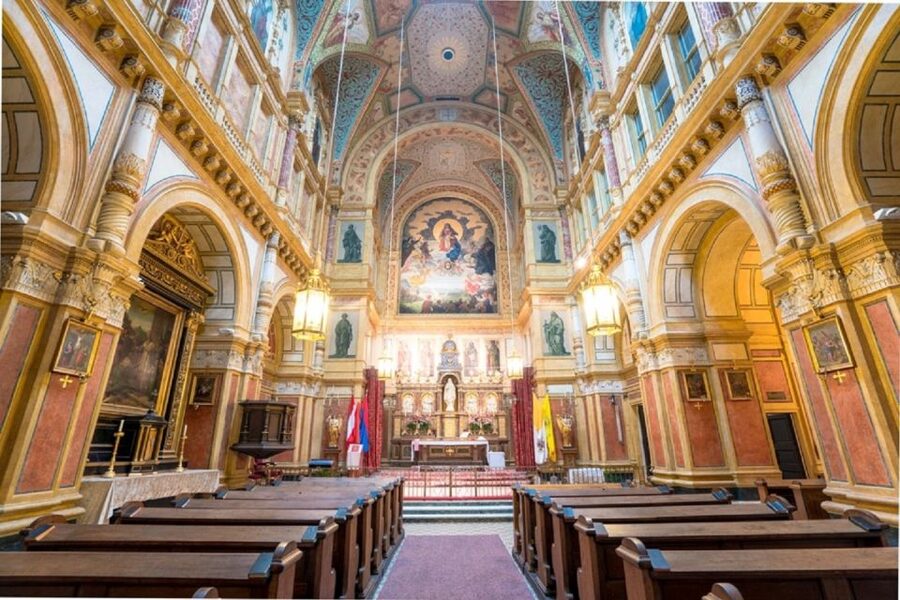
Then comes Maria Schutz Church, built in 1874 as a replacement for an earlier Cappuccine church. That detail is more than trivia. It helps you understand the architecture as a layered space, where Catholic-era structures gave way to a specifically Armenian Catholic identity expressed in their own sacred building.
Inside the church, the tour focuses on altar works that connect the Armenian story to European art. One of the strongest highlights is the altar painting dedicated to St Mary’s protection of Armenia. You are told it was painted by Camillo Sitte, and this is the kind of attribution that makes the art feel grounded in real art history, not just devotional iconography.
You will also spend time on the altar dedicated to St Gregory the Illuminator. The design is attributed to Theophil von Hansen, and the tour links him to a famous Austrian landmark, the Austrian Houses of Parliament in Vienna. That connection is handy. It gives you a mental map across Vienna, so you start seeing how local architecture and broader artistic circles intersect.
Possible drawback? If you are the type who wants to focus on one room and really stare, 2 hours can feel tight. But if you like guided structure and clear highlights, the church portion is a smart use of time.
Loretto-Chapel and the Baroque Picture Mary with the Rose
After the main church stops, you head to the Loretto-Chapel. This is where baroque drama meets survival history, and the tour makes that connection clear.
The key item is the baroque miraculous picture Mary with the Rose, which you are shown as a major devotional focus. What makes it especially compelling is the story attached to it, it was rescued intact from the Turkish siege of Vienna in 1683.
That 1683 detail is not just background. It gives the chapel a sense of stakes and endurance, which makes the artwork feel like a living memory rather than something locked behind glass. Even if you are not religious, you can still appreciate why communities protect certain images. They carry meaning across generations, and you can sense that in the way the guide explains the picture’s role.
If you like stories that connect art to real-world events, this chapel is one of the strongest segments of the tour.
The Refectory Painting, Feeding the Five Thousand, and Why It Matters
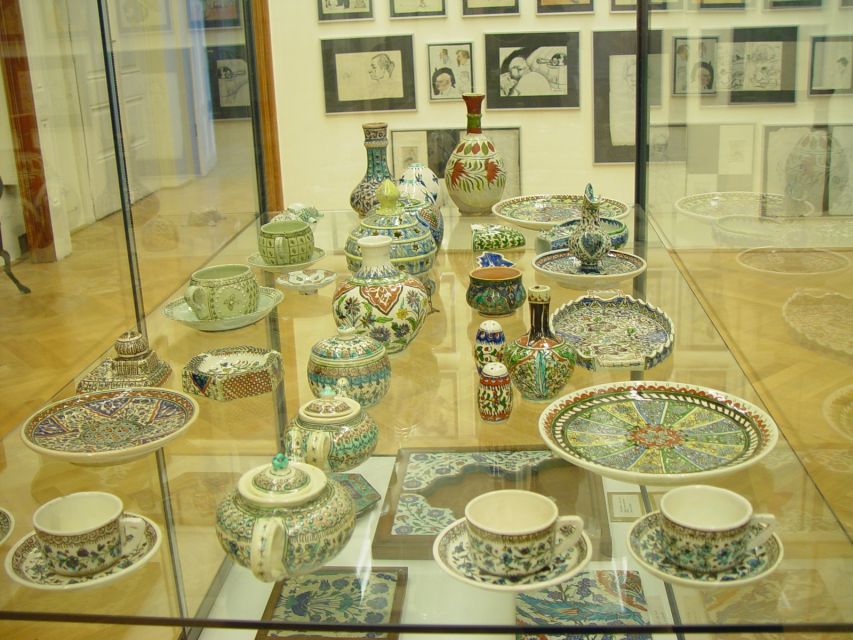
Next you pass through the refectory. This is one of those spaces that sounds ordinary until you see how it gets used as a storytelling wall for the monastery.
The tour spotlights the monumental painting The Feeding of the Five Thousand by Ludwig Ferdinand Schnorr von Carolsfeld. The scale alone changes how you read the room. Instead of thinking of a refectory as only a dining space, you start to see it as a place where faith and community life were meant to share the same wall space.
The practical value for you is how the guide helps translate symbolism. A scene like this can look simple at first glance, but when someone explains the religious meaning and its relevance to community identity, it clicks. The tour keeps you from treating the artwork like a decorative postcard.
One more subtle benefit is pacing balance. If the church feels heavy with symbolism, the refectory offers a strong visual narrative. You get emotion through a story scene, not only through altar composition.
A completely different kind of day, same corner of Austria:
- Vienna Spanish Riding School Guided Tour
★ 4.7 · 6,765 reviews - Vienna: Classical Concert in the World-Famous Musikverein
★ 4.6 · 6,673 reviews - Vienna: Skip-the-Line Sisi Museum, Hofburg and Gardens Tour
★ 4.8 · 5,918 reviews - Vienna: Hallstatt & Alpine Peaks Day Trip with Skywalk Lift
★ 4.7 · 5,458 reviews
Mekhitharis Library and Museum: Manuscripts, Newspapers, and Coins
Then the tour turns into the part that tends to surprise people. The highlight is not just that the library exists. It is the scale and variety of what is held inside.
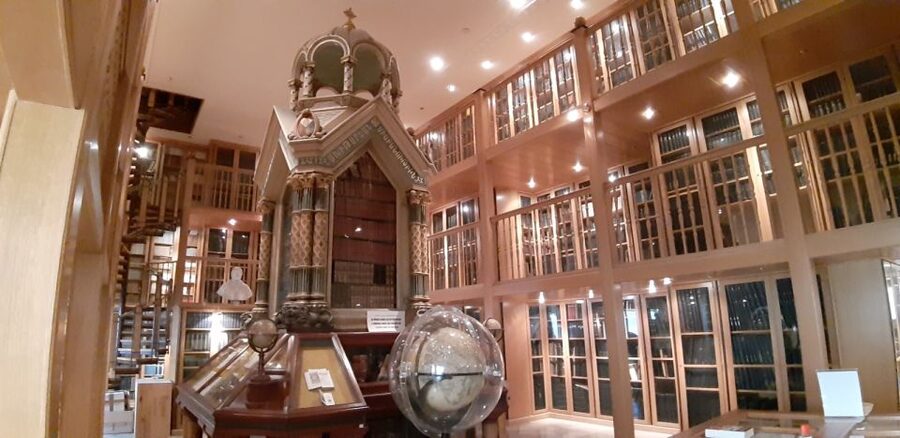
You enter the Mekhitharis Library and museum spaces and learn about one of the monastery’s most impressive assets: more than 2,800 Armenian manuscripts, plus over 170,000 volumes of ancient and modern Armenian publications. The numbers alone help you understand the purpose. This is not a small archive for occasional use. It is an ongoing engine of cultural preservation.
The tour also emphasizes Armenian newspapers and magazines, described as the largest collection of Armenian periodicals found in the Western world. That is a specific claim, and it matters because it moves the story beyond medieval manuscripts into the rhythms of modern identity. Newspapers show what people cared about in real time, and that is where preservation becomes active, not only reverent.
You will see exhibitions across the museum, guided by explanations that connect items to Armenian production and community life. The tour points out the Mekhitharists numismatic collection, including about 10,000 Armenian coins and roughly 20,000 coins from other countries. For people who like tangible history, coins are a gift. You can feel the movement of time through metal, and the guide helps you understand why collecting and classifying matters.
The museum is also not limited to money and paper. You may see ceramics, carpets, and other items mainly of Armenian production. And there is a gallery with valuable paintings by Armenian artists, including three paintings by Aivazovsky. That art fact is worth noting because Aivazovsky’s name carries weight, and it is nice when a tour includes at least one crossover point into broader European art attention.
The Mechitharine Liqueur Tasting, History, and Why the Ending Feels Clever
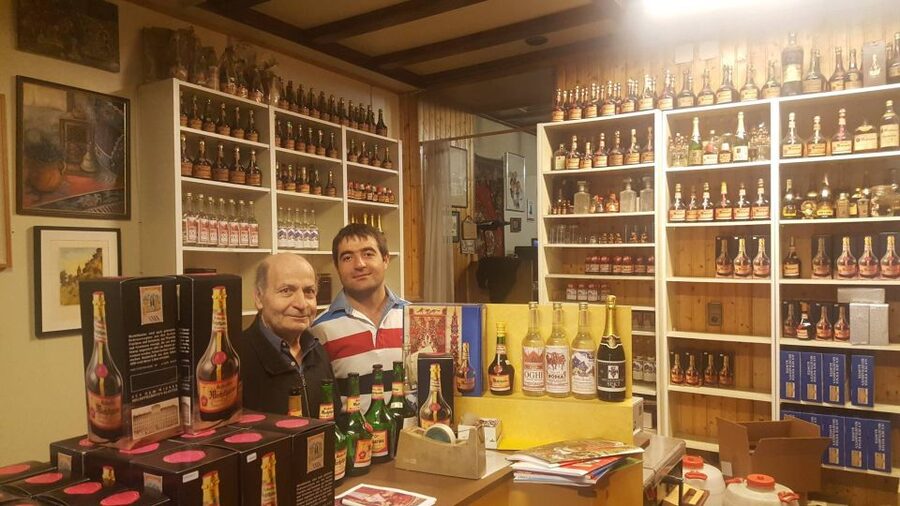
After walking through church, chapel, refectory, and museum rooms, you end with something practical and pleasant, a liqueur tasting of high-quality Mechitharine.
This ending works because it changes your brain state. You move from visual focus to taste. A good guide does not treat tasting as a gimmick. Here, the tasting is paired with an explanation of the liqueur world, its unique taste, its history, its families, and the business behind it.
Even if you are not a liqueur person, you can treat this as a small cultural lesson. It gives you a way to remember the monastery beyond manuscripts and paintings. When a tour connects cultural identity to a product people make and share, it stops feeling purely historical.
If you drink liqueur regularly, you might enjoy the deeper context the guide gives. If you only sample, you still get the story and the flavor marker.
Price, Time, and What You Get for $84 in 2 Hours
The price is $84 per person for a 2-hour experience, and the value is mostly in what is included. You get entrance fees, guide service, and the Mechitharine liqueur tasting.
For a short tour, I think this is priced fairly because you are paying for access to multiple spaces in a functioning monastery complex. You are not just hearing a lecture outside. You also have a live guide, and the group is limited to 10 participants, which improves the quality of explanations and questions.
Two hours sounds brief, and it is brief, but the itinerary is structured around major highlights. You see Maria Schutz Church interiors, Loretto-Chapel, the refectory, and then the library and museum focus. That makes the money-to-time ratio feel sensible, especially if you are doing Vienna in bite-sized segments.
If you are on a strict schedule and only want one culture stop that covers both art and scholarship, this time window is a good match.
Who This Tour Suits Best, and Who Might Want a Different Plan
This tour suits you if you want more than surface culture. You will like it if you enjoy church art, baroque details, and the way symbolism links to real events like the 1683 siege of Vienna.
It also fits you if you care about Armenian culture in Western Europe, not as a vague concept, but as something preserved through manuscripts, publications, coins, paintings, and everyday tradition like liqueur.
It might not be the best fit if you want long, unstructured roaming time. This is a guided route with set stops, so you are moving through rooms on someone else’s rhythm.
It also helps if you appreciate a live guide voice in Armenian, English, or German. The tour is offered in all three, and that matters because the guide’s job is to connect details. If you do not understand the explanations, the museum and library can feel like impressive rooms rather than meaningful stories.
Practical Tips Before You Go
Start by planning your timing around the meeting point. You meet in front of the main entrance of the Mekhitarist Monastery, so arrive a few minutes early to settle in without stress.
Wear comfortable shoes. You will spend time moving through multiple areas of the monastery complex, including interior spaces.
Finally, bring one real question or theme you care about. If you are curious about the art, ask about Camillo Sitte or Theophil von Hansen. If you care about scholarship, ask about the manuscript collection size or the periodicals focus. A small group format works best when you interact.
Should You Book This Tour or Skip It?
Book it if you want a focused 2-hour experience that connects Armenian identity to art, architecture, and a major library archive. The standout part for me is the combination: church interiors and baroque chapel devotion, followed by the library and museum scale that goes beyond what most people expect to find in Vienna.
Skip it only if you need a long, self-paced museum style visit. This experience is guided and highlight-driven, and the best results come when you enjoy walking with someone who can explain why each object matters.
If you like value, this is also a solid choice: $84 includes entrance fees and the liqueur tasting, so the tour ends with a memorable final note rather than leaving you hungry for context.
FAQ
Where does the tour meet?
Meet in front of the main entrance of the Mekhitarist Monastery.
How long is the tour?
The tour lasts 2 hours.
How much does it cost?
The price is $84 per person.
How big is the group?
It is limited to a small group of up to 10 participants.
What languages are available for the live guide?
The live tour guide is available in Armenian, English, and German.
What is included in the tour price?
Entrance fees, guide service, and a Mechitharine liqueur tasting are included.
What are the main sights you visit?
You visit Maria Schutz Church, the Loretto-Chapel, the monastery refectory, and the Mekhitharists Museum and Library.
Is it possible to cancel for a refund?
Yes, free cancellation is available up to 24 hours in advance for a full refund.
Recently reviewed around Vienna
- Vienna: Mozart, Beethoven, & Strauss Private Tour★ 5.0 · 4 reviews
- Vienna: Musical Tickets ROCK ME AMADEUS – THE FALCO MUSICAL★ 4.8 · 15 reviews
- Vienna: Mozart Concert with Dinner and Carriage Ride★ 4.8 · 25 reviews
- Private Melk Hallstatt, Salzburg tour from Vienna★ 4.9 · 22 reviews
- Vienna: Luxury Vintage Fashion Walking Tour★ 3.4 · 8 reviews
- Vienna: Kunsthistorisches Museum Guided Tour incl. admission★ 4.9 · 32 reviews
- Vienna: Mozart Private Guided Tour★ 5.0 · 4 reviews
- Vienna: KuK Perfumery Filz – Viennese Perfume Tasting★ 4.3 · 23 reviews
Tours, side by side.
Schönbrunn Palace & Gardens Skip-the-Line Tour
Read our review →

Skip-the-Line Sisi Museum, Hofburg and Gardens Tour
Read our review →
Skip-the-Line Schönbrunn Palace & Gardens Tour
Read our review →
Guided Walking Tour of City Center Highlights
Read our review →
Hop-On Hop-Off Sightseeing Bus Tour in 19 Languages
Read our review →