Appraised · TOURS
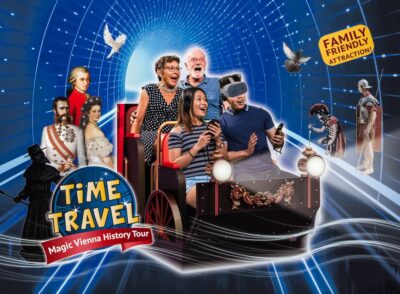
Future Bus Tours – Vienna’s highlights bus tour with virtual reality
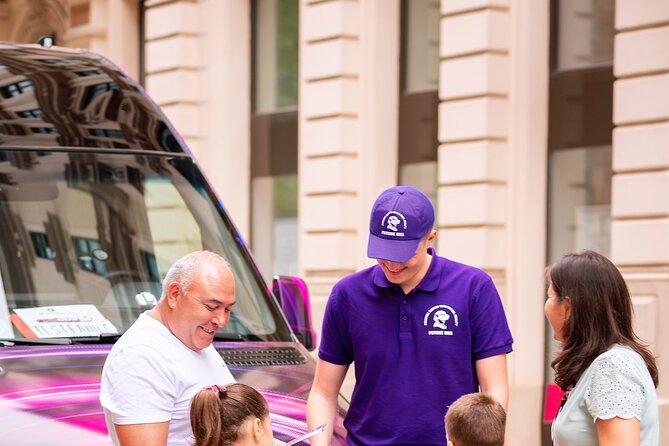
This Vienna highlights bus tour is interesting because it mixes classic sightseeing with virtual reality headsets. While the bus rolls along the Ringstraße, you swap into VR at key moments to “meet” famous Austrian rulers and see landmarks from a different angle.
I like that it compresses a lot of Vienna into about one hour without feeling like you are sprinting. I also like the practical touches, like air-conditioned transport and a mobile ticket you can keep on your phone.
One consideration: language support can be a moving target. The tour offers multiple language options, but if you are counting on a specific audio language, double-check what is active for your session so nothing gets lost in translation.
Key points to know before you ride
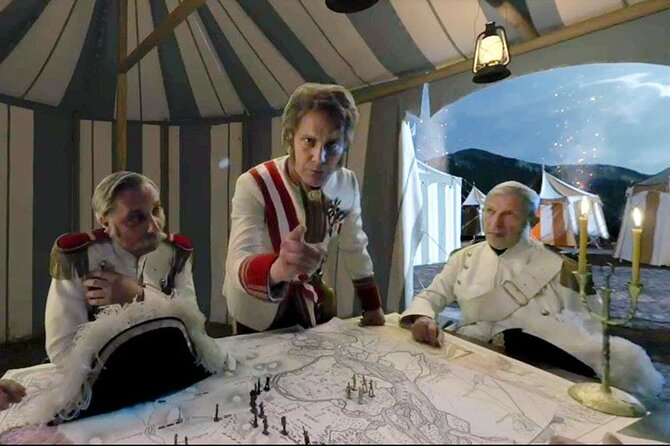
- Four VR headsets, four story moments tied to major landmarks across the inner city
- Fast orientation on the Ringstraße so you know what you are looking at later on foot
- Language choices, plus an audio guide offered in multiple languages (availability can vary)
- Comfort-focused timing with short, structured stops and air-conditioned transport
- Small group size (up to 18) which usually keeps things smoother at boarding and headset changes
- Easy start at Operngasse 4 near Albertinaplatz and the State Opera area
Why this one-hour Vienna bus tour feels like a time machine
If you want a quick feel for Vienna, this format makes sense. You get the normal highlights, but the VR stops act like built-in context. Instead of just seeing a palace façade or church exterior, you get a guided scene tied to the location, with audio narration that runs alongside the visuals.
The best part is the balance. You are not stuck staring at a screen the whole time. You ride past real places, you look up at real architecture, and then you switch to VR for short, focused moments. That rhythm helps if Vienna landmarks are new to you and you want to place names and buildings in your head.
The time structure also matters. Each key viewing moment is short, roughly 10 minutes, which makes the tour work even if your schedule is packed.
Other things people book around Vienna:
- Vienna: Vivaldi’s Four Seasons Concert in Karlskirche
★ 4.7 · 14,951 reviews - Vienna: Schönbrunn Palace & Gardens Skip-the-Line Tour
★ 4.7 · 7,739 reviews - Vienna: Light of Creation Votive Church Immersive Light Show
★ 4.8 · 6,779 reviews
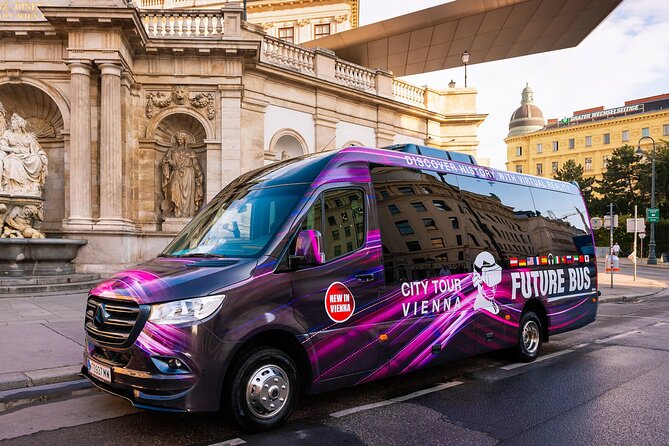
Meeting at Operngasse 4, then settling in for the air-conditioned ride
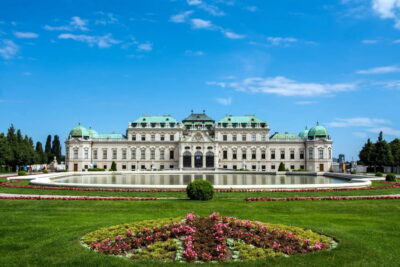
You meet at Operngasse 4, right by Albertinaplatz in Vienna’s inner city. This is convenient because it keeps you close to a cluster of big sights, including the State Opera area. You do not have to waste time getting to some far-flung pick-up point.
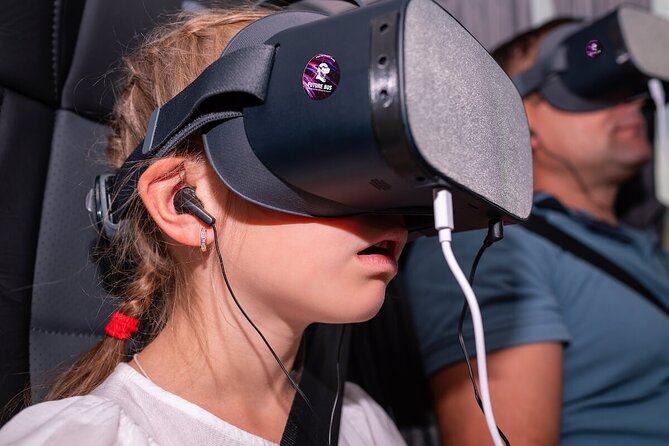
At the start, you receive instructions tied to the virtual reality experience before you head out. That matters because VR works best when you understand when to put the headset on, what the narration will cover, and when you should stay ready to move on.
The group size is capped at 18, and the transport is described as air-conditioned, which is a big deal in summer and still pleasant in cooler months. You also get a mobile ticket, so you can keep it simple and avoid hunting for paper.
Stop 1 at Heldenplatz: Hofburg palace views plus a VR introduction to power
The tour’s first major story stop is Heldenplatz, also known as Heroes Square. From here, you get a clear view linked to Hofburg palace. Even if you never go inside, it helps to see the approach from this perspective, since Hofburg is one of those places Vienna visitors keep hearing about.
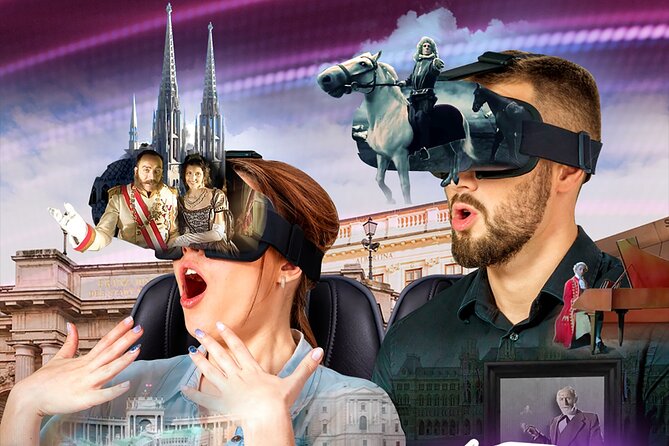
Then you switch into VR for the first of the ruler moments. The VR sequence is designed for you to “meet” three Austrian leaders, including two generals and an empress. The point is not to memorize a family tree. It is to connect political power to the actual place you are standing beside, so the names you hear later make more sense.
This is also where the tour does something clever: it uses the physical landmark as your anchor, while VR adds the human story. It is a fast way to turn a wide square into a scene with people, timing, and motives.
Maria Theresia Square and meeting her story in the open air
Right in front of Heldenplatz is Maria Theresia Square, with the prominent monument to Empress Maria Theresia. The tour uses both the audio guide and the VR setup to bring her story forward from the statue to the person behind it.
If you like Vienna best when you understand why certain rulers are treated like symbols, this stop is worth paying attention to. Maria Theresia is one of the names that shows up across the city, and seeing her monument early helps your brain build connections instead of collecting disconnected facts.
This is also a good moment to slow down for photos because you are tied to a landmark people recognize from guidebooks, even if you are only here briefly.
A completely different kind of day, same corner of Austria:
- Vienna Spanish Riding School Guided Tour
★ 4.7 · 6,765 reviews - Vienna: Classical Concert in the World-Famous Musikverein
★ 4.6 · 6,673 reviews - Vienna: Skip-the-Line Sisi Museum, Hofburg and Gardens Tour
★ 4.8 · 5,918 reviews - Vienna: Hallstatt & Alpine Peaks Day Trip with Skywalk Lift
★ 4.7 · 5,458 reviews
Rathaus and the Ringstraße loop: quick landmark spotting with real-world context
After Heldenplatz and the Maria Theresia moment, the bus heads toward Rathaus, the Vienna City Hall, along the Ringstraße corridor. Even though you are not walking a long museum route, this section helps you map Vienna’s “great street” approach.
Here is the practical value: the Ringstraße is where you can orient yourself quickly. You will see major civic and cultural buildings along the road, including the State Opera, the Parliament, Vienna City Hall, and the University of Vienna. The narration ties in specific details, including a note about an office location and a favored cafe across the street from it. That kind of detail is small, but it helps the city feel less like a postcard and more like a place where real people worked and lived.
There is also a VR angle in this stretch. The tour frames some buildings so you see them with your eyes first, then with VR for a different perspective. That two-step method is useful. When you return later to any one building, you will have a mental “before and after” of what you noticed the first time.
The second VR stop near the famous theatre and the Volksgarten vibe
As you continue along the Ringstraße area, you pass a cluster that includes the theatre across from the city hall and Volksgarten. The tour description places the stop right next to Vienna’s most famous theatre, with the Volksgarten and Cafe Landtmann nearby.
This is where the tour schedules the second virtual reality stop. The idea here seems to be to keep moving your attention across Vienna’s major public spaces: civic buildings, cultural institutions, then gardens and cafés. In real life, that is how Vienna feels, especially in the inner districts. The VR story moment adds a personal layer to the architecture.
If you are the type who gets more from cities when you can connect places to people, this stop format works well.
Votivkirche: why this Neo-Gothic church is easy to miss and fun to learn
The Votivkirche stop is described as one of Vienna’s beautiful, sometimes overlooked churches, and it comes with a specific hook: how its Neo-Gothic design connects to an assassination attempt story.
This is the third VR stop. The tour sets it up like a mini historical documentary, built for people who want history but do not want to spend hours reading before they get to the good stuff.
That assassination connection is also exactly the kind of detail that makes a church feel alive. You are not just looking at windows and stonework. You are learning why the building matters in the larger story of the city and its rulers.
Practical advice: even though the stop is short, take a moment to look at the church exterior before the headset goes on. You will understand the VR framing better when you have the real shape in your head.
Museumsquartier pass-by and then back toward the State Opera area
After Votivkirche and the Ringstraße highlights, the route leaves the main road to pass additional areas, including Museumsquartier, which is described as a more modern, museum-focused zone.
This part is a “reset” section. You have seen several heavy hitters in quick succession, and now the route shifts to show you Vienna is not only palaces and grand civic buildings. Museumsquartier is a helpful visual cue for what comes next when you choose your own walking routes.
Finally, you head back toward Vienna’s State Opera area by Albertinaplatz, which brings you to the tour’s last VR moment.
Ending at the Vienna State Opera: emperor and wife plus a private virtual concert
The tour wraps up close to Albertinaplatz near Vienna’s State Opera. This is the fourth and last virtual reality stop.
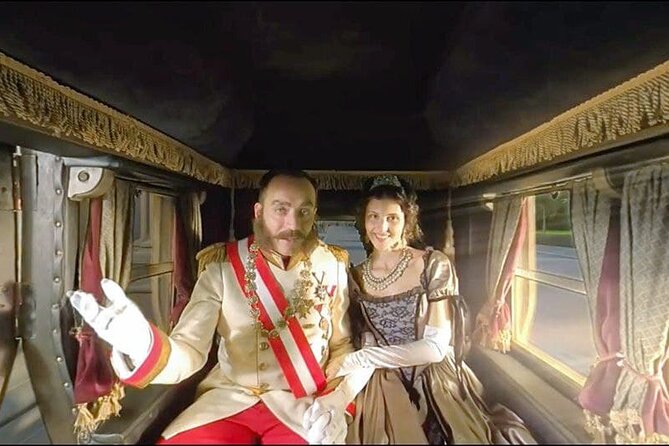
In VR, you meet an iconic emperor and his wife, and the experience includes a private virtual concert inside the opera house. Even if you are not an opera devotee, this ending choice is smart. It takes a world-class location and pairs it with something emotional, music-based, and memorable, which is a strong way to end a short tour.
The fact that the tour returns to the same general meeting area also helps. You can step off and continue exploring nearby on foot without complicated transfers.
Price and value: what you’re really paying for at about $32
At $32.10 per person for about one hour, you are paying for three things working together:
First, you are paying for transport in a comfortable, air-conditioned shuttle with a tight route through central Vienna. That saves you time, and time is usually the most expensive part of city visits.
Second, you are paying for structured storytelling via an audio guide in multiple languages and short VR segments tied to specific places. The VR pieces are not random. They are scheduled at landmark points, which makes the experience feel guided rather than like a tech demo.
Third, you are paying for convenience: mobile ticket and a starting point near major landmarks. It is designed to be easy to fit into a day even if you do not have a lot of planning time.
Compared with doing everything on foot, this tour can be a good deal if you want a fast sampler. If you already know Vienna well and you want long walks and museum time, you might prefer a slower, self-guided plan. But if you want a guided orientation plus entertainment, the price can feel fair for what it delivers.
Booking tip: the tour is on average booked 34 days in advance. If you are traveling in high season or a busy week, booking earlier can help you avoid limited availability.
The VR format is the main event, so check these practical details
The VR headset is used at four stops, and each VR moment is supported by an audio guide. That means the experience is not just visual. It is designed to be tied to narration and the story of rulers and historical scenes.
The strongest feedback theme is that the VR approach is genuinely fun and unusual, and that it helped people see monuments in a more three-dimensional, “in the moment” way. One person even described it as a great way to bring history to life with a documentary-style storytelling feel.
At the same time, one caution showed up clearly: audio language can be tricky. One booking was made expecting Japanese audio, but at the start, only German and English were offered. So if Japanese is important to you, treat it as a priority to confirm before the headset goes on, not after.
Also, because stops are short, you cannot expect deep lingering at each site. If your ideal city day is “slow coffee, long photo breaks, and museum entrances,” you will need extra time before or after this tour to do Vienna justice.
Who this tour fits best
This tour is a strong match for you if:
- You want a one-hour highlights plan that shows where key sights are located.
- You like history presented through scenes, not just dates and plaques.
- You enjoy tech that supports learning, not tech that distracts.
It is also a good fit if you are traveling with mixed interests. The bus ride keeps it easy, the audio helps, and the VR gives a different kind of engagement.
It might be less ideal if:
- You need a specific audio language and cannot risk it being unavailable.
- You want long walking time at churches, squares, and buildings.
Should you book Future Bus Tours Vienna highlights with VR
Yes, I would book it if you want a fun, fast way to get your bearings in central Vienna and you like the idea of short VR story stops at major landmarks. The combination of comfort, small group size, and four VR moments makes it a good value for a quick day.
But do this one homework item. When you book, pay attention to the language options you can select, and confirm that your session supports the audio language you expect. If language is sorted, this tour can turn a handful of famous locations into something you remember, not just something you pass by.
FAQ
How long is the Vienna highlights bus tour with virtual reality?
The tour lasts about 1 hour.
Where does the tour start, and does it return to the start?
It starts at Operngasse 4, 1010 Wien, Austria, and the activity ends back at the meeting point.
Is the transport air-conditioned, and is there a group size limit?
Yes, the transportation is described as air-conditioned, and the tour has a maximum of 18 travelers.
How often do you use the VR headset?
You use the VR headset at four stops during the tour.
What languages are available?
You can choose from nine tour languages, and the audio guide is available in seven languages.
What is the price, and is it a mobile ticket?
The price is $32.10 per person, and the tour uses a mobile ticket.
What if plans change, can you cancel?
You can cancel for a full refund up to 24 hours in advance of the experience start time.
Recently reviewed around Vienna
- Vienna Private Full Day Tour – Tickets to Schönbrunn & Lunch★ 5.0 · 3 reviews
- Vienna: Private Half-Day Sightseeing Tour★ 4.1 · 9 reviews
- Vienna: Old Town Walking Tour with a Local Guide★ 4.6 · 52 reviews
- Vienna Portrait Experience: Exclusive Vienna Photo Shoot★ 5.0 · 7 reviews
- Vienna: Private 3-Hour City Highlights Van Tour★ 4.3 · 6 reviews
- Vienna: Old Town Highlights Private or Group Walking Tour★ 4.6 · 66 reviews
- Vienna Nightlife: Food, Wine, Cocktails and Rooftop Bar Tour★ 4.9 · 17 reviews
- Vienna: Old Town Professional Photowalk★ 4.7 · 33 reviews
Tours, side by side.
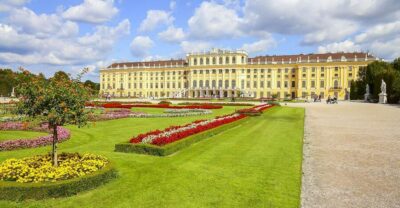
Schönbrunn Palace & Gardens Skip-the-Line Tour
Read our review →

Skip-the-Line Sisi Museum, Hofburg and Gardens Tour
Read our review →
Skip-the-Line Schönbrunn Palace & Gardens Tour
Read our review →
Guided Walking Tour of City Center Highlights
Read our review →
Hop-On Hop-Off Sightseeing Bus Tour in 19 Languages
Read our review →