
Appraised · VIENNA WALKING TOURS
Vienna: Walking Tour of the Historic Ringstrasse
Vienna’s Ringstrasse is interesting because it was planned like a grand public stage, then built into the kind of architecture that makes you pause every few steps. I really like how this walking tour keeps your eyes moving, with 19th-century buildings plus short story breaks that explain what you are looking at. It is a great way to understand why these places feel so dramatic in real life.
Two things I especially enjoy: the guided focus on details you might miss on your own, and the way the route weaves the wealthy side of Vienna into the lives of everyone else who was pulled into the city’s makeover. The only caution is time. At 2 hours, the tour can feel like a curated hit list rather than an ultra-deep course for people who want maximum depth on every building.
Quick highlights
- Ringstrasse planning, from the demolition of city walls to a boulevard lined with trees and pedestrian paths
- Palais stories, including the rich Jewish banker family connected to Palais Ephrusi and its fate as described in The Hare with the Amber Eyes
- Votive Church and University of Vienna, seen in the same walking flow so the city’s culture and power feel connected
- Gardens with statues and flower arrangements, where you get a breather instead of just walking straight through
- City Hall, Burgtheater, Parliament, Heldenplatz, plus major museum and park areas along the way
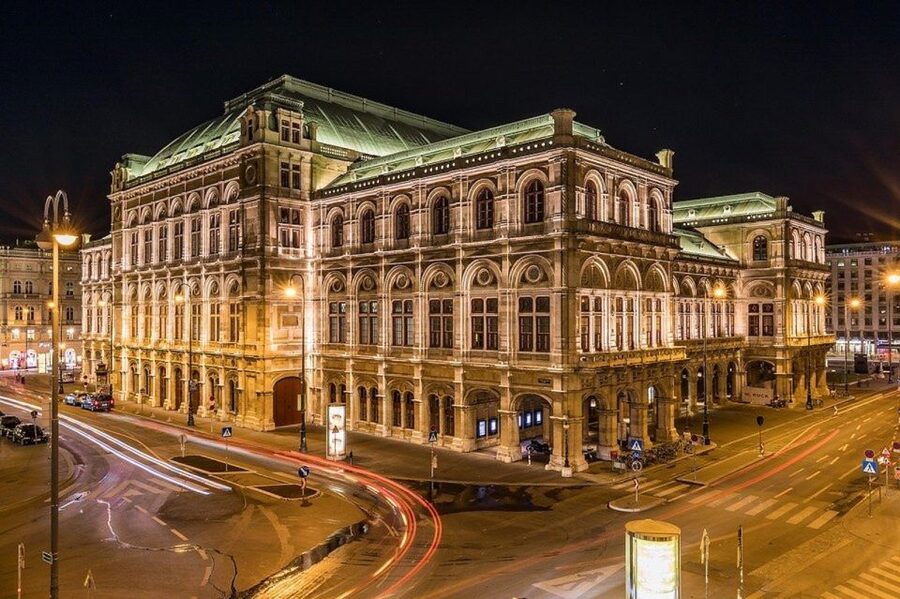
- Finish by the Opera House, so the whole loop feels like a proper tour conclusion
Why Vienna’s Ringstrasse feels different from other “old city” walks
Most historic districts are leftovers. The Ringstrasse is a project. About 150 years ago, Emperor Franz Josef ordered the demolition of the city walls and used the space to create a carefully designed ensemble of civic life. You still feel that planning energy on foot, because the boulevard is wide, leafy, and structured, with spaces made for carriages, riders, and pedestrians.
That mix matters for you as a visitor. It means you are not only chasing pretty facades. You are seeing a 19th-century idea of how a modern city should look and function: opera, theaters, museums, universities, the Academy of Fine Arts, parliament, and city hall all on one grand arc. Even if you do not memorize dates, the logic clicks as the buildings roll by.
I also appreciate that this tour leans into the human side of the architecture. The palaces are oversized, yes, often commissioned by industrialists and bankers who gained titles through the new development. But the story does not stop there. Poor people also came looking for work, and they worked under incredibly tough conditions. That contrast gives the stroll weight.
More walking tours in Vienna:
- Vienna: Guided Walking Tour of City Center Highlights
★ 4.7 · 4,989 reviews - Vienna: Vienna Central Cemetery Guided Walking Tour
★ 4.8 · 3,307 reviews - Vienna: Guided Walking Tour of City Highlights & Hidden Gems
★ 4.9 · 2,180 reviews
Starting at Liebenberg-Denkmal, then getting your bearings fast
The meeting point is Liebenberg-Denkmal at Mölker Bastei 8, 1010 Wien. Plan to arrive 10 minutes early so you can get oriented before the group starts.
From here, the tour’s rhythm becomes clear. Instead of rushing from one photo spot to another, the guide anchors you. You get background on what you are about to see, then you look again, this time with better context. In guides I trust, that is the difference between seeing buildings and really understanding why they look the way they do.
Since it is a private group, the pacing feels natural. You are not forced into a fast shuffle while strangers talk over the guide. Also, the guide works in Polish, German, and English, so you can expect the explanation to be delivered clearly in your chosen language.
The Ring’s big idea: walls fall, a city boulevard rises
You will hear how Vienna’s transformation was not just construction, it was an intentional redesign of public space. Emperor Franz Josef’s vision turned the old defensive perimeter into a showcase for culture and governance.
As the walk goes on, you can connect the dots. The wide boulevard lined with trees is not just decoration. It supports the parade-like quality of the route, and the special paths reflect how people moved through the city at the time. Carriages and riders had their lanes, while pedestrians got their own space, which shaped how people experienced the “new Vienna” as a daily ritual.
This is where I think the tour gives real value. You stop treating the Ringstrasse like a random gallery of big buildings. You start seeing it as a system, with architecture and city planning tied to wealth, power, and work.
Palais Ephrusi and the story of wealth, titles, and a complicated fate
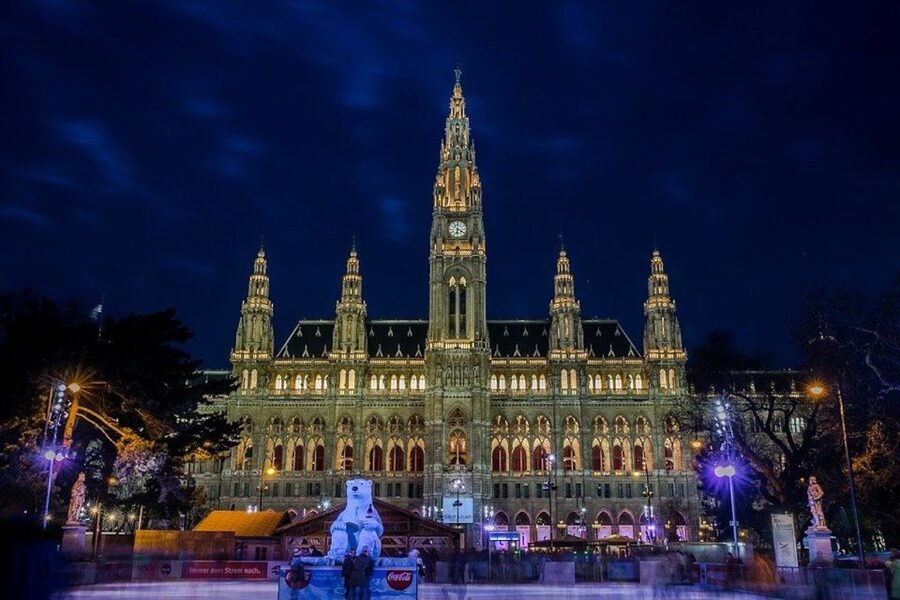
One of the most memorable stops is Palais Ephrusi. This is the kind of place where you feel the effort put into every surface. It was commissioned by a rich Jewish banker family, and the tour connects their fate to The Hare with the Amber Eyes.
Even if you have not read the book, you will likely find this part of the tour hits harder than the purely aesthetic bits. The Ringstrasse palaces often come with a fairy-tale aura in travel photos. Here, you get reminders that fortune did not protect people from major historical turns.
I love the way the guide frames the architecture as something tied to real lives. Francoise’s feedback nailed what I also look for: pointing out sites you might otherwise overlook, plus sharing small stories about the owners of these palaces. That storytelling approach makes your photos more meaningful later.
More history tours in Vienna:
- Vienna: Time Travel and Magic Vienna History Tour
★ 4.6 · 3,879 reviews - Vienna: World War II Historical Walking Tour
★ 4.8 · 1,772 reviews - Vienna Historic Center Small Group Walking Tour
★ 5.0 · 1,746 reviews - Time Travel-Magic Vienna History Tour Ticket
★ 4.5 · 1,099 reviews
Votive Church: a landmark that works as a visual turning point
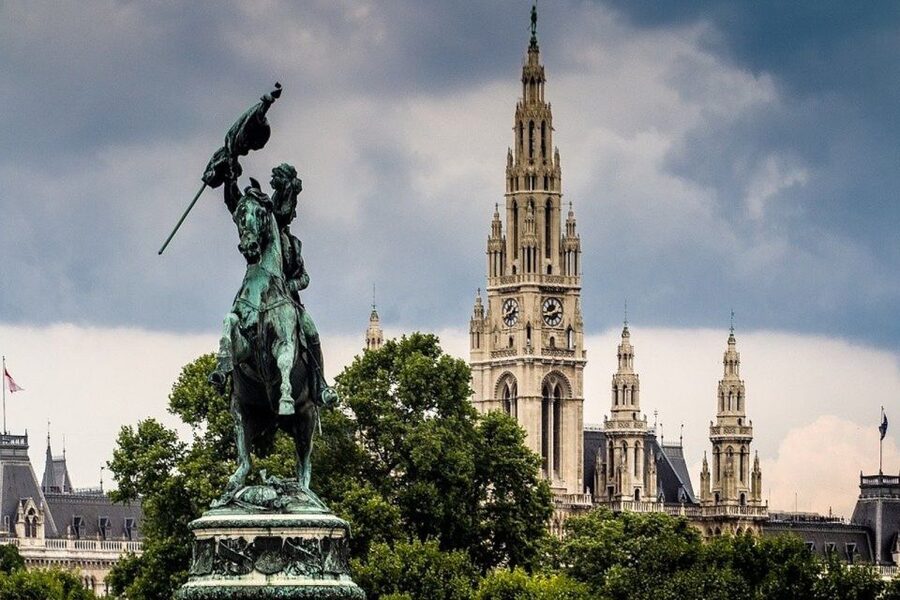
You will also see the Votive Church, one of the most striking religious buildings along the Ring. On a walk like this, churches can be tricky, because they can feel like one more stop in the middle of a long list of grand structures.
What makes it different here is the way the route’s background adds context. You are not just looking at dramatic design. You are learning how different parts of Vienna represented public identity, spiritual life, and national pride within the same sweeping urban plan.
If you like your landmarks explained before you look, this is a good moment. You will get the kind of “stand closer, look up” guidance that helps you notice the combination of styles and the rich decoration the buildings are known for.
University of Vienna and the idea of culture as power
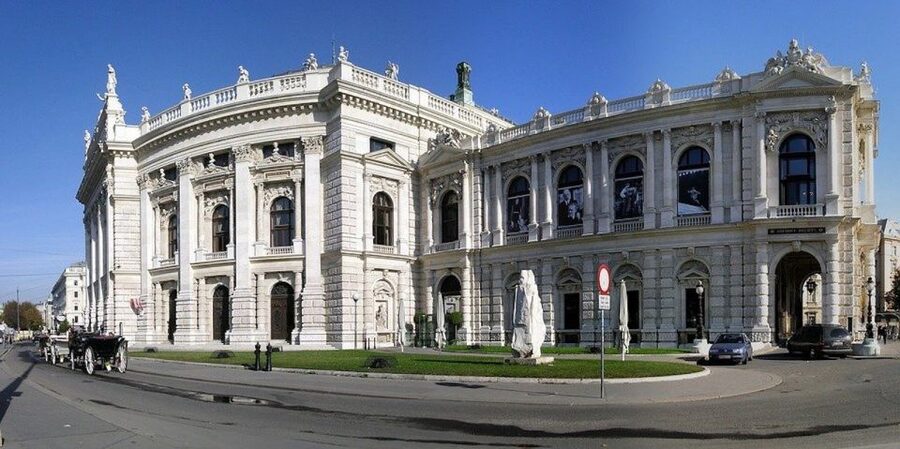
Next comes the main building of the University of Vienna. It is easy to walk past institutions like universities as if they are simply functional. On this tour, you see why they were part of the grand civic narrative of the Ringstrasse.
The guide’s background ties education and culture into the same 19th-century push that built theaters, museums, and political buildings. You start to understand the Ring as a full cast, where scholarship and arts have a place beside parliament and city hall.
This is also where the tour’s structure pays off. Because the stop order is built around connections, you end up seeing the city as linked, not as isolated monuments.
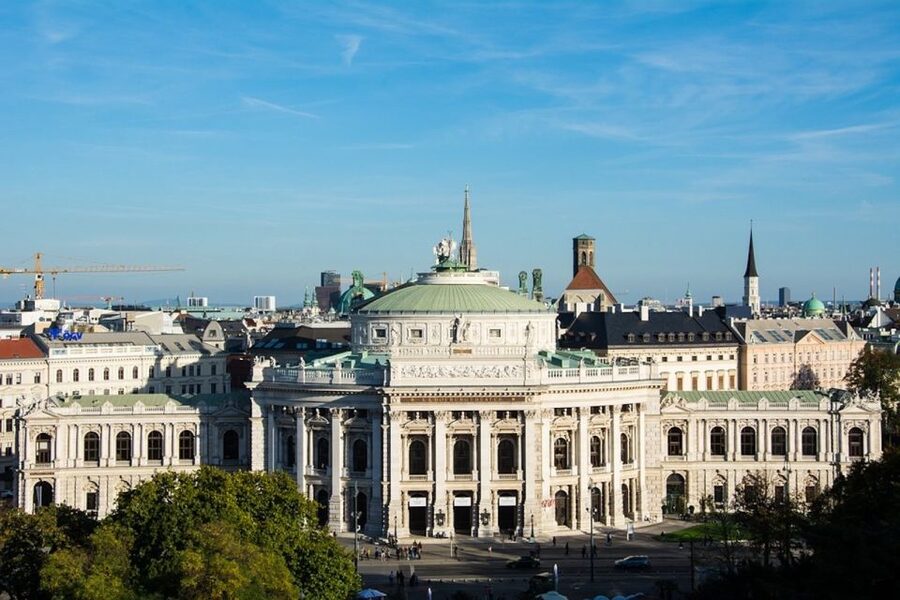
City Hall and Burgtheater: where government and performance share the same street
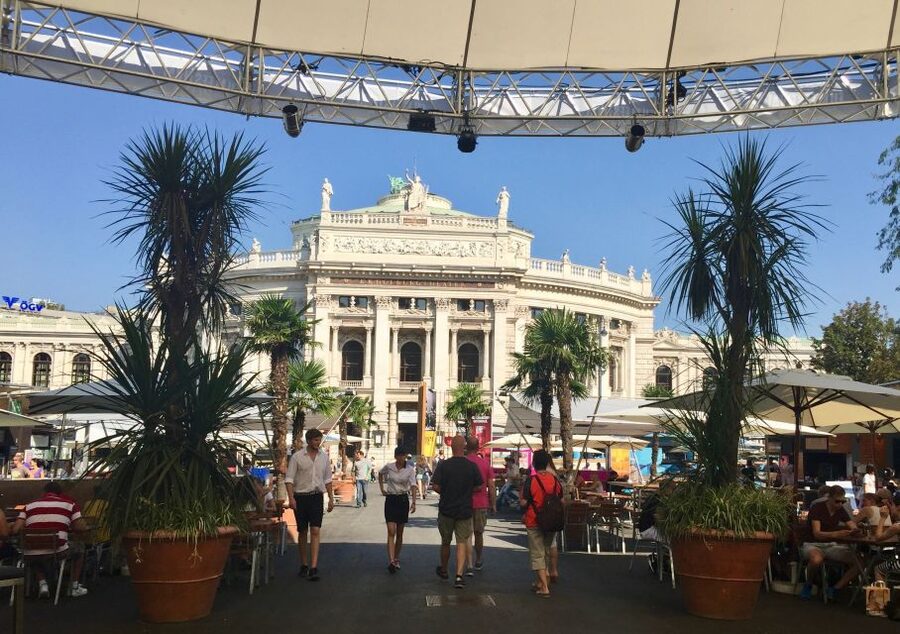
You will pass City Hall and Burgtheater. These stops are great for two reasons.
First, the architecture is big enough to feel theatrical. Second, the function matches the feeling. City Hall represents administration and civic authority. Burgtheater represents performance and public culture. Seeing both within the same walking arc helps you sense how Vienna wanted its public spaces to perform, day after day.
If you enjoy architecture but also like human context, this is a strong section. Claudia’s review mentioned how much the guide knew, how you could ask questions, and how reliable the experience felt even in rain. That is the kind of guide behavior that makes stops like these more than just window dressing.
Parliament, Heldenplatz, museums, and Volksgarten: the Ring as a whole system
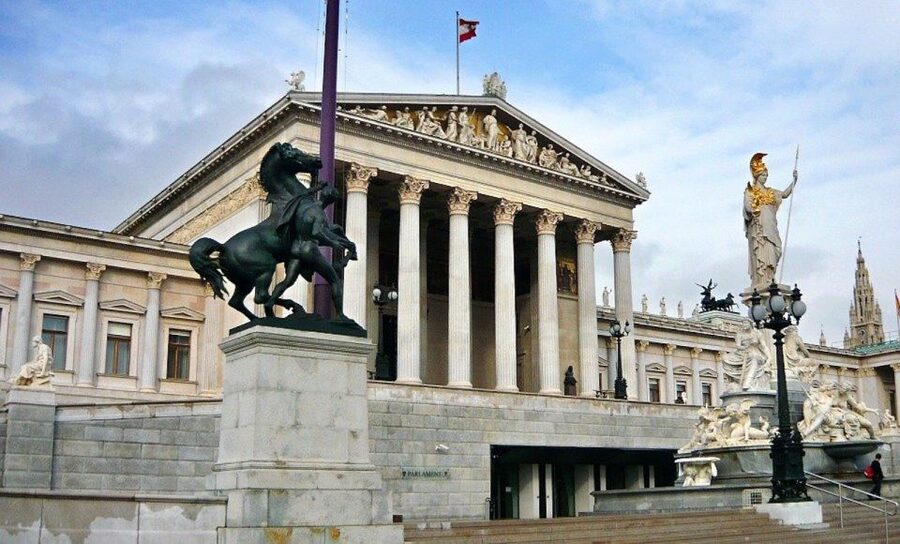
A big reason this tour works is that it does not treat the Ringstrasse like a string of unrelated icons. It builds a broader picture as you move toward the more open, symbolic areas like Heldenplatz, plus major areas that connect into the museum district and Volksgarten.
At this stage, the walk becomes more about contrasts. You still get the overhwelming 19th-century architecture and rich decoration. But you also see how the city creates space to breathe, with garden breaks featuring statues and marvelous flower arrangements.
Those breaks matter when you are traveling. You get time to regroup, and you get a visual reset between concentrated architecture blocks. You also have a chance to look at smaller elements in a calmer setting, where details land more clearly.
Statuary along the route: Liebenberg-Denkmal and Pallas Athene
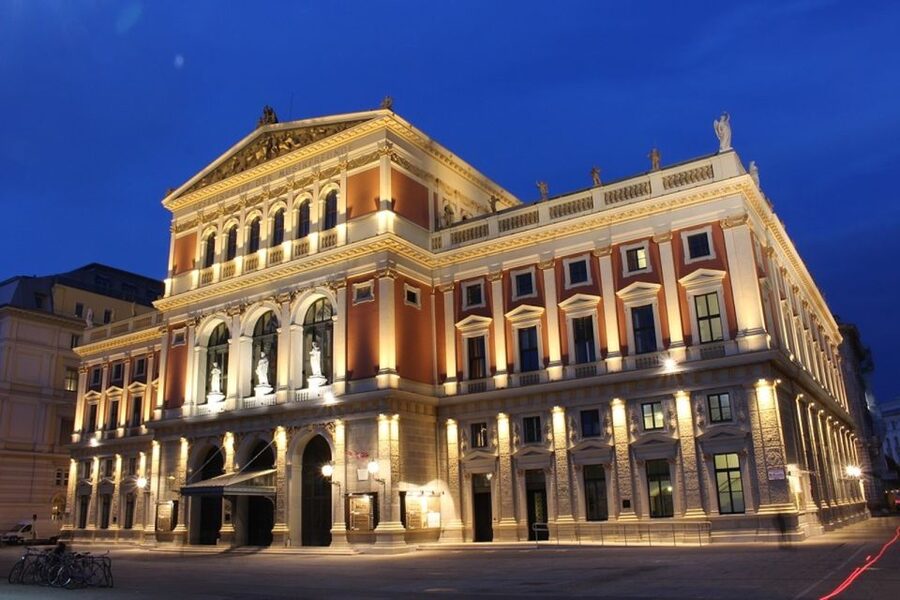
You will also encounter statues such as the mayor Liebenberg and Pallas Athene. Statuary can be easy to skip if you think you already know the vibe of old statues.
But on a tour like this, you learn to read them like clues. They fit the Ring’s idea of public identity. Who gets honored, what themes get emphasized, and how myth or civic leadership gets translated into stone.
Starting at Liebenberg-Denkmal makes this extra satisfying. You get a sense of continuity between where the tour begins and the larger symbolic world you walk into.
Pauses in gardens: why those breaks improve the tour, not just the walking
The tour includes short breaks in spacious gardens. You get to enjoy flower arrangements and statues in a setting that is calmer than the boulevard.
From a value perspective, I like these pauses because they do not turn the tour into a long rest. They keep the energy up while giving your brain a place to sort what it just saw. Also, gardens are where facial expressions on buildings often become clearer. You can stand back, look up, and then return to the street with fresh eyes.
It also helps for weather. Claudia’s review specifically called out how the guide kept the tour engaging despite rain. Even if you do not love cold or wet days, a guide who manages the pace and the stops can make the experience feel controlled instead of stressful.
Value and price: is $353 per group worth it for 2 hours?
The price is listed as $353 per group, up to 8 people, for a duration of about 2 hours. The big value factor is private group format. If you are traveling with even a few people, the cost per person can drop fast compared to per-person tours.
You are paying for two things you cannot easily DIY on your own: a live guide to connect architecture and history into a story, and a route designed to hit the most representative parts of the Ring. The tour also focuses on background and intriguing stories, plus practical “look here” guidance that turns landmark spotting into actual understanding.
For solo travelers, it can still be good value if you want a guided experience rather than a self-guided checklist. Just know the tour is 2 hours, so it is designed for broad understanding, not deep research on every building.
One note for expectations: one review mentioned that the content felt thin. That is a reminder that a short 2-hour tour will always compress details. If you crave depth, be prepared to ask questions, and focus your attention on the specific stops that matter most to you.
Logistics that matter on the day (so you can enjoy the walk)
This is a walking tour, so come with realistic expectations for time and shoes. You will want a public transport ticket, because a tram ticket is not included. The tour ends next to the Opera House, which is convenient if you want to keep exploring afterward on foot.
Because the tour is wheelchair accessible, it is set up with that in mind. You still should plan for uneven historic city surfaces, but you will not be shut out based on mobility needs.
Should you book this Ringstrasse Historic Walk?
Book it if you want the Ringstrasse explained in a story-driven way. This is the type of tour that helps you connect Emperor Franz Josef’s ambitious plan to what you see today, while also bringing in the more human angle, from wealthy palace patrons to the poor people who worked in harsh conditions.
I would also book it if you care about guidance that goes beyond basic sightseeing. The strongest reviews praise the guide’s ability to point out what you might miss, share small stories about palace owners, and keep the tour engaging even in rain. That kind of guiding changes how the city feels.
Skip or rethink if you are looking for a very deep, building-by-building academic lecture. At 2 hours, and given that one review found the content thin, it is better seen as a high-impact introduction to the Ring’s most representative section rather than a fully exhaustive study.
If your goal is to leave with clear mental pictures, smart context, and a route that flows naturally from Liebenberg-Denkmal to the Opera House, this is a solid choice.
Recently reviewed around Vienna
- Vienna: Mozart, Beethoven, & Strauss Private Tour★ 5.0 · 4 reviews
- Vienna: Musical Tickets ROCK ME AMADEUS – THE FALCO MUSICAL★ 4.8 · 15 reviews
- Vienna: Mozart Concert with Dinner and Carriage Ride★ 4.8 · 25 reviews
- Private Melk Hallstatt, Salzburg tour from Vienna★ 4.9 · 22 reviews
- Vienna: ‘Armenia In The Heart Of Austria’ Tour★ 5.0 · 6 reviews
- Vienna: Luxury Vintage Fashion Walking Tour★ 3.4 · 8 reviews
- Vienna: Kunsthistorisches Museum Guided Tour incl. admission★ 4.9 · 32 reviews
- Vienna: Mozart Private Guided Tour★ 5.0 · 4 reviews
Vienna Walking Tours, side by side.

Guided Walking Tour of City Center Highlights
Read our review →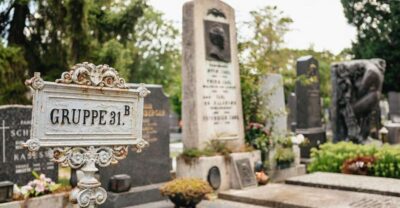
Guided Walking Tour of City Highlights & Hidden Gems
Read our review →
Vienna Historic Center Small Group Walking Tour
Read our review →
Lists this tour appears in