
Appraised · VIENNA WALKING TOURS
Walking Tours for Time Travelers
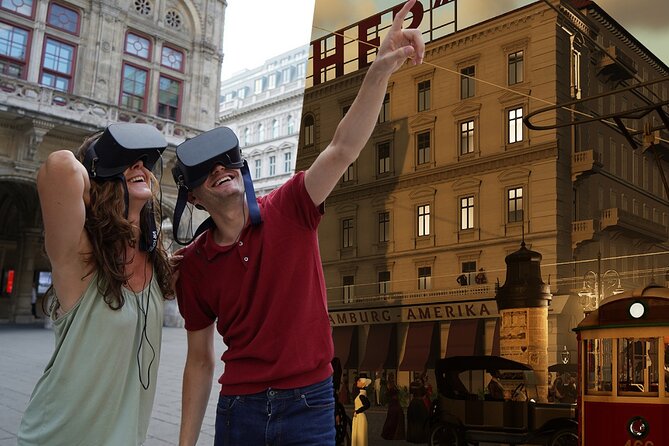
Vienna does something clever with this tour, mixing a classic Old Town stroll with 360 VR scenes at big landmarks. I like the way it uses the streets you already came to see, then adds a tech layer so the city’s timeline feels easy to follow. I also like the English audio guide that explains what you’re looking at, and why it matters as the city changes.
The tour keeps group size small, capped at seven people, so you’re not getting squeezed into a mass shuffle. One possible drawback to think about first: the experience is not suitable for people with epilepsy, and the VR component may be a non-starter for some folks.
Key things I’d lock in before you go
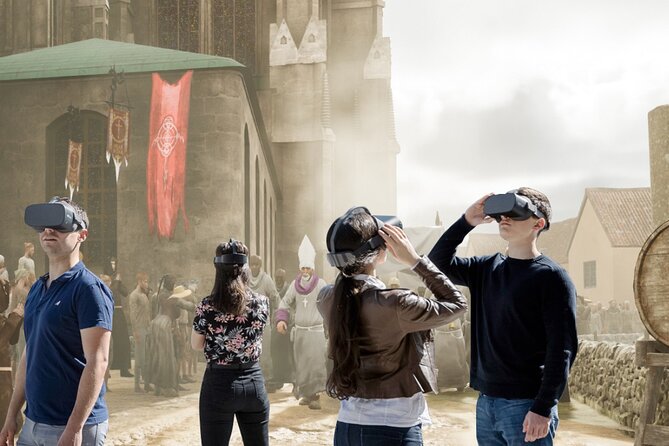
- VR 360-degree scenes at St. Stephen’s Cathedral, Graben, Hofburg, Opera, and Stephansplatz
- English audio guidance that walks you through Vienna’s evolution as you move
- Max seven people, which makes it calmer than most city tours
- A walk of about 2 to 3 km over roughly 2 hours, so it’s doable for most people
- Mobile ticket and a start and end point in the center, near public transport
VR Time Travel in Vienna Old Town, in a Small Group
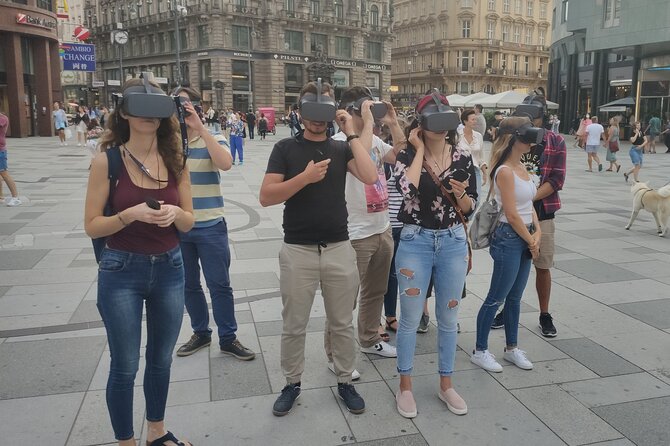
This is a walking tour designed for people who like a plan, but still want the street-level feel of Vienna. You’re on foot through the Old Town, with VR glasses at key moments, so you get the real buildings in front of you, then a 360-degree view of how things may have looked during different stages of the city.
The small group size, up to seven people, matters more than it sounds. When everyone can hear the audio clearly and the pace stays human, the story connection actually lands. You also get time to look at details for yourself, like the facades, shopfront energy, and the way each street transitions to the next.
If you’ve never tried VR before, don’t worry. The format is built around watching history unfold right where you are, not around learning complicated tech. You’ll spend the tour looking at the city, then popping into the VR scenes at the landmarks, which feels more natural than “tech first” tours.
More walking tours in Vienna:
- Vienna: Guided Walking Tour of City Center Highlights
★ 4.7 · 4,989 reviews - Vienna: Vienna Central Cemetery Guided Walking Tour
★ 4.8 · 3,307 reviews - Vienna: Guided Walking Tour of City Highlights & Hidden Gems
★ 4.9 · 2,180 reviews
Price, Time, and What You Actually Get for $47.17
At $47.17 per person for about two hours, you’re paying for two things that normally cost separately: a guided walk plus VR content. The value comes from how tightly they’re connected. You’re not watching a standalone video show, then leaving. You walk between the points, and the audio narration plus VR scenes give context to what you’re seeing.
Let’s talk time. Around two hours and roughly 2 to 3 km is a comfortable “morning coffee walk” distance. You’re not signing up for an all-day hike. And you still end in a major hub, Stephansplatz, which makes it easy to keep exploring after the tour.
Booking seems fairly popular. The average booking window is about 24 days in advance, which tells me you should reserve early if your dates are fixed. In a city like Vienna, the Old Town stays busy, and small groups are easier to sell out.
Is it worth it if you’re not sure about VR? I’d say try it if you’re curious and you can tolerate wearable tech for short bursts. The audio guide also works on its own, and the VR is the bonus that turns landmarks into 360-degree “what used to be here” scenes.
Meeting at Johannesgasse 21, Then Walking 2 to 3 km to Stephansplatz
You start at Johannesgasse 21 in Vienna’s center, then you finish at Stephansplatz. That start-to-finish setup is practical because it drops you right back in the heart of the action. It also means you’re not spending time backtracking to where you began.
You’ll use a mobile ticket, and the meeting point is near public transportation. That’s a big plus if you’re pairing this with museums or coffee stops later. It’s also helpful for timing, because you’re not dependent on finding a far-off location by foot after a long day.
The pace is built for a typical walking tour, not for hardcore speed. Expect a gentle rhythm with enough time for looking and VR setup at the main stops. If you’re the kind of person who hates being hurried, the max-seven group size helps a lot.
One thing to consider: because it includes walking, good weather matters. If the weather is poor, the experience can be canceled and you’d be offered a different date or a full refund. So if you’re visiting in shoulder season, bring a flexible mindset.
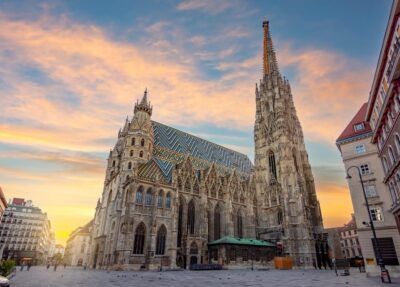
St. Stephen’s Cathedral VR Moment, and the Story Starts
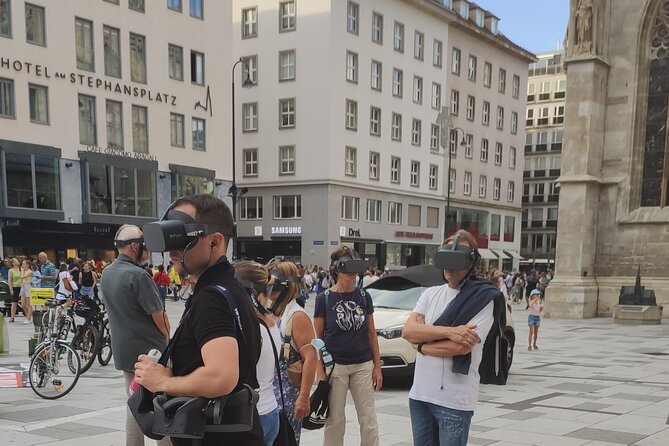
St. Stephen’s Cathedral is where the tour’s “time travel” idea clicks. You arrive at the building in the real world, then the VR scene at that point is designed to show history unfolding around a landmark you already recognize.
This stop works on two levels. First, you get your bearings in Vienna’s most famous church area, so the rest of the route makes sense. Second, the audio guide ties what you’re seeing to the city’s changes over time, instead of treating the cathedral like a single photo opportunity.
What makes this stop especially good is the pairing: you’re looking at stone and street life, then you get a 360-degree 3D animation layer. That contrast helps you understand the difference between the Vienna you can touch today and the Vienna the audio is describing.
Possible drawback: cathedral area can be crowded depending on the time of day. If you’re sensitive to crowds or you prefer quieter sightseeing windows, plan to arrive with calm expectations. The tour limits group size, but the surrounding square can still be busy.
A completely different kind of day, same corner of Austria:
- Vienna: Vivaldi’s Four Seasons Concert in Karlskirche
★ 4.7 · 14,951 reviews - Vienna: Schönbrunn Palace & Gardens Skip-the-Line Tour
★ 4.7 · 7,739 reviews - Vienna: Light of Creation Votive Church Immersive Light Show
★ 4.8 · 6,779 reviews - Vienna Spanish Riding School Guided Tour
★ 4.7 · 6,765 reviews
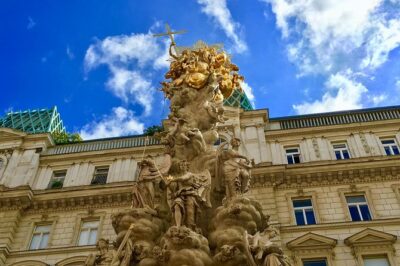
Graben, a Classic Shopping Street With VR-Helped Perspective
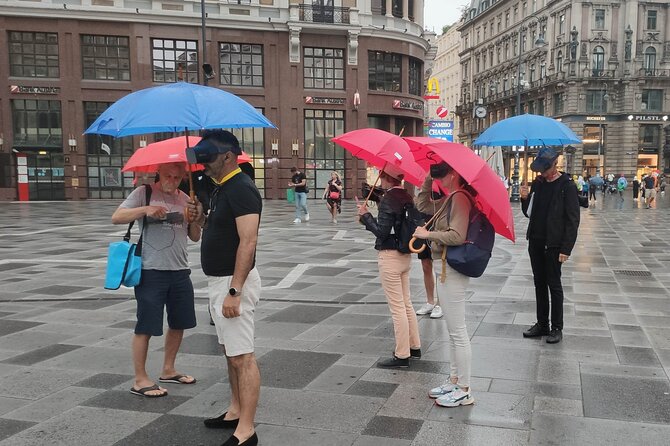
Next up is the Graben, one of those central streets where you can feel Vienna’s rhythm shift from landmark scale to everyday life. The audio guide continues through Vienna’s evolution, and the VR scene is designed to put earlier city moments into the same visual frame you’re walking through now.
I like Graben for how it naturally connects story to street. Even without VR, it’s a street you can “read” through architecture, storefront energy, and the way the crowd flows. With VR, you get a clearer sense of how the street might have operated during different eras.
This is also a good spot for first-time VR users. You’re already in motion, and the story keeps moving with you. You don’t feel stuck in one location for a long time.
One consideration: if you’re prone to motion discomfort, pay attention to how you feel during the VR moments while you’re still in a walking-tour headspace. The VR is part of the experience, but you’re still outdoors in a city street setting.
Hofburg, Where the Audio Shifts Toward Imperial Vienna
Hofburg is one of the stops where the tour’s theme becomes obvious. The audio guide talks you through different stages of Vienna’s evolution, and when you reach the imperial area near Hofburg, the narrative focus makes sense in a very practical way.
This is where the tour can be more than sightseeing. You’re not only seeing a landmark cluster, you’re learning how Vienna’s power and identity shaped what you walk past. The VR at this point helps you connect the street-level reality with the bigger picture of how the city functioned in earlier times.
From a value perspective, this stop is important because it’s a bridge. It connects what you saw at St. Stephen’s, a landmark that anchors older Vienna, to the more palace-and-institutions feeling of Hofburg. That continuity is what keeps the tour from feeling like five unrelated photo stops.
Drawback to consider: Hofburg area can also attract tourists and groups. The tour’s max seven-person cap helps, but if you’re picky about crowd-free walking, pick a calmer time of day and give yourself a buffer for slowdowns.
Opera Area, VR 360 Scenes Meet Vienna’s Signature Grandeur
Then you move to the Opera area, another layer in the city’s identity. Even if you’re not a big opera person, this part of Vienna reads as “public face” and “big cultural signal.” The tour’s audio guide and VR scene pair well with that vibe because they turn a modern icon area into part of a longer timeline.
I like that the tour doesn’t just say “look at this famous building.” It guides you to notice relationships: how the city’s look and functions shift across time, and how those changes affect what you experience today.
The VR 360-degree component here is a strong payoff moment. It’s the kind of stop that makes you look up, look around, and realize the walking tour is giving you more than a list of landmarks. You’re getting a sense of transformation.
If you’re worried about VR, this is also a good litmus test. You’ll see whether you find the VR scenes entertaining and understandable, and whether the glasses feel comfortable enough for another stop or two.
Stephansplatz Finish, Ending in the City’s Easy-to-Explore Center
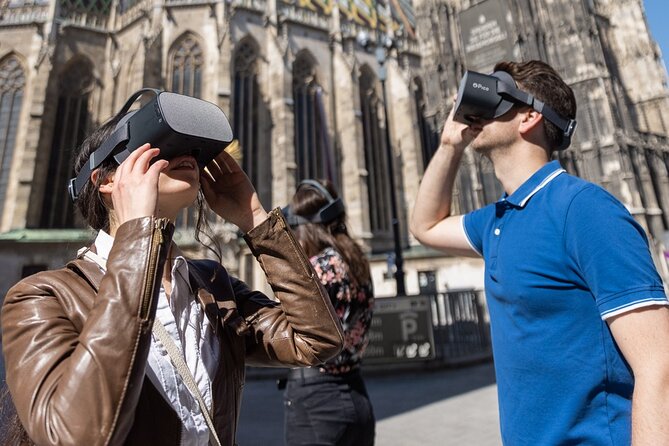
The tour ends at Stephansplatz, which is a smart landing spot. It’s central, it’s connected to other major sights, and it’s the kind of place where you can naturally keep going after your two-hour block.
Finishing at Stephansplatz also gives you a neat loop feeling. You start at Johannesgasse and move through a sequence of landmarks, then you land at a major square that’s easy to orient from. If you’ve got museums, cafes, or a tram ride next, you’ll appreciate that you’re not ending somewhere awkward.
This is a good moment to do a quick reset. Take off VR glasses, refocus on the present city, and compare what you saw in VR with what you’re seeing in reality. That contrast is where the tour’s “time traveler” idea becomes most satisfying.
Practical note: like many central squares, the area can be busy. The tour’s small group end helps you avoid getting stuck in a long line of people all at once.
Who This Tour Fits Best, and Who Should Skip It
This tour is a solid fit if you want a guided walk with built-in context, and you’re curious about technology without making it the whole trip. It’s also a good choice if you like structure. The route is focused, the stops are meaningful, and the audio keeps the narrative moving.
It’s designed for people who can participate in a walking tour, and it’s not aimed at young children. It’s not suitable for children below 10. Also, service animals are allowed, which is a helpful detail if you travel with an assistive companion.
Here’s the one serious “don’t skip this” point: it’s not suitable for people with epilepsy. If that applies to you, choose a different Vienna walking option without VR.
If you’re new to VR, this tour has an advantage: VR is used at specific points along the walk rather than forcing you to learn the system in a separate setting. I like that because it lowers the intimidation factor. You can just enjoy the story at the landmarks and treat the VR as a timed experience.
Should You Book Walking Tours for Time Travelers?
Book it if you want a small-group Old Town walk that mixes real landmarks with 360 VR at the exact spots you’re looking at. It’s also a good value if you like having an English audio guide that explains how Vienna changed over time, not just where things are.
Skip it if VR is a hard no for you, or if the VR component is medically not suitable. Also, be ready for outdoor walking and plan around weather, since good weather is required for the experience.
If you’re planning a tight Vienna itinerary and want one activity that gives you both “see it” and “understand it,” this is the kind of tour that can pull double duty. Reserve in advance, aim for comfortable walking shoes, and you’ll finish with a better sense of how Vienna became the city you see today.
FAQ
How long is the Vienna Old Town time travel walking tour?
It runs for about 2 hours.
What is the price per person?
The price is $47.17 per person.
Where does the tour start and where does it end?
The tour starts at Johannesgasse 21, 1010 Wien, Austria and ends at Stephansplatz, 1010 Wien, Austria.
Is the tour offered in English?
Yes, it is offered in English.
How many people are in a group?
The maximum group size is seven people.
Is it suitable for children?
It is not suitable for children below 10.
Is it suitable for people with epilepsy?
No, it is not suitable for people with epilepsy.
Are service animals allowed?
Yes, service animals are allowed.
Can I cancel for a full refund?
Yes. You can cancel for a full refund if you cancel at least 24 hours before the experience’s start time. It is offered a different date or a full refund if canceled due to poor weather.
Recently reviewed around Vienna
- Vienna: Mozart, Beethoven, & Strauss Private Tour★ 5.0 · 4 reviews
- Vienna: Musical Tickets ROCK ME AMADEUS – THE FALCO MUSICAL★ 4.8 · 15 reviews
- Vienna: Mozart Concert with Dinner and Carriage Ride★ 4.8 · 25 reviews
- Private Melk Hallstatt, Salzburg tour from Vienna★ 4.9 · 22 reviews
- Vienna: ‘Armenia In The Heart Of Austria’ Tour★ 5.0 · 6 reviews
- Vienna: Luxury Vintage Fashion Walking Tour★ 3.4 · 8 reviews
- Vienna: Kunsthistorisches Museum Guided Tour incl. admission★ 4.9 · 32 reviews
- Vienna: Mozart Private Guided Tour★ 5.0 · 4 reviews
Vienna Walking Tours, side by side.
Guided Walking Tour of City Center Highlights
Read our review →
Guided Walking Tour of City Highlights & Hidden Gems
Read our review →
Vienna Historic Center Small Group Walking Tour
Read our review →
Lists this tour appears in