
Appraised · VIENNA WALKING TOURS
Vienna Private Walking Tour including State Opera
Vienna is interesting because you can walk through it like a timeline, from Roman ruins to imperial palaces and down to the music that shaped the city. I especially like starting at the State Opera, because the building gives you instant context for how Vienna thinks about art and power. I also like how the route ties major eras together, Habsburg rule through the Second Republic, so the big history actually feels geographic.
The only drawback to consider is that the State Opera stop can be limited. Some people end up seeing the lobby more than a full opera-house interior experience, so it’s smart to clarify what inside access means for your group and language on the day.
Key things to know before you go
- State Opera focus first: The tour begins at the Vienna Court Opera era site, then connects it to major composers and directors.
- A clean historical through-line: Roman Vindobona, the Holy Roman Empire, Habsburg dominance, and the post-World War II Second Republic are all part of the story.
- You’ll hit major religious and imperial landmarks: Michaelerkirche and the Hofburg area help explain the monarchy beyond postcards.
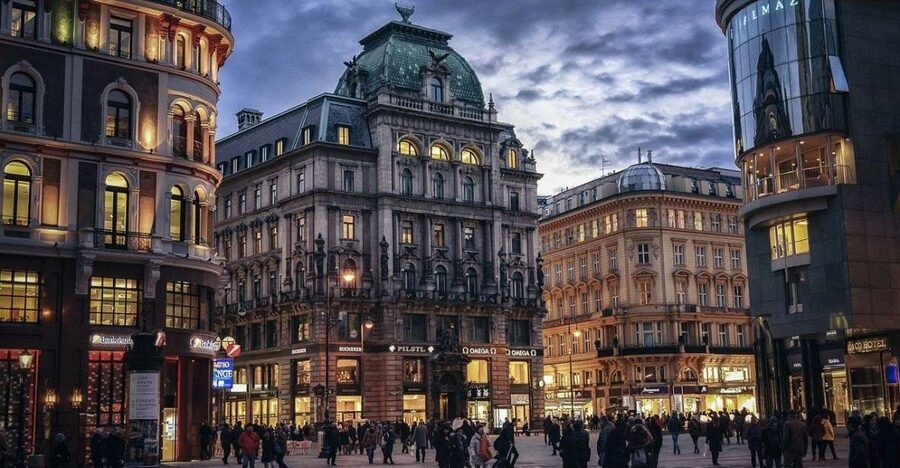
- Classic Vienna street scenes on foot: Der Graben, Peterskirche, and the path toward Stephansplatz keep the walk varied.
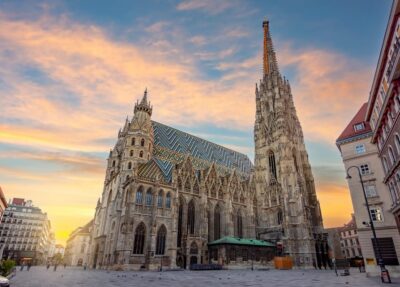
- Stephansdom is the visual finish: You end with the Roman-Gothic cathedral that dominates Vienna’s skyline.
- Opera-house expectations should be set early: Entrance fees are not included, and the depth of the Opera visit may vary.
A 3-hour Vienna power-walk with opera-house context
This is a private, guided walk that lasts about 3 hours, built for people who want history and music to connect. You meet in the city center near Stephansplatz 8A, then your guide leads you step by step through the layers of Vienna, from the earliest city footprint to the age of emperors and composers.
The value here is not just the list of landmarks. It’s how your guide uses those spots to explain why Vienna became Vienna, how power shaped art, and how 20th-century trauma changed the country’s self-image.
This is also the kind of tour where comfortable shoes really matter. You’ll be moving through central Vienna at a steady pace, and you will want to stand still at key viewpoints long enough to take in the architecture.
More walking tours in Vienna:
- Vienna: Guided Walking Tour of City Center Highlights
★ 4.7 · 4,989 reviews - Vienna: Vienna Central Cemetery Guided Walking Tour
★ 4.8 · 3,307 reviews - Vienna: Guided Walking Tour of City Highlights & Hidden Gems
★ 4.9 · 2,180 reviews
State Opera first stop: what you get inside
You start at the Vienna State Opera building, first known as the Vienna Court Opera in the 1860s. The name shifted in 1920, when the early Austrian Republic was forming, which is a small detail that makes the place feel less like a static monument.
From there, the tour connects what you see to what’s performed there. The tour highlights works such as La Traviata, La Clemenza di Tito, and Verdi’s Don Carlo, and it also references famous music leaders who worked in the house, including Gustav Mahler, Herbert von Karajan, and Claudio Abbado.
Here’s the practical part: the State Opera visit is included, but entrance fees are not included. And in real life, that often translates into a visit that may be limited to public areas like the lobby, depending on access rules and what your guide can arrange. Before you book, I recommend you ask what level of interior access your group should expect.
One more heads-up: if you’re paying attention to the tour title and assuming a full “opera-house tour,” you’ll want to confirm the depth. Some versions of opera-house experiences require separate ticketing, so it’s better to plan for that possibility than to be surprised on the spot.
Roman Vindobona to Habsburg rule: the walking timeline you can see
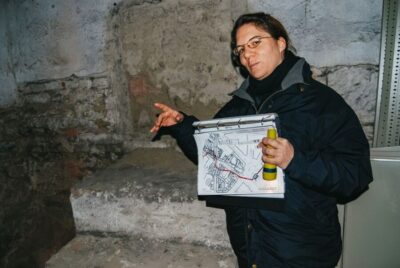
Vienna’s oldest roots are right under the surface, and this tour tries to make that visible rather than abstract. The route includes a look at Roman remains tied to Vindobona, the ancient Roman city that preceded the imperial Vienna most people picture.
Then the walk shifts into the era when Vienna became a power center for the Holy Roman Empire and later the Austro-Hungarian Empire. Your guide uses the monarchy’s buildings and institutions to explain why Vienna produced both political authority and serious cultural output.
The Habsburg story here isn’t treated like a simple family biography. It’s framed as a system that influenced where people prayed, where rulers lived, and which kinds of art were rewarded. That’s why so many stops feel like they belong together, even when the details change from Roman to medieval to imperial.
If you love big timelines, you’ll get your fix. If you prefer quieter, human-scale history, you can also enjoy it, because each era is explained through visible structures you can point at while you walk.
Hofburg, Michaelerkirche, and the monarchy’s street-level authority
After the Opera, the tour moves into the Hofburg area, including a look at the kind of imperial setting that kept the Habsburgs running for centuries. The key is that these aren’t just pretty facades. Your guide connects the buildings to the daily presence of power.
One standout stop in this zone is the Michaelerkirche, also called Michaelerkirche or St. Michael’s Church. It’s presented here as the official church of the emperors for years, which gives you a useful lens for understanding how the monarchy used religion as part of its public role.
You’ll also pass or reference the Hofburg itself, plus nearby cultural institutions such as the area linked with the Art History Museum. This matters because it shows Vienna’s habit of housing art and authority in the same neighborhood, not as separate worlds.
I like that the tour uses these places to explain the monarchy’s “why.” If you’ve ever wondered why Vienna feels so ceremonial, this section gives you the answer without needing a classroom.
A few more days out around Vienna worth comparing
- Vienna: Private Walking Tour with a Local Guide
★ 4.6 · 1,420 reviews - Vienna: Private Walking Tour with a Guide
★ 4.7 · 962 reviews - Vienna: Wine Tasting Experience in a Private Wine Cellar
★ 4.8 · 413 reviews - Private Day Tour Trip Salzburg Hallstatt and Melk from Vienna
★ 5.0 · 388 reviews
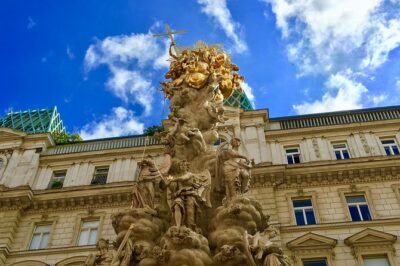
Der Graben and the medieval layer, including Richard Lionheart territory
Der Graben, also called the Graben, is one of those streets that makes Vienna feel older than the era people think of most. The walk treats it as dating back to the Roman Empire, which is a clever reminder that the city repeatedly reused and reshaped its own urban skeleton.
A fun connection included here is Richard Lionheart’s association with entering the city via the area. Even if you don’t become a medieval-history person overnight, that kind of anchor makes the street feel like it had a job beyond shopping.
You’ll also see the Peterskirche (St. Peter’s Church), with references placing it since the 4th century. That’s the sort of detail that can sound like trivia, until you realize why it’s useful: it tells you this is a city where multiple layers of belief and civic life overlap.
And you’ll move through the edges where medieval walls and older city structures show up in the story. The point isn’t to “spot ruins” like an archaeologist. It’s to understand that Vienna built itself on top of earlier Vienna.
Stephansplatz and Stephansdom: the skyline finish that clicks
The walk culminates at Stephansplatz, with Stephansdom as the big visual payoff. Vienna’s cathedral is described as one of the tallest churches in the world, and it’s known here as a majestic Roman-Gothic masterpiece.
This is the moment when the tour’s approach makes sense. After hearing about empires and political shifts, it’s satisfying to end at a building that still looks like it belongs at the center of civic identity.
If you want to take photos, do it here and give yourself time. The cathedral area rewards lingering, because you’ll see it from angles that feel different as you shift your position around the square.
Even if you’ve seen Stephansdom before, I’d still do the walk this way. The “finish at the center” design helps your brain store the earlier stops as context, not just separate dots.
World Wars and the Second Republic, explained in context
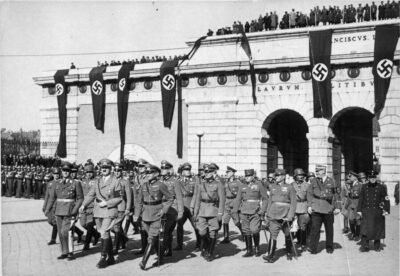
A walk like this can feel like it stops at crowns and composers, but this one explicitly includes the World Wars and the birth of the Second Republic. That’s important, because it separates Vienna’s story from the museum-only version.
The practical benefit for you is understanding how modern Austria frames its identity after catastrophe. The tour uses the shift from empire-era authority to post-war political life as a turning point, not just another historical “chapter title.”
This is also where tone matters. The tour includes sensitive history, so you should pay attention to how your guide handles it. In German-language feedback, a guide named Franziska Pfisker was criticized for problematic phrasing when discussing the Holocaust and camps. If your group wants a careful, respectful approach to these topics, I’d ask the operator how they handle Holocaust history during the tour, or plan to speak up if the language feels off.
Good guides can make heavy history clear and factual without turning it into shock value. You want clarity, not theatrics, especially when the subject matter is so serious.
Classical music connections mapped to real places
Vienna’s music legacy is often delivered like a list, with composers floating above the city. This tour tries to ground it, especially by tying the State Opera to the composer names and the performing tradition.
The material highlights composers including Wolfgang Amadeus Mozart, Josef Haydn, Ludwig van Beethoven, Franz Schubert, Johann Strauss (father and son), Johannes Brahms, and Gustav Mahler. It also references directors and conductors linked to the Opera’s artistic leadership.
What you should take away is how Vienna treats music as civic culture, not just entertainment. When composers and performers share the same public spaces as emperors and institutions, you get a city that feels designed for art.
Also, this kind of tour works well if you can stay flexible. Some guides will spend a little extra time around key points so you can look, listen in your head, and connect the buildings to the music era without rushing.
Price and value for a private group up to 15
The price is $323 per group, sized for up to 15 people. That means the value can be surprisingly good if you’re traveling with family or friends and you want one shared itinerary instead of everyone booking solo audio guides.
Is it cheap per person? That depends on your group size. If it’s you and a small crew, you get the benefit of a private pace and focused explanations. If you’re a larger group, you’re essentially paying for one guide and one route that fits multiple people, which usually feels like better value.
The other value driver is that the walk is designed to be both historical and musical, with stops that you likely would not connect on your own. Without a guide, you can certainly visit the landmarks. The “why” is what you’re buying.
The one cost surprise to plan for is entrance fees, since they’re not included. Also, if your version of the Opera visit needs additional ticketing for interior access, you may want to budget a bit more to keep the day smooth.
Logistics that matter: meeting point, pace, and smart planning
You meet at Stephansplatz 8A, 1010 Wien, Austria, right in the center where it’s easy to pair this with the rest of your day. Starting in the Opera area helps because the most iconic modern venue of Vienna is also a great reference point for the city’s cultural identity.
The tour runs in English or German, and it’s described as a private group. That matters because you can ask questions without feeling like you’re competing with a busload of people.
The total time is about 3 hours, which is long enough to cover a true arc, but short enough that you don’t feel like you’ve been walking forever. Still, bring water if it’s warm and plan for street-level walking in a dense historic center.
One more thing: it’s not suitable for people with mobility impairments. The tour is built for walking, and the physical route can’t be adjusted based on the information provided.
Who this tour suits best
This tour is ideal if you want a single guided thread through Vienna’s eras. You’ll like it if you care about how history and culture connect, and if you enjoy seeing how power, religion, and art show up in architecture.
It’s also a good choice if you’re not trying to do everything in one day. Three hours is a practical block that lets you return for museums, coffee breaks, or a performance later.
I’d be a little cautious if you need guaranteed deep interior access to the State Opera. Because entrance fees are excluded and interior access may vary, you should confirm what parts you can enter and what you will see.
Should you book this private Vienna walking tour?
Yes, I’d consider booking if you want a guided, coherent Vienna storyline that starts at the State Opera and ends at Stephansdom. The route is strong for first-time visitors who want context, and it’s a good fit for small groups who appreciate learning with a guide rather than wandering with guesswork.
I’d think twice or at least ask more questions if opera-house access is your top priority. Confirm whether the State Opera stop is limited to the lobby and whether any additional interior tour tickets might be required, then you can plan your expectations and budget without surprises.
Recently reviewed around Vienna
- World War II History Vienna Old Town Private Walking Tour★ 4.8 · 9 reviews
- Vienna: Winery and Wine Tasting Tour with a Wine Expert★ 5.0 · 5 reviews
- Vienna: Wine Tasting Tour★ 4.8 · 61 reviews
- Vienna: Vienna under the Nazis, Private Walking Tour★ 1.8 · 3 reviews
- Vienna: Wine Tasting E-Bike Tour★ 4.9 · 46 reviews
- Vienna: Concert by the Vienna Baroque Orchestra★ 4.6 · 56 reviews
- Vienna: Unforgettable Private City Tour★ 5.0 · 7 reviews
- Vienna: Swarovski DIY Workshop Experience★ 5.0 · 9 reviews
Vienna Walking Tours, side by side.

Guided Walking Tour of City Center Highlights
Read our review →
Guided Walking Tour of City Highlights & Hidden Gems
Read our review →
Vienna Historic Center Small Group Walking Tour
Read our review →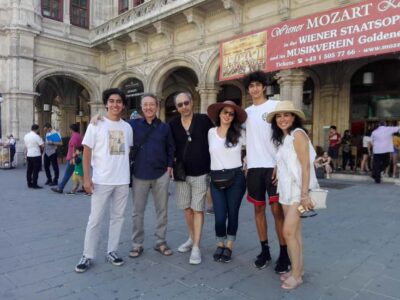
Lists this tour appears in