
Appraised · VIENNA WALKING TOURS
Vienna Art Nouveau Walking Tour
Vienna Art Nouveau is everywhere, but this tour is a smart way to read it. Instead of hopping from big museum to big museum, you walk and ride the metro through the places where Jugendstil and early modern design actually show up in public life.
I especially love the Otto Wagner focus and how the guide connects buildings to design ideas, not just dates. I also love the Stadtpark station stop, because you get to see how aesthetics and engineering had to solve real city problems.
One possible drawback: this is a walking and outdoor approach, so bring a rain layer. Also, some of the best add-ons, like the Secession’s Beethoven Frieze, require extra paid admission on specific days.
Key things you will notice on this Art Nouveau walk
- Small group, up to 8 people: you can ask questions and get real attention from your guide.
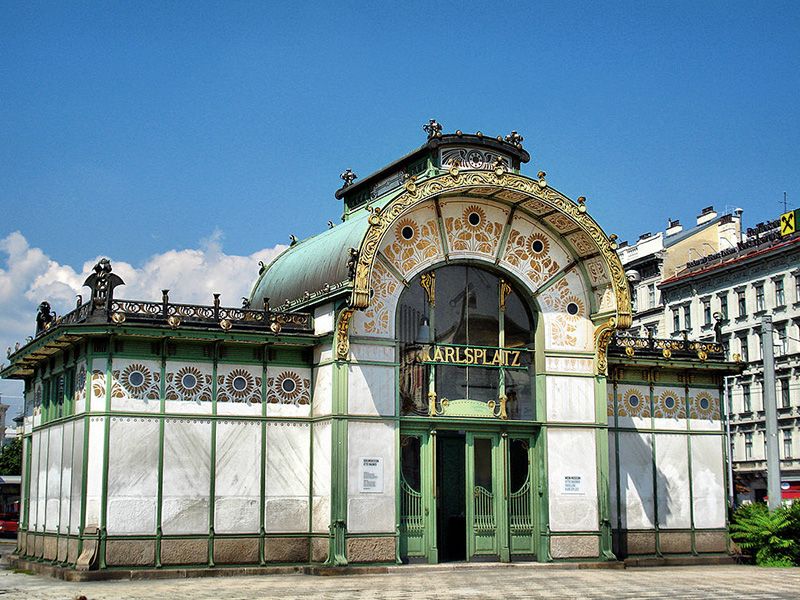
- Otto Wagner Pavillon at Karlsplatz (season matters): access to the pavilion and its Wagner Museum can come with extra admission from April to October.
- Stadtpark metro station design you can still see: the station remains one of the best preserved original metro stations still in use.
- A design story tied to water engineering: the artificial riverbed for the little Vienna river is part of the lesson at Stadtpark.
- Sezession building at Kettenbrücke: you will connect Jugendstil symbols and materials to what you see in front of you.
- Imperial station with political meaning: a final stop links the Emperor, Schönbrunn, and why the metro line needed support.
Why Vienna’s Jugendstil shows up best in metro stations
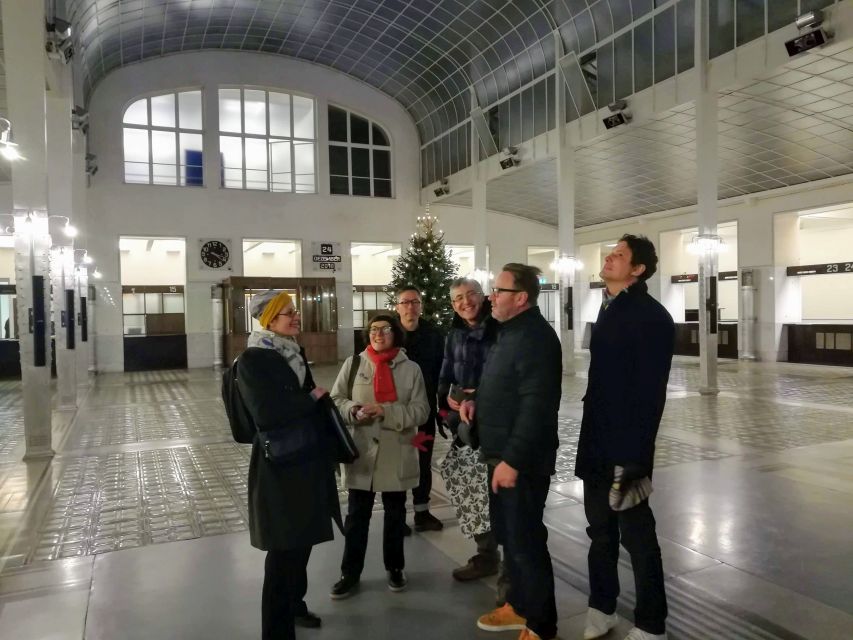
Vienna’s Art Nouveau, called Jugendstil, can feel abstract if you only see it in photos. On this tour, it becomes practical. You will learn how style choices, materials, and symbols show up in the everyday spaces of a modern city, including transit.
The tour is also built for orientation. After about 2.5 hours, you typically walk away with a clearer mental map of where the movement took hold and how Otto Wagner helped translate Art Nouveau from middle-class comfort into something with imperial scale.
And because the group stays small, the guide can slow down when you want to look closer at ornament, ironwork, tiling, and the overall logic of each building.
More walking tours in Vienna:
- Vienna: Guided Walking Tour of City Center Highlights
★ 4.7 · 4,989 reviews - Vienna: Vienna Central Cemetery Guided Walking Tour
★ 4.8 · 3,307 reviews - Vienna: Guided Walking Tour of City Highlights & Hidden Gems
★ 4.9 · 2,180 reviews
Meeting point at Operngasse 7, and what the 2.5-hour pace feels like
You start at Operngasse 7, 1010 Wien. It is a central meeting point and the tour is near public transportation, which helps when you want to arrive early or extend your day afterward.
The schedule runs about 2 hours 30 minutes. In that time, you will get a mix of walking and short metro connections between stops. The pacing matters here: it is not a long endurance walk, but it still expects comfortable shoes and a bit of outdoor time.
Since the tour is offered in English and uses a mobile ticket, it is easy to manage once you are in the city. Confirmation is provided at booking time, and you can plan around that.
Stop 1: Otto Wagner Pavillon at Karlsplatz and the Wagner Museum
Your first stop is the Otto Wagner Pavillon at Karlsplatz. This is a great opener because it frames the whole tour around Wagner’s approach: form and function working together, not fighting each other.
Right there at Karlsplatz, you can also visit the small Wagner Museum. Admission is listed as free in the walk sequence, but there is an important season detail to keep in mind.
From April to October, the pavilion visit can include an admission fee:
- €5 for general admission
- €4 for senior citizens, students, Vienna Card holders, and persons with disabilities
That small footnote is the kind of thing that changes how you should plan your day. If you are traveling in winter months, you may face a different situation than a traveler in peak season, so it is worth checking your travel dates when you book.
What I like about starting here: Karlsplatz sets a calm stage for design discussion. You are not rushing through the first stop while trying to learn where everything is. You get oriented while the architecture is still easy to concentrate on.
Stop 2: Stadtpark station, the preserved metro experience, and the little Vienna river
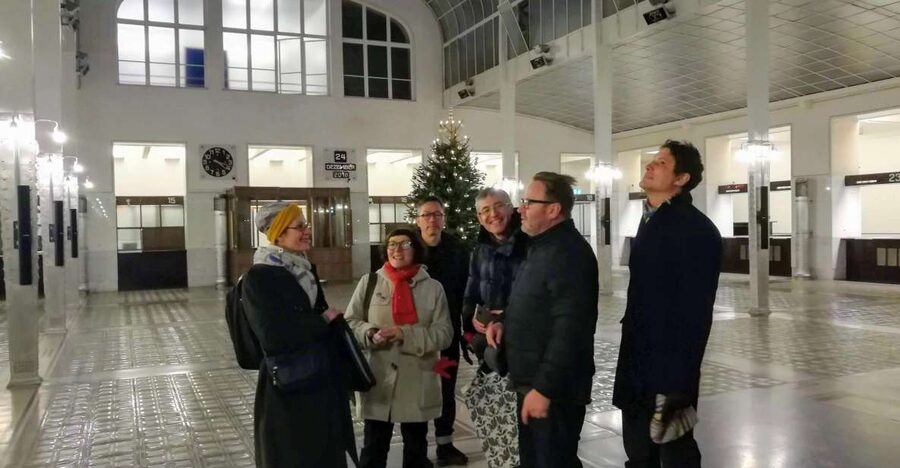
Next you move toward Stadtpark. This stop is a highlight for anyone who likes “design that had to work.”
The point of Stadtpark is that it is considered the best preserved of the original metro stations still in use. That matters because you are not only looking at a style on paper. You are looking at an actual working transit space that still carries original character.
One of the most memorable parts of the lesson is the station’s adjoining artificial riverbed. Vienna’s “little Vienna river” needed its route rechanneled when the city train was built. The guide explains how the waterway got integrated into the new city landscape, instead of being treated like a problem to hide.
Practically, this is a tour stop that makes you see the city differently. It connects Jugendstil ideas to engineering and urban planning decisions, which is the kind of context you often miss if you only focus on facades.
Admission here is listed as free, so you mainly pay in time and attention. When a stop is free, your money goes to the guide’s interpretation, which is exactly where a tour like this earns its price.
A completely different kind of day, same corner of Austria:
- Vienna: Vivaldi’s Four Seasons Concert in Karlskirche
★ 4.7 · 14,951 reviews - Vienna: Schönbrunn Palace & Gardens Skip-the-Line Tour
★ 4.7 · 7,739 reviews - Vienna: Light of Creation Votive Church Immersive Light Show
★ 4.8 · 6,779 reviews - Vienna Spanish Riding School Guided Tour
★ 4.7 · 6,765 reviews
Stop 3: Sezession at Kettenbrücke, plus Otto Wagner apartments on the way
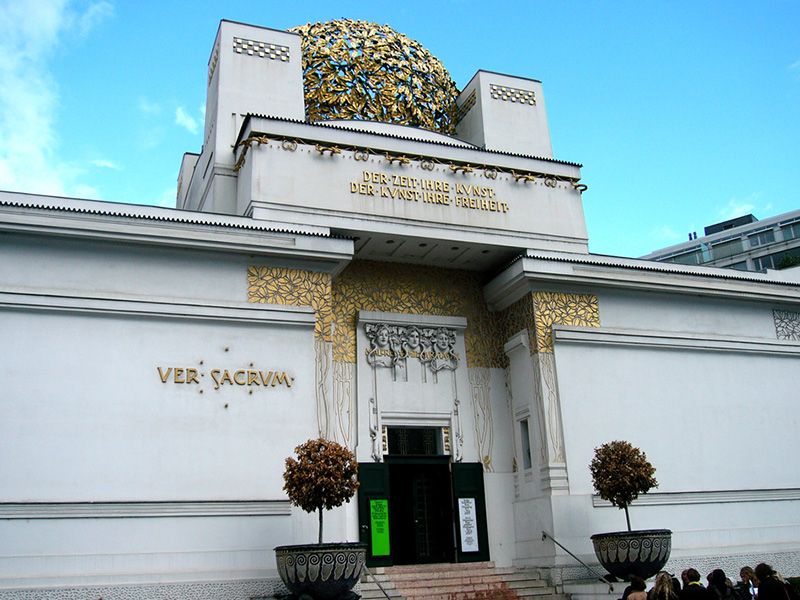
From Stadtpark you work your way toward the Kettenbrücke area and the iconic Sezession (Secession) building. This is the visual “big idea” stop.
The Sezession building is described as the icon par excellence of Viennese Jugendstil. You will spend time looking at what makes it Jugendstil: the concept of ornament, the way materials and forms signal a design movement, and the symbols used by its practitioners.
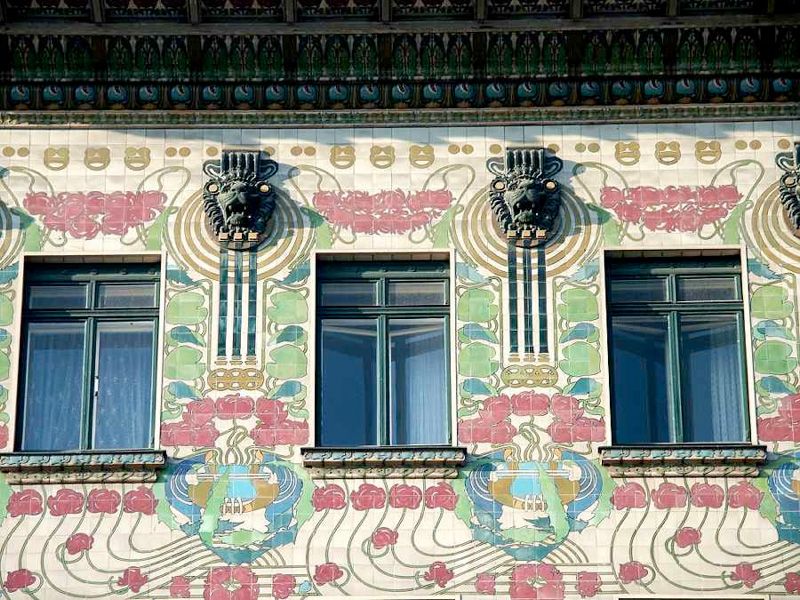
On the approach from Kettenbrücke station, you also explore two Otto Wagner apartment houses. That is a useful contrast. You can see how Wagner’s style thinking could show up in more everyday residential settings, not only in famous landmark structures.
What you learn here tends to stick because the guide ties it to philosophy: you are not just naming elements, you are understanding why they were chosen. If you care about architecture, this stop is where the “why” becomes clearer.
The optional Secession House add-on: Klimt’s Beethoven Frieze
There is one extra experience that can make this tour feel like a standout afternoon: seeing Gustave Klimt’s Beethoven Frieze.
This is handled as an admission add-on:
- If you tour Tuesday to Sunday, admission to Secession House is €9.50 for adults and €6 for students and seniors.
- Your guide helps you pay.
Note the day range. If you are only visiting on Monday, your experience could differ, because the ticket condition is specified for Tuesday through Sunday. This is one of those details that can make or break your plan, so check your itinerary days before you assume the Beethoven Frieze is automatically included.
The imperial station stop tied to Schönbrunn, and why Wagner used symbolism
From Kettenbrücke station, the tour continues by metro to the final major stop: the imperial station.
This station is described as being built outside Schönbrunn Castle solely for the Emperor to use. That alone makes it fascinating, but the guide also connects it to the political context around the metro line.
The building had symbolic meaning. It was meant to show critics that the Emperor supported the line. In other words, it was not only about transportation. It was also about confidence and public approval.
Inside the smaller, dynamic station building, you get a payoff. The guide helps you recognize design elements you encountered earlier, then shows how Otto Wagner translated a generally bourgeois Art Nouveau look into something with imperial grandiosity.
This stop is valuable because it adds a layer that many architecture tours skip. It tells you that style in Vienna was not just artistic. It was tied to power, public perception, and the role of modern infrastructure in everyday life.
Price and value: what $180.04 includes, and where extra tickets can appear
The price is $180.04 per person for a group tour of about 2.5 hours in English. That is not a bargain price, but it can still be good value if you focus on what you are buying.
You are paying for:
- A professional guide who interprets Jugendstil across multiple sites
- A route that combines walking with metro connections so you see real city design
- A small group size, up to 8 people, which typically means more questions and less rushing
Several of the architecture stops are listed as free at the moment you encounter them, including the Otto Wagner Museum in the sequence and the metro station visits. But two places can involve additional admission fees depending on date and season.
- Otto Wagner Pavilion / Wagner Museum (April to October)
- €5 adults, €4 seniors/students/Vienna Card holders/people with disabilities
- Secession House for Klimt’s Beethoven Frieze (Tuesday to Sunday)
- €9.50 adults, €6 students and seniors
If you want the Beethoven Frieze, you should mentally budget extra for the Secession House admission on the days it applies. If you do not care about that specific artwork, you can still enjoy the Secession building as an Art Nouveau icon without turning the tour into an expensive museum day.
Also, there is a practical detail worth noting: the tour is commonly booked about 36 days in advance on average. In a small group of eight, that early interest can matter, so booking ahead usually makes planning easier.
How the guide approach improves the whole walk
A tour like this lives or dies on the guide. The best part of this experience is that the guide is not only presenting facts, they are connecting the design dots and shaping the walk to what you care about.
In particular, guides for this route are often described as:
- Very enthusiastic about Viennese architecture and Austrian history
- Willing to answer detailed questions about symbolism, materials, and building purpose
- Able to adjust pacing and focus when the group wants more time in front of a particular facade
You also get practical city help. One helpful theme that comes through is how guides can make it easier to use Vienna’s public transit system during your day. That matters because it turns your remaining time in Vienna from guesswork into confident movement.
Group size helps here too. With a maximum of 8 travelers, it is easier for the guide to notice if people are cold, curious, or ready for more discussion.
If weather is rough, plan for flexibility. This tour is often done in winter months when it can feel cold and damp, and you may appreciate having a rain layer and a plan B mindset for longer outdoor stretches.
Who should book this Art Nouveau walking tour, and who might not
This tour is a strong match if you:
- Love architecture and want a clear explanation of Jugendstil in real-world places
- Prefer city orientation that feels grounded in design, not just broad sightseeing
- Want a guided path through Otto Wagner landmarks and major Jugendstil statements
It is also a good choice if you like transit-based sightseeing. Vienna’s metro can feel like part of the city’s story, and this tour treats those stations as architecture destinations.
You might choose something else if you:
- Want a long museum time with lots of inside galleries and minimal walking
- Are traveling only on days when you strongly want the Beethoven Frieze, since the specified ticket condition is Tuesday through Sunday
- Have very limited mobility, since the experience is described as a walking tour with metro connections
Should you book this Vienna Art Nouveau tour?
Yes, I think you should book it if Jugendstil is on your Vienna must-see list and you want a focused, high-attention walk through Otto Wagner and Vienna’s metro-era design.
I would book it sooner rather than later, given the small group size and the fact that it tends to fill in advance. And before you pay, check your travel dates if you want the Beethoven Frieze add-on at the Secession House, since the extra admission is tied to Tuesday to Sunday.
If you are okay with paying a bit extra for that artwork and you bring good shoes and a rain layer, this is one of those tours that helps you see Vienna with smarter eyes afterward.
FAQ
How long is the Vienna Art Nouveau walking tour?
It runs for about 2 hours 30 minutes. The guided portion is described as a 2.5-hour tour.
What is the group size for this tour?
The maximum is 8 travelers per booking, so the group stays small.
Where is the meeting point?
The start is at Operngasse 7, 1010 Wien, Austria. The end point is listed as Vienna.
Is the tour offered in English?
Yes. This tour is offered in English.
What is included in the ticket price?
You get a 2.5-hour guided tour of Vienna Art Nouveau metro stations and iconic buildings, plus a professional guide.
Are there entrance fees on top of the tour price?
Some stops are free in the walk sequence, but the Otto Wagner Pavilion can have admission fees from April to October. The Secession House admission for the Beethoven Frieze also has fees on Tuesday to Sunday.
Is Klimt’s Beethoven Frieze included?
It depends on your day. The Beethoven Frieze is accessed via Secession House and requires an extra admission fee from Tuesday to Sunday, with your guide helping you pay.
Does the tour include food or drinks?
Food and drinks are not included unless specified.
Can I cancel for a full refund?
Yes, you can cancel for a full refund if you cancel at least 24 hours before the experience starts. Cancellation is free up to that time.
Recently reviewed around Vienna
- Vienna: Mozart, Beethoven, & Strauss Private Tour★ 5.0 · 4 reviews
- Vienna: Musical Tickets ROCK ME AMADEUS – THE FALCO MUSICAL★ 4.8 · 15 reviews
- Vienna: Mozart Concert with Dinner and Carriage Ride★ 4.8 · 25 reviews
- Private Melk Hallstatt, Salzburg tour from Vienna★ 4.9 · 22 reviews
- Vienna: ‘Armenia In The Heart Of Austria’ Tour★ 5.0 · 6 reviews
- Vienna: Luxury Vintage Fashion Walking Tour★ 3.4 · 8 reviews
- Vienna: Kunsthistorisches Museum Guided Tour incl. admission★ 4.9 · 32 reviews
- Vienna: Mozart Private Guided Tour★ 5.0 · 4 reviews
Vienna Walking Tours, side by side.
Guided Walking Tour of City Center Highlights
Read our review →
Guided Walking Tour of City Highlights & Hidden Gems
Read our review →
Vienna Historic Center Small Group Walking Tour
Read our review →
Lists this tour appears in