
Appraised · VIENNA WALKING TOURS
The Ringstrasse Project Walking Tour
The Ringstrasse Project Walking Tour is interesting because it turns Vienna’s famous boulevard into a simple, walkable story you can follow block by block. I love how it connects politics, opera, art, and design along the Ringstrasse without turning it into a museum marathon. And with guides like Sussana and Biljana, you get explanations that feel human, not robotic.
My other big plus is the small group size, max 8, which means you can actually ask questions while you stroll. The only drawback to consider is that it is a set 2.5-hour route, so if you want to linger for long inside any one stop, you’ll need to plan extra time on your own.
Key things to know before you go
- Small group (max 8) keeps the pace comfortable and the guide responsive
- 2.5 hours is long enough to learn the Ring’s “why,” not just the “what”
- English language tour with a professional guide and a mobile ticket
- Morning or afternoon departure gives you schedule flexibility
- Ticket-free stops on the route help you spend time looking, not buying
- Ends at Café Schwarzenberg so you finish with classic Vienna café culture
Why the Ringstrasse works so well on foot
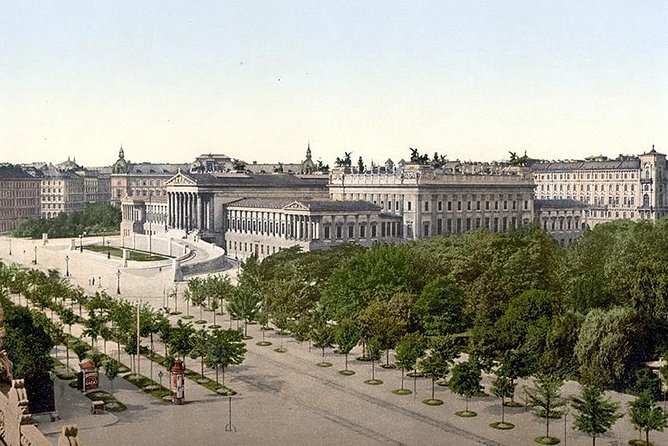
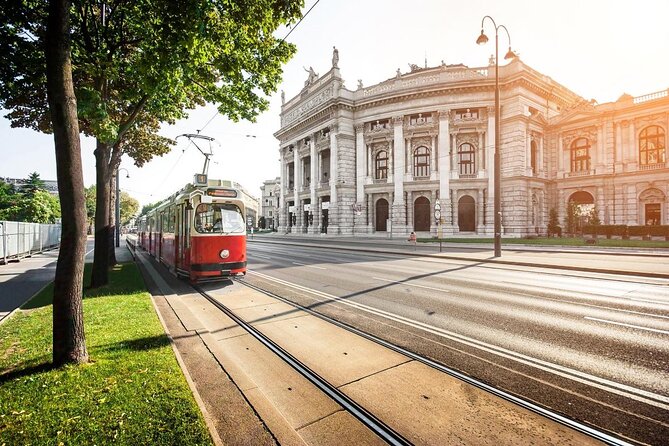
Vienna’s Ringstrasse is one of those places where the city’s priorities are written in stone. Government buildings. The opera. Big art museums. Architectural ideas tied to movements like Vienna Secession. If you only glance from a bus window, you miss the logic of it.
This tour keeps you moving, but not rushed. You get a guided walk that helps you connect the dots: the boulevard as a stage where Vienna showed what it was proud of in the late 1800s. The route also has a nice rhythm, because it mixes exterior-first landmarks with a great finish at a working café, not a formal museum finale.
You also choose your departure, morning or afternoon. That matters because Vienna’s light changes how buildings look, and it affects how comfortable you’ll be walking and stopping for photos. Since the tour is near public transportation, you can usually fit it in without a huge time buffer.
More walking tours in Vienna:
- Vienna: Guided Walking Tour of City Center Highlights
★ 4.7 · 4,989 reviews - Vienna: Vienna Central Cemetery Guided Walking Tour
★ 4.8 · 3,307 reviews - Vienna: Guided Walking Tour of City Highlights & Hidden Gems
★ 4.9 · 2,180 reviews
Meeting at Café Landtmann, ending at Café Schwarzenberg
The tour starts at Café Landtmann (Universitätsring 4) and ends at Café Schwarzenberg (Kärntner Ring 17). I like this setup because it frames the walk with two of the most iconic parts of Viennese daily culture: meeting points where people watch life go by.
Café Schwarzenberg is especially important on this route. The tour concludes there because the café opened in 1861, which places it right in the era when the Ring was becoming the place to see and be seen after it was completed. Even if you never order a single thing, the location alone helps your brain lock in the timeline.
If you do want coffee or a snack, plan on paying for it yourself. The tour price covers the guide and the walking portion, not food and drinks. That is a small tradeoff, but it also gives you freedom to choose what you like.
A 2.5-hour route built around six meaningful stops
This is an approximately 2-hour 30-minute guided walk through the Ringstrasse area. The group is capped at 8 travelers, so you’ll often get more back-and-forth than you would on a larger city tour. The itinerary is structured, but it does not feel like a checklist. The guide uses each stop to explain what that building signaled to Vienna at the time.
Here’s what you can expect, stop by stop.
Stop 1: Rathaus (Vienna City Hall) and the politics behind the stone
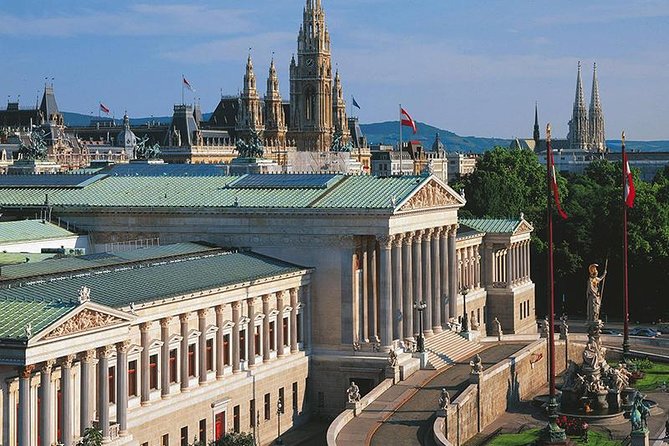
You begin at Rathaus on Rathausplatz, the seat of local government. This building was constructed from 1872 to 1883 in a Neo-Gothic style. It also houses offices tied to the Mayor of Vienna and includes chambers for the city council and the Vienna Landtag diet.
Why this stop works: Rathaus is the Ring telling you, plainly, that civic authority matters. Neo-Gothic architecture often uses visual complexity to communicate permanence and seriousness. On this walk, you’re not just seeing a pretty façade. You’re learning how a city chooses an image of power.
Time on this stop is about 15 minutes, and the schedule lists admission ticket free. That means you can focus on the exterior features and keep the momentum for the next landmark without getting stuck waiting around.
A practical tip: since this is a government centerpiece, it can be busy around peak hours. If your departure time is flexible, picking a less crowded period can make your photo and walking time smoother.
A completely different kind of day, same corner of Austria:
- Vienna: Vivaldi’s Four Seasons Concert in Karlskirche
★ 4.7 · 14,951 reviews - Vienna: Schönbrunn Palace & Gardens Skip-the-Line Tour
★ 4.7 · 7,739 reviews - Vienna: Light of Creation Votive Church Immersive Light Show
★ 4.8 · 6,779 reviews - Vienna Spanish Riding School Guided Tour
★ 4.7 · 6,765 reviews
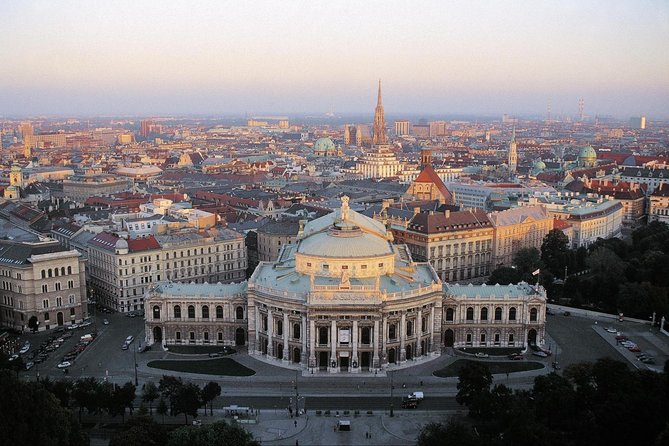
Stop 2: Vienna State Opera, where music was public identity
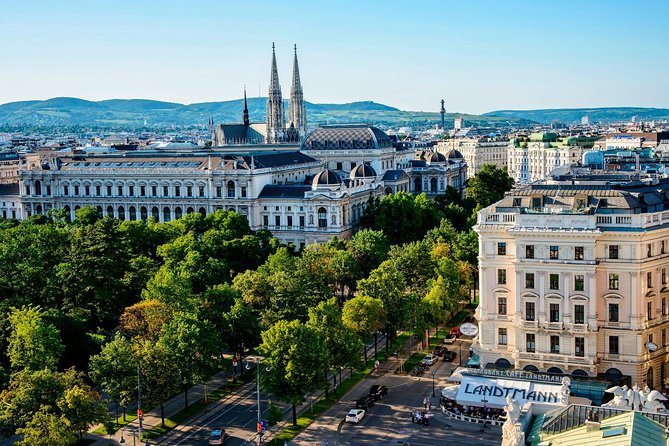
Next is the Wiener Staatsoper. It has 1,709 seats and was the first major building on the Vienna Ring Road. That timing is key. It signals that opera and music were not just entertainment. They were part of Vienna’s public identity.
Construction dates run from 1861 to 1869. This stop is about 20 minutes, and it is also marked as admission ticket free.
Why I think you’ll like it: the opera house is one of the easiest “Ring landmarks” to connect to the city’s self-image. Even if opera is not your thing, the building helps you understand the culture that shaped Vienna’s reputation. It’s a quick way to see why music was treated as a cornerstone of public life.
Watch for how the exterior communicates grandeur without needing to step inside. The guide’s job here is to help you read those choices in context, so it feels like more than just a famous address.
Stop 3: Kunsthistorisches Museum Vienna, art on a city scale
After the opera, the route moves to Kunsthistorisches Museum Vienna. The tour notes that the name applies to both the institution and its main building. It’s the largest art museum in Austria and one of the most important museums worldwide.
Your time here is about 20 minutes, and the stop is listed as admission ticket free.
Why this stop matters for the story: the Ring ties art to national pride. Big museums are often about power and education at the same time, and that’s exactly what you’re seeing along the boulevard. You’re not waiting for an audio guide. You’re learning how to interpret what the scale of the museum says.
What to expect: you’ll likely get a guided sense of what makes this museum notable and why the Ring corridor would include an institution like this right in the same visual neighborhood as government and opera.
If your personal style is “I want to see inside everything,” you can do that later. But for a walking tour, this stop is a great way to understand the museum’s role without turning the day into a long ticket line.
Stop 4: Postsparkasse, Otto Wagner’s design brain at work
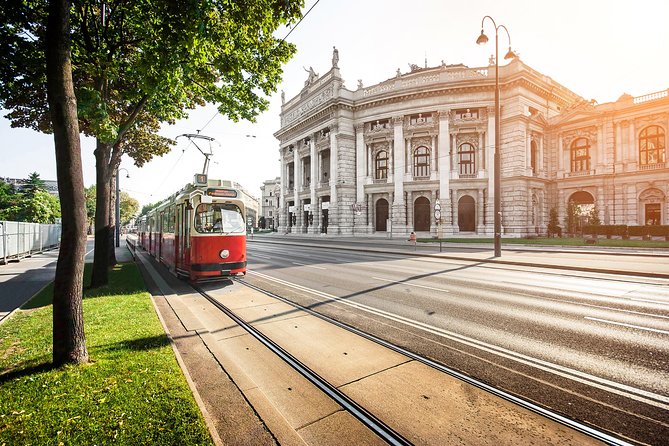
Then you hit Postsparkasse, the Austrian Postal Savings Bank building, designed and built by architect Otto Wagner. The tour also points out that it’s regarded as an important work tied to Vienna Secession, in the Art Nouveau family.
This stop is about 20 minutes, and it is marked as admission ticket free.
Why I love this part: it’s where the Ring story shifts from classic grandeur to modern visual ideas. Wagner is a name people hear in architecture circles, but you don’t need any background to appreciate the impact of the building. In a guided walk, you get enough context to understand why Vienna Secession mattered, without drowning in technical terms.
If you care about design, photography, or how cities evolve their style, this stop is often the one that changes how you see the boulevard. The guide will help you connect Art Nouveau visual language to the broader moment in Vienna, which makes the walking tour feel like a real education, not a route of landmarks.
Stop 5: Stadtpalais Todesco and the salon tradition
The next stop is Stadtpalais Todesco, tied to Ringstraßenplatz. The building was constructed from 1861 to 1864 for the aristocratic Todesco family. One inhabitant mentioned by the tour is Baroness Sophie von Todesco, who established a renowned salon for artists and intellectuals.
Time here is about 15 minutes, and it is also marked as admission ticket free.
Why this stop is useful: it brings Vienna’s cultural life back down to human scale. Salons were a way for thinkers, artists, and writers to meet, debate, and exchange ideas. By including this building, the tour explains that Vienna’s greatness was not only in institutions like museums or opera houses. It lived in private social spaces too.
You can also see how this complements the opera and art museum stops. The Ring shows public culture. The palais stop hints at where some of that culture was discussed and shaped.
If you like stories about how ideas spread, this one will click. It’s shorter than the major stops, but it carries real meaning.
Stop 6: Café Schwarzenberg, finishing the day with Vienna café life
The tour ends at Café Schwarzenberg, right on the Ring. The tour frames it as a window into the thriving Vienna café culture in the latter half of the 19th century, when the Ring became the place to see and be seen.
This part lasts about 25 minutes. Admission ticket free is listed, and the tour is designed so you can sit, regroup, and let the ideas from the walk settle.
What makes this finish work is that it’s not only about sitting down. It’s about connecting place and time. The café opened in 1861, and that date puts it in the same era as the big Ring construction and the early cultural spotlight.
If you want a practical move, order something modest, then spend the rest of your time people-watching. Use the guide’s explanations as a mental prompt for what you already saw, like how a government building, opera house, and art museum all fit into the same city plan and mindset.
Price and value: what you’re really paying for
The price is $177.44 per person for about 2.5 hours, with a professional guide and a mobile ticket. The tour also mentions group discounts.
Is it worth it? For me, the value comes from two things.
First, the route hits multiple major Ring landmarks in one guided sequence. You’re paying for a person who can connect them into a coherent story while you’re walking.
Second, the itinerary lists admission ticket free for every stop. That is a big deal on a paid tour, because it reduces the chance you’ll feel like you’re paying for time you could spend independently. You’re essentially paying for guidance and planning, not for a stack of entrance fees.
What’s not included is food and drinks, plus hotel pickup and drop-off. That’s normal for a walking tour. You’ll want to build in a little extra time if you plan to grab a meal before or after.
Who this tour is best for
This works well if you:
- Want a structured orientation to Vienna’s Ringstrasse in a short time
- Like learning how buildings relate to culture and civic life
- Prefer small groups and a guide who can answer questions
- Enjoy architectural and design details without needing deep pre-reading
It can also be booked as a children’s family tour. In that version, the guide focuses on symbols on buildings and everyday life in Vienna around 1900. If you’re traveling with kids and want a sightseeing plan that stays understandable, that option can be a smart fit.
If you are the type who only cares about interiors and nothing else, you might feel a bit impatient during the exterior stops. But you still get a strong overview, and you’ll know what to return to later.
The guide makes the difference (and the pace stays human)
The biggest theme behind the best experiences is the guide. Names like Sussana and Biljana show up in strong feedback, and what you can take from that is simple: when the guide is good, the Ring becomes understandable.
You can expect an informative, friendly, professional style. Small group size also helps. You don’t feel like a number. You can ask questions at the right moment instead of waiting until the tour ends.
The humor element is real too, and it matters more than you might think. When a guide can keep things light while still explaining why a building matters, you remember it later.
Practical tips to get the most out of the walk
- Wear shoes you trust. You’ll be walking and standing for multiple stops.
- If you can choose, pick morning or afternoon based on your energy level. The comfort of the walk matters more than the clock.
- Bring a charged phone. You’ll use a mobile ticket.
- Plan your own café moment at the end. Café time is part of the experience, so treat it like a payoff, not an afterthought.
- If you’re a photo person, aim to arrive ready to shoot quickly at each stop. The time per location is short on purpose.
Should you book this Ringstrasse walking tour?
Yes, I would book it if you want a high-value overview of Vienna’s Ringstrasse that stays focused and human. The small group size, the professional guide, and the fact that the route is built around multiple major landmarks in a tight 2.5-hour window makes it a smart use of time. Add the ticket-free stops and the classic Café Schwarzenberg finish, and it becomes more than a walk past famous buildings.
I’d skip it only if you already know the Ring well and plan to spend most of your time inside specific attractions. In that case, you might prefer independent visits and a self-guided plan.
If you’re seeing Vienna for a first or second time and want to understand the city’s “why” along the Ring, this is a very practical way to do it.
Recently reviewed around Vienna
- Vienna: Mozart, Beethoven, & Strauss Private Tour★ 5.0 · 4 reviews
- Vienna: Musical Tickets ROCK ME AMADEUS – THE FALCO MUSICAL★ 4.8 · 15 reviews
- Vienna: Mozart Concert with Dinner and Carriage Ride★ 4.8 · 25 reviews
- Private Melk Hallstatt, Salzburg tour from Vienna★ 4.9 · 22 reviews
- Vienna: ‘Armenia In The Heart Of Austria’ Tour★ 5.0 · 6 reviews
- Vienna: Luxury Vintage Fashion Walking Tour★ 3.4 · 8 reviews
- Vienna: Kunsthistorisches Museum Guided Tour incl. admission★ 4.9 · 32 reviews
- Vienna: Mozart Private Guided Tour★ 5.0 · 4 reviews
Vienna Walking Tours, side by side.
Guided Walking Tour of City Center Highlights
Read our review →
Guided Walking Tour of City Highlights & Hidden Gems
Read our review →
Vienna Historic Center Small Group Walking Tour
Read our review →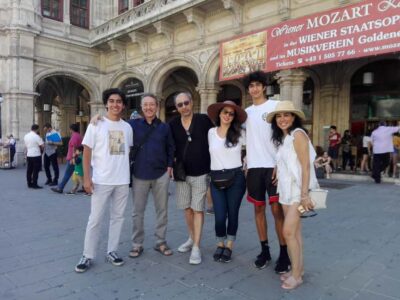
Lists this tour appears in