Appraised · CITY TOURS
Terrible crimes in Vienna, hidden secrets of the inner city
This offbeat Vienna walk is interesting because it uses real addresses to tell a not-so-polished story, from monastery prisons to political violence. I really like the tight storytelling that turns ordinary street corners into a clear timeline, and I also like that the tour focuses on the lesser-known history most visitors skip.
I also love that you get a complimentary smartphone audio guide to keep the pace moving, even when you are standing outside in the middle of the old city. The main drawback is that the cases are often gruesome, so it is a smarter pick for teens and adults who can handle darker subject matter.
Key things to know before you go
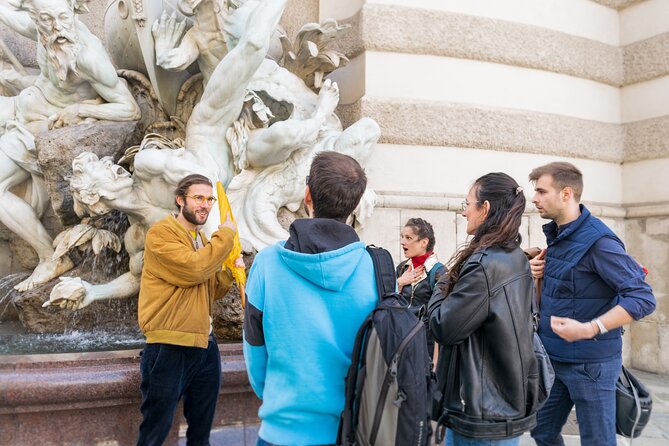
- Offbeat “crime in Vienna” theme that links stories to specific inner-city addresses
- Small group size (max 20) for a more personal feel and smoother explanations
- Complimentary smartphone audio guide to support what your guide is saying
- Short, efficient stops (many are 5 to 15 minutes) that keep you moving through the center
- Free entry indicated for each stop, so you are not stacking extra ticket costs
Why Vienna’s inner city tells a darker story than you expect
Vienna looks pristine from far away, with light stone, big squares, and that postcard glow. This experience nudges you to look closer. Instead of only admiring facades, you learn how the city’s institutions, rumors, and punishments shaped real lives.
The tour is built around “terrible crimes” and the people caught in them. The result is a walk that feels like history you can see, not history locked behind a museum door.
More sightseeing tours in Vienna:
- Vienna: Guided Walking Tour of City Center Highlights
★ 4.7 · 4,989 reviews - Vienna: City Cruise with Optional Lunch
★ 3.4 · 3,982 reviews - Vienna: City Cruise
★ 3.3 · 2,978 reviews
Price and logistics for a 2-hour small-group walk
At $46.13 per person for about 2 hours, the price makes more sense when you factor in what you get. You are paying for a guided narrative plus a complimentary smartphone audio guide, and every stop on the route is marked as admission ticket free.
You also get a mobile ticket, and the tour runs in English. The group is capped at 20 travelers, which matters because Vienna sidewalks can be tight in the inner city, and a big group would slow everything down.
One practical tip: wear shoes that can handle uneven old-street paving. A lot of the experience is about listening closely while you pause at exact addresses.
Capuchin monastery dungeon: Father Innocentius, long imprisonments, and Joseph II
The walk starts at Tegetthoffstraße 2 at the Capuchin monastery, where you hear about a dungeon connected to Father Innocentius. The story focuses on monks who were locked up for extremely long stretches, sometimes for reasons that sound shockingly small by modern standards, like unauthorized afternoon walks or complaints about monastery officials.
A key detail here is how the case reached Emperor Joseph II. You learn that Joseph II reportedly kept the dungeon closed and moved Father Innocentius to Lviv for his own safety, and you also hear how Father Innocentius later became a Protestant, a Freemason, and an advisor to the tsar.
This stop is valuable because it shows Vienna’s “crime” theme isn’t only about streets and courts. It also includes places of faith, discipline, and power.
Trattnerhof and the Jaroszynski murder case tied to Therese Krones
At Trattnerhof, you step into the story of the Jaroszynski murder case, which became especially known through the involvement of actress Therese Krones. The narrative explains how she was pulled into a case that she had little to do with, and how it damaged her career.
You also get the difference between rumor and motive. There are stories that point toward extravagant desires pushing Jaroszynski toward despair and crime, but the explanation you hear instead is that he was addicted to games and deeply in debt.
If you like true crime, this is one of the more “modern-feeling” stops in tone, because it centers on reputation, media attention, and how convenient stories form around complicated people.
A completely different kind of day, same corner of Austria:
- Vienna: Vivaldi’s Four Seasons Concert in Karlskirche
★ 4.7 · 14,951 reviews - Vienna: Schönbrunn Palace & Gardens Skip-the-Line Tour
★ 4.7 · 7,739 reviews - Vienna: Light of Creation Votive Church Immersive Light Show
★ 4.8 · 6,779 reviews - Vienna Spanish Riding School Guided Tour
★ 4.7 · 6,765 reviews
Palais Bathory on Elisabeth Bathory: serial killer myth or violent court intrigue
At Augustinerstraße 12, the tour links you to Palais Bathory and the figure of Elisabeth Bathory, often remembered as the so-called blood countess. The story includes the famous allegation of killing huge numbers of victims and using their blood to enhance youth and beauty.
Then comes the uncertainty that makes the stop more interesting than a straight legend. The tour also frames Bathory as possibly the target of a violent intrigue tied to loyalty within court circles, so you get the sense that the city’s record may be shaped by political pressure as much as by facts.
This is a stop for people who enjoy messy historical truth. You are not just hearing a shock story, you are hearing why shock stories stick.
Graben and Kohlmarkt: Demel and the Lucona affair insurance plot
Near Graben and Kohlmarkt, the route pauses by the area of Place of the Demel, where a signature tied to the 1970s Lucona affair is discussed. The story explains that a far overinsured freighter was chartered for Asia, with an explosive charge hidden on board.
It turns into mass murder and major insurance fraud. And you also learn why the investigation took years, including how relationships in different directions made it harder to untangle.
This stop is a good example of why the tour is more than shock value. It shows how finance and networks can drive violence, not just personal grudges.
Herrengasse at Ferstel Palace: the Zu den Fünf Morden medieval mass murder
Moving to Herrengasse, you reach the former location of the house known as Zu den Fünf Morden at today’s Ferstel Palace area. Here, the tour covers one of the most notorious mass murders in medieval Vienna.
The punishment matters: the perpetrator was reportedly impaled because his act, including crimes involving a seven-year-old, was considered especially terrible. The story also notes that the executioner was likely not experienced with this type of execution, so it took extremely long.
This stop is intense. If you are the type who wants darker history but not graphic detail, you can still enjoy it by focusing on the justice system and the social fear behind the punishment.
Hotel Klomser across from Palais Ferstel: Colonel Redl and the biggest spy affair
Right on Herrengasse, across from Palais Ferstel, the tour points you to the former Hotel Klomser, the place where Colonel Redl’s suicide ended a major spy affair. The story frames it as the biggest spy affair of the monarchy and suggests it could have influenced how events played out toward the First World War.
You also hear how the discovery of Redl’s espionage activity harmed the reputation of the army. It also exposes the vulnerability of the underfunded Evidenzbureau, Vienna’s secret service system.
This is a strong “Vienna, not just art” moment. You get the city as a machine of information, risk, and political fragility.
Molker Bastei: Anna Gaugisch, dismemberment, and parts found near the Danube
At Molker Bastei, the tour covers the Anna Gaugisch murder in 1861 and what happened afterward. Her boyfriend Raimund Lewisch is described as dismembering her, with some body parts found in the Danube and others located near here.
The motive is presented as a way to remove an uncomfortable situation, including the idea that Lewisch wanted her out of the way because she was pregnant. The stop also connects to the broader context of violence and the brutality of the era.
This one is short, but it is not light. It is best handled with the mindset that you came for the darker side of Vienna, not a gentle stroll.
Am Hof and 1848: Theodor Baillet de Latour and political violence in revolution year
At Am Hof, you hear about the Lynch murder of war minister Theodor Baillet de Latour during the revolution of 1848. The tour frames this as one of the rare cases of political violence in Vienna, and it also connects it to the “Wiener October Revolution” years later.
The story points out that the civil arsenal is in the same place where it was looted during the revolution. In other words, you connect the violence you hear about to a physical location you can still picture in your mind.
This stop adds balance to the theme. It is not only personal crime of passion or greed, it is also politics, crowds, and a city in upheaval.
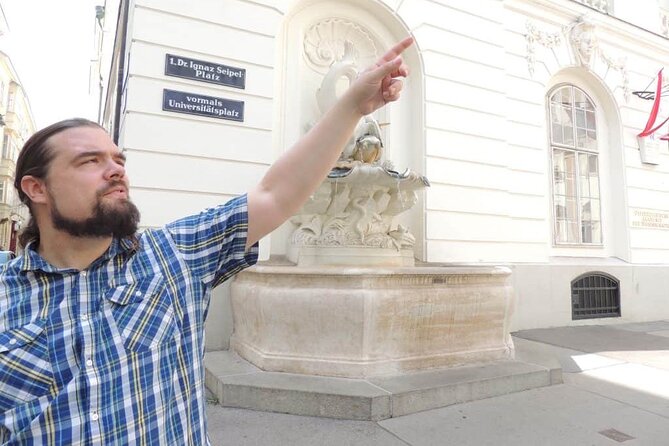
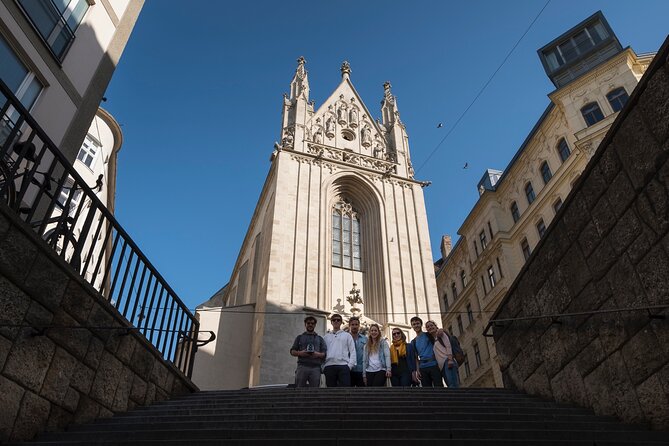
Hannakenkönig at Hannaken-Brunnen, then Maria Am Gestade and the Zahlheim case
At Hannaken-Brunnen, the tour tells the story of the Hannakenkönig, a surgeon who allegedly caused injuries to improve business by setting up hazards. The stop also references the Hannaken as a minority in Moravia who often came to Vienna for work.
The fountain is used as the visual clue, with two men described as carrying an injured comrade to the Hannakenkönig. It is a rare moment where the story turns into something you can interpret through public art.
Then at Maria am Gestade, you hear about a section of the city wall connected to the Zahlheim case, described as Vienna’s last wheeled-in execution for murderers. The tour stresses that this death penalty was exceptionally cruel and that it went against Joseph II’s usual rejection of the death penalty, which is why the case pushed a decision.
This pair of stops is great for your understanding of the city. You connect street-level life and old survival strategies to the darker edge of public punishment.
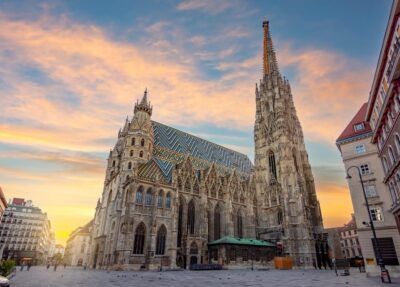
Hoher Markt torture story and St. Stephen’s baking punishment legend
At Hoher Markt, the story focuses on Thekla Riener, linked to a torture case connected to her husband Anton Grünborn and instruments from the courthouse. Thekla is said to have been expected to betray a supposed lover, but there was reportedly no real person behind it.
Jealousy driven by imaginary lovers is part of what the story explains, and it ends in a tragic chain reaction, including the accidental killing and even the parents becoming insane.
Then the tour heads to St. Stephen’s Cathedral area for the “bread loaf” legend tied to medieval Vienna’s punishment methods. The tale includes the idea of bakers being dipped repeatedly into the Danube in a cage for poor baking, and it notes that similar punishments existed in other countries aimed at women in dispute.
Even if you treat parts of legends cautiously, this stop is useful. It shows how everyday trades and public discipline could overlap in the Middle Ages.
Steffl witch accusations and Himmelpfortgasse’s walled-in nun story
At Steffl, the tour connects you to the former Malefizspitzbubenhaus, including an executioner’s apartment and dungeon. The story includes the claim of the only witch burned in Vienna, the “Plainacher,” along with the accusation tied to an epileptic granddaughter and demons summoned.
Then the final move is to Himmelpfortgasse, where the tour tells the story of a nun reportedly walled in around 1319 because she did not want to part with her lover, whose father opposed the relationship. The story is described as a Vienna version of Romeo and Juliet, with political pressure and family conflict driving the fate of the couple.
These final stops are memorable because they show the social mechanism behind fear. Witchcraft and “disobedience” are treated as threats to order, and Vienna’s inner city architecture helps you visualize how power was enforced.
What makes this tour worth your time, not just your curiosity
What I like most about this experience is that it is not random. The cases are arranged so you see different eras of Vienna through different kinds of violence, from monastery imprisonment to medieval punishment, then forward to revolution-era politics and 1970s fraud.
It is also clear that the guide role matters. The tour is led by a named guide, Ben, and multiple parts of the experience emphasize that his preparation and storytelling help you keep moving and stay engaged.
Finally, the route is built for walking. You pass through the center on foot with short pauses, which helps you notice older streets and spots you might otherwise miss. If you like the sensation of learning something new while your feet are doing the work, this fits.
Should you book this Vienna crime walk?
Book it if you want an inner-city Vienna walk that focuses on lesser-known history, true crime themes, and a story-driven route that stays moving for about two hours. It is also a good choice if you enjoy being surprised by “serious history” hiding in plain sight, and if you like having a smartphone audio guide to reinforce what you hear from your guide, Ben.
Skip it if you dislike dark subject matter or you prefer light sightseeing only. The theme is often gruesome, and the tour is geared toward teens and adults for a reason.
If you match that mood, you will come away with a Vienna you did not expect, one you can talk about, and one you can point to on a map.
FAQ
How long is the tour?
The tour is approximately 2 hours.
What language is the tour offered in?
It is offered in English.
Do I get a smartphone audio guide?
Yes. You receive a complimentary smartphone audio guide.
Is the ticket mobile or paper?
The tour uses a mobile ticket.
How big is the group?
The experience has a maximum of 20 travelers.
Where does the tour start and end?
It starts at Helmut-Zilk-Platz Albertinapl. 2-3, 1010 Wien, Austria, and it ends at Rauhensteingasse, 1010 Wien, Austria.
Are there admission fees at the stops?
The stops are marked as admission ticket free.
What is the cancellation policy if plans change?
You can cancel for a full refund up to 24 hours in advance of the start time.
What if the weather is bad?
The tour requires good weather. If it is canceled due to poor weather, you are offered a different date or a full refund.
Is the tour suitable for most people?
Most travelers can participate, but the topics are often intense and geared toward teens and adults.
Recently reviewed around Vienna
- Vienna: Mozart, Beethoven, & Strauss Private Tour★ 5.0 · 4 reviews
- Vienna: Musical Tickets ROCK ME AMADEUS – THE FALCO MUSICAL★ 4.8 · 15 reviews
- Vienna: Mozart Concert with Dinner and Carriage Ride★ 4.8 · 25 reviews
- Vienna: ‘Armenia In The Heart Of Austria’ Tour★ 5.0 · 6 reviews
- Private Melk Hallstatt, Salzburg tour from Vienna★ 4.9 · 22 reviews
- Vienna: Luxury Vintage Fashion Walking Tour★ 3.4 · 8 reviews
- Vienna: Kunsthistorisches Museum Guided Tour incl. admission★ 4.9 · 32 reviews
- Vienna: Mozart Private Guided Tour★ 5.0 · 4 reviews
City Tours, side by side.
Guided Walking Tour of City Center Highlights
Read our review →
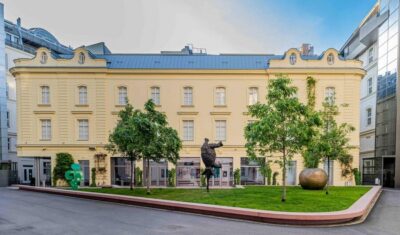
Guided Walking Tour of City Highlights & Hidden Gems
Read our review →
City Sightseeing Tour in an Electro Vintage Car
Read our review →
Skip-the-Line Schonbrunn Palace Guided Tour and Vienna Historical City Tour
Read our review →