
Appraised · VIENNA
Italian VIENNA
Italian Vienna is interesting because it flips Vienna’s story upside down. Instead of treating the city as purely Austrian, you see how Italian artists and architects helped shape its Baroque face, and you spot the connections as you walk.
What I like most is the way the tour stays human, not textbook. You get two big anchors on the route, Minoritenkirche for the Italian community and the Hofburg for Habsburg power, and Mario ties them together with entertaining, clear explanations.
One possible drawback: you are outside for a good chunk of the experience. The tour needs good weather, so if it’s rainy or stormy, plan for some wet walking time and expect the operator may reschedule or refund.
Key highlights you will care about
- Italian community in Minoritenkirche: start in a place that connects the city’s Italian presence to everyday faith and culture
- Hofburg interiors and royal context: the story is anchored in the Habsburg apartments of Francesco Giuseppe and Sissi
- Mario Casalone’s storytelling style: friendly, patient, and good at balancing history with real-life flavor
- Short, doable pacing: about 15 minutes at each main stop, with an easy walk between them
- Small group feel: maximum 30 travelers, which helps keep questions from getting lost
- Mobile ticket and simple route: you receive a mobile ticket and end at Stephansplatz, a natural place to continue sightseeing
Italian Vienna in 2 hours 30 minutes: the idea behind the walk
This is not a “stand and read plaques” tour. It’s built like a guided stroll through the parts of Vienna where Italy’s fingerprints make sense, even if you are not an art expert. The whole concept is to understand Vienna through a second lens: painters, architects, composers, preachers, adventurers, and military leaders, all mixed into one city story.
The route is concentrated and practical. You start at Wiener Minoritenkirche and finish at Stephansplatz, so you can plug it into your day without feeling stuck in the middle of nowhere. And because the pacing is short at each highlight, you do not spend forever waiting at one spot.
You should book this if you enjoy history that feels like a conversation. The best moments here are the little connections Mario makes, the ones that help you look at familiar buildings and see something new.
Other things people book around Vienna:
- Vienna: Vivaldi’s Four Seasons Concert in Karlskirche
★ 4.7 · 14,951 reviews - Vienna: Schönbrunn Palace & Gardens Skip-the-Line Tour
★ 4.7 · 7,739 reviews - Vienna: Light of Creation Votive Church Immersive Light Show
★ 4.8 · 6,779 reviews
Start at Wiener Minoritenkirche: where the Italian story becomes local
Your tour begins at Wiener Minoritenkirche, at Minoritenplatz 2A (1010 Wien). This church matters because it is described as the church of the Italian community in Vienna. That detail alone changes how you read the building, because you are not just looking at architecture. You are starting with a real community link.
At this stop, the time is about 15 minutes, and admission is free. That means you can focus on what the guide is showing you without worrying about ticket lines or extra fees. If you like to get your bearings fast, this is a strong opening: the neighborhood feel, the church presence, and the way the tour frames Vienna’s Italian layer.
What I’d suggest you do in your head during this first stop is simple: listen for the bridge. Mario’s style is to connect people and artistic influence to places, so even if you are walking into a church setting, the story usually keeps one foot in broader Vienna.
A practical note: churches can have a quieter vibe, so keep your voice down and treat the space like you would anywhere of worship.
The Hofburg: Habsburg power, with Italian connections in the background
Next up is the Hofburg, Vienna’s imperial palace complex and home base of the Habsburg family. This stop is also about 15 minutes. The big reason it works for an Italian-themed tour is that the Hofburg is where political life, patronage, and style all meet.
In the tour framing, you focus on the apartments of Francesco Giuseppe and Sissi. Even if you do not enter every interior space, the guide’s job is to put those names into context so the palace feels more than “big walls and uniforms.” This is where you start seeing why art and architecture mattered to rulers, not just to museums.
Admission is listed as free for this stop as well, which helps the value. It also means you can spend your brainpower on interpretation rather than logistics.
One thing to keep in mind: the Hofburg is a large complex. With only about 15 minutes allotted here, you will not see everything. Instead, you’ll get the key ideas and the visual cues that let you keep exploring after the tour. Think of this as a guided lens, not a full palace tour.
The role of Mario Casalone: friendly, funny, and good at answering questions
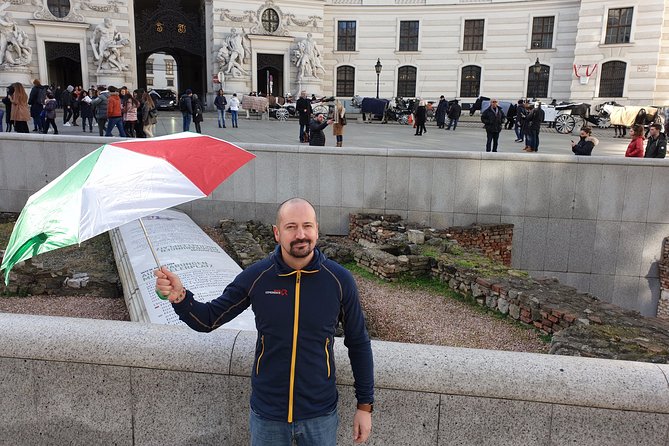
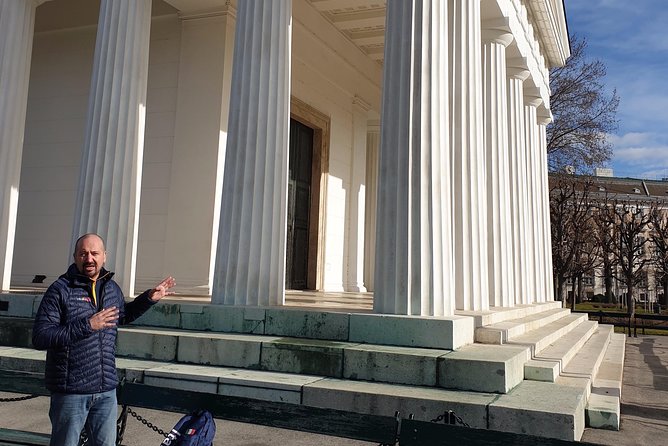
The tour experience really comes alive through your guide, Mario Casalone (MarioViennaGuide). The strongest praise across feedback is consistent: Mario is available, friendly, and welcoming, and he makes complicated connections feel easy to follow.
Here’s what that usually translates into on your walk:
- Storytelling that is interesting and exhaustive, without dragging
- Explanations that mix trivia and facts in a way that stays memorable
- A relaxed delivery style, so you do not feel pressured to keep up
- Patience for questions, including during small group moments
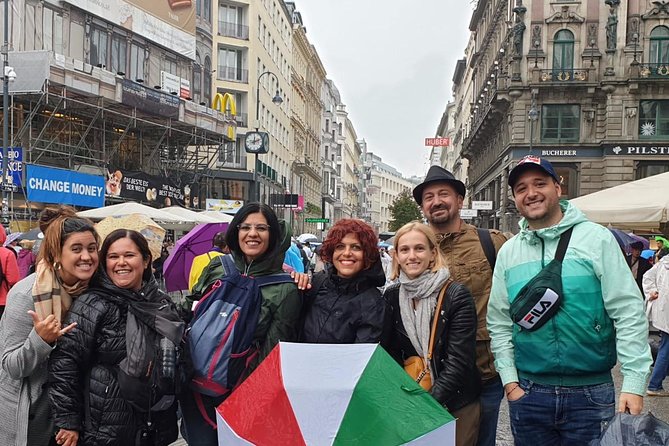
I also like that the tour seems built to handle less-than-perfect weather. One review mentions that the tour stayed interesting even with rain, wind, and storm. That matters because you are outside most of the time. If you tend to get grumpy when plans get wet, bring a small umbrella and a good attitude, because the pacing and commentary are what keep it from turning into a slog.
A completely different kind of day, same corner of Austria:
- Vienna Spanish Riding School Guided Tour
★ 4.7 · 6,765 reviews - Vienna: Classical Concert in the World-Famous Musikverein
★ 4.6 · 6,673 reviews - Vienna: Skip-the-Line Sisi Museum, Hofburg and Gardens Tour
★ 4.8 · 5,918 reviews - Vienna: Hallstatt & Alpine Peaks Day Trip with Skywalk Lift
★ 4.7 · 5,458 reviews
What the 2 hours 30 minutes feels like in real life
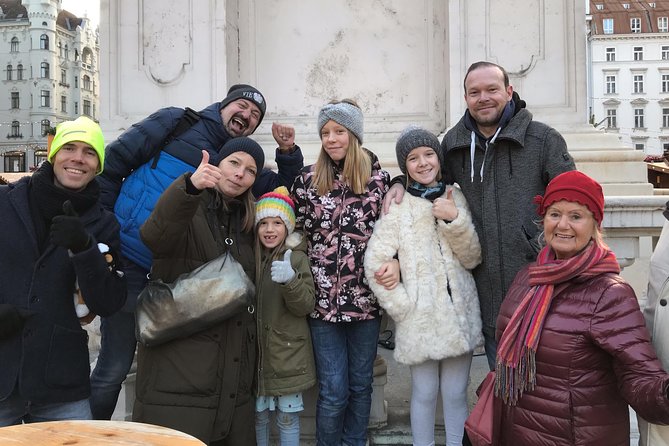
The whole thing runs about 2 hours 30 minutes. With two main stops and the time between them, it works out to a steady rhythm instead of a rushed checklist.
Because the stops are timed at around 15 minutes each, the tour is designed to keep momentum. You are never stuck at one point for an hour. You get enough time to absorb the meaning, then you move on while the story stays fresh.
The group size also matters. With a maximum of 30 travelers, you typically get a walk that still feels guided, not chaotic. In smaller groups like this, people can ask questions and the guide can respond without losing the flow.
If you are a solo traveler, this is also a good option. It gives structure to your morning or afternoon, and the end point at Stephansplatz is a natural place to split off and roam.
Price and value: $33.20 for two free stops and a guided connection
At $33.20 per person, this is priced like a thoughtful walking tour, not a ticket-heavy museum day. The value angle is the combination of:
- A guided interpretation of key places
- Free admission for both main stops as listed
- A route that ends in a major sightseeing hub
If you are the type who hates paying for things you can see from the outside, this may still feel worth it, because the payoff here is understanding. The cost goes toward the guide’s ability to connect Italian influence to what you see in Vienna.
At the same time, keep your expectations aligned with the format. This is not a full indoor palace ticket day. It’s a street-level, story-driven route. If you want lots of hands-on interior time, you might pair this with your own time at St. Stephen’s area or other nearby stops after the tour ends.
For most people, though, this price makes sense for a 2.5 hour “get the city in your head” experience.
End at Stephansplatz: your launchpad for the next part of Vienna
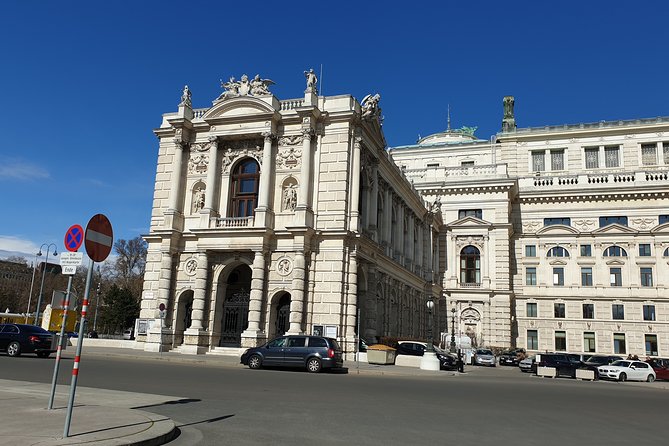
The tour finishes in the cathedral square of St. Stephen (Stephansplatz). That’s a smart ending. You finish right where the city’s central energy shows up and where it’s easy to pivot into more sightseeing, dining, or just a slow wander.
Because you end at Stephansplatz, you can also continue the Italian Vienna theme on your own. Once you’ve trained your eye to look for artistic and architectural connections, you tend to notice them everywhere, even in areas you hadn’t planned to visit.
If you want a simple plan: after the tour, take 30 to 45 minutes to walk around St. Stephen’s square and nearby streets before making any big museum decisions. You’ll likely feel more oriented, and Vienna’s layout makes more sense once you’ve done a guided story route.
Who this tour is best for
This is a strong match if you:
- Like Baroque-style cities but want a fresh angle on Vienna
- Enjoy art and architecture explanations that connect people, not just buildings
- Want a tour that stays entertaining, with stories and light trivia
- Prefer a small group walking format
It’s also a good choice for repeat visitors. One review notes it felt like going back to places you already saw, but with a different perspective. That is exactly the kind of value I look for in a city I already know a little.
If you are in Vienna for a short time and want one guided experience that improves your later self-guided wandering, this is a good candidate.
Planning tips so your day goes smoothly
A few practical things help:
- Wear shoes you can walk in comfortably. This is a walking route through central Vienna.
- Keep an eye on weather. The tour requires good weather, and poor weather can lead to rescheduling or a full refund.
- Bring a small question list. Mario seems to do well with questions, and the tour style suggests you’ll get a better experience if you engage.
- For photography, expect exterior views and street-level angles. The time at each main stop is short, so capture quickly and focus your attention on listening.
If you are the type to get distracted by crowds, arrive a bit early for the start at Wiener Minoritenkirche. It helps you get settled before the walking portion begins.
Should you book Italian VIENNA with MarioViennaGuide?
I would book it if your goal is to understand Vienna through its Italian links, especially the Baroque side and the architecture that supports the story. The strongest reasons to choose it are the human factor and the guide’s delivery: Mario is described as welcoming, funny in a relaxed way, and very good at making connections that stick. The tour also earns its keep with a practical length, small group size, and free admission at both listed highlights.
Skip it if you want a long museum-style schedule or lots of deep interior time. This tour gives you a guided framework, then leaves you to roam. If that sounds like your style, you’ll likely enjoy how quickly Vienna starts to feel like a single, connected story.
FAQ
How long is the Italian Vienna tour?
It runs for about 2 hours 30 minutes.
How much does the tour cost?
The price is $33.20 per person.
Where does the tour start and where does it end?
It starts at Wiener Minoritenkirche (Minoritenplatz 2A, 1010 Wien, Austria) and ends at Stephansplatz, in the cathedral square of St. Stephen.
Do I need a ticket for Minoritenkirche and the Hofburg?
Both stops are listed with free admission (ticket free).
Will I receive a mobile ticket?
Yes, the experience includes a mobile ticket.
What is the group size limit?
The tour has a maximum of 30 travelers.
What happens if weather is poor?
The tour requires good weather. If it is canceled due to poor weather, you’ll be offered a different date or a full refund.
Recently reviewed around Vienna
- Vienna Private Full Day Tour – Tickets to Schönbrunn & Lunch★ 5.0 · 3 reviews
- Vienna: Private Half-Day Sightseeing Tour★ 4.1 · 9 reviews
- Vienna: Old Town Walking Tour with a Local Guide★ 4.6 · 52 reviews
- Vienna Portrait Experience: Exclusive Vienna Photo Shoot★ 5.0 · 7 reviews
- Vienna: Private 3-Hour City Highlights Van Tour★ 4.3 · 6 reviews
- Vienna: Old Town Highlights Private or Group Walking Tour★ 4.6 · 66 reviews
- Vienna Nightlife: Food, Wine, Cocktails and Rooftop Bar Tour★ 4.9 · 17 reviews
- Vienna: Old Town Professional Photowalk★ 4.7 · 33 reviews