

Appraised · VIENNA WALKING TOURS
An Introduction to Vienna Walking Tour
Vienna rewards slow attention, and this walk is built for that. You get an orientation of the center plus stories that connect emperors, artists, architecture, and everyday life, step by step. I like that it is led by a historian guide, not just a sightseeing conductor, and I also like the way the group size stays tight, up to 8 people.
The starting point at Café Hawelka makes it easy to begin in the heart of Vienna, and it keeps the tour feeling local from minute one. I also like the mix of headline sites and real context, like the Secession building alongside big imperial symbols. One thing to consider is that you will not be eating on the tour, so plan to grab a snack on your own before or after.
Key points before you go
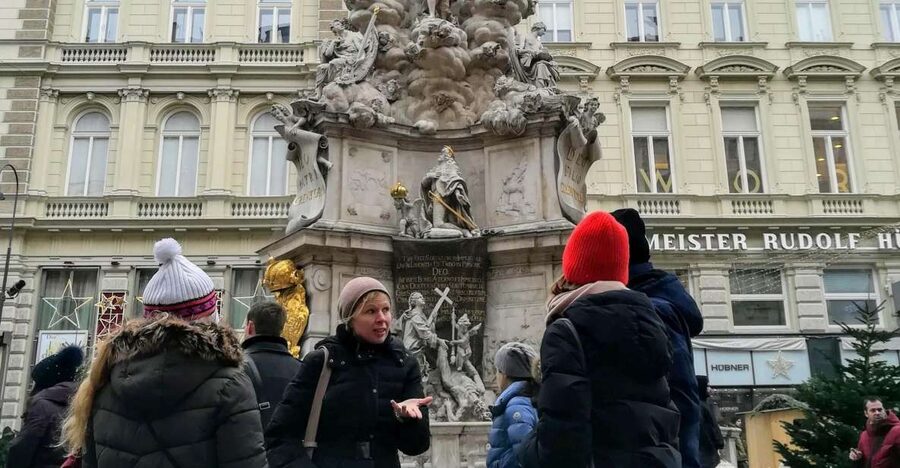
- Small-group pace with a maximum of 8 travelers, so you can ask questions and actually hear the answers
- Historian guide focus, with Vienna’s turn-of-the-century ideas and imperial power explained in plain language
- Severe and complicated history gets spoken about, including the darker parts of the 20th century
- Landmarks plus atmosphere, from Stephansdom to the Naschmarkt and the fashion streets around Kohlmarkt and the Graben
- Architecture variety from the Secession to the Ringstraße boulevard and Adolf Loos’s Loos House
- Practical local tips can add real value, like where to eat without wasting time in big lines
Start at Café Hawelka, then orbit the Hofburg at Michaelerplatz
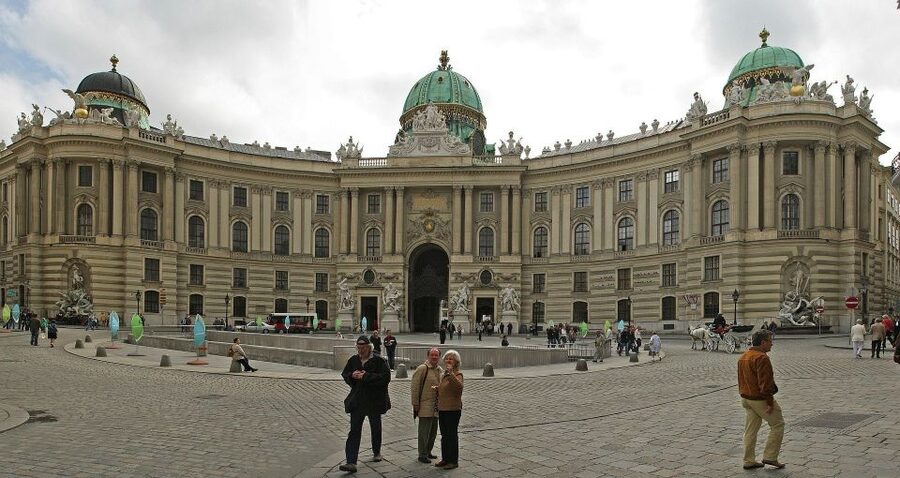
The tour begins at Café Hawelka on Dorotheergasse. This is a smart launch spot because it drops you into central Vienna right away, not out by some bus stop. From there, you move toward Michaelerplatz, where the Hofburg is the visual anchor.
The Hofburg is more than a big wall of stone. It is a reminder that power in Vienna lived in one place for centuries, stretching back to the 13th century as the seat of power for the Habsburgs. As you look around the square, you get a better sense of how Vienna’s public spaces grew around imperial life, ceremonies, and administration.
If you like history that feels attached to real geography, this is where the tour starts doing that. You are not just memorizing names. You are placing them on the city map in your head.
More walking tours in Vienna:
- Vienna: Guided Walking Tour of City Center Highlights
★ 4.7 · 4,989 reviews - Vienna: Vienna Central Cemetery Guided Walking Tour
★ 4.8 · 3,307 reviews - Vienna: Guided Walking Tour of City Highlights & Hidden Gems
★ 4.9 · 2,180 reviews
Hofburg, Habsburgs, and why imperial Vienna still shapes your walk
Once the Hofburg is in view, the guide’s job becomes translation. You start to understand the Habsburg dynasty not as one long fact sheet, but as a system that influenced culture, politics, and the look of the city.
You also get a sense of how Vienna balances control and creativity. Even in a palace-centered neighborhood, the story keeps widening, from the court world to artists and thinkers who worked in the same city but pushed against its rules.
This kind of framing matters because it changes how you see everything else. Later stops, like churches and museum areas, land more clearly when you understand the power structure behind them.
Secession and the turn-of-the-century Vienna of Klimt and Mahler
As you head toward the Secession building, the tour shifts gears from imperial gravity to artistic friction. This stop is tied to Vienna’s turn-of-the-century avant-gardism, with names like Klimt and Mahler coming up for context.
The Secession area is a good example of why architecture tours can be more than photo stops. The building style connects to the mood of a city trying to modernize its identity, while still living inside old traditions. You get the feeling that Vienna’s creative revolution was not just abstract, it was pushed by people who wanted a new visual language.
I like this stop because it gives you a second lens. Yes, Vienna is the capital of empires. It is also the capital of arguments about art, culture, and what should replace the old forms.
Stephansdom, the cathedral you should stop to actually look at
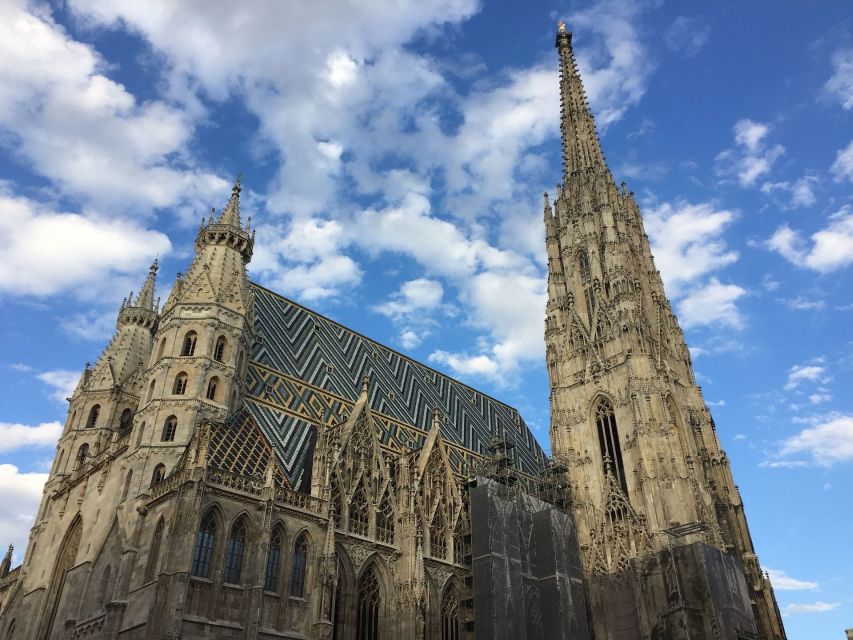
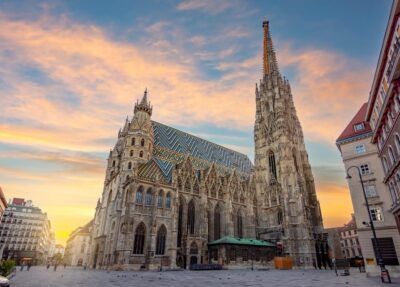
Stephansdom is the national architectural icon of Austria, and here it is more than a postcard. The guide helps you read the cathedral as a statement, then layers it with the city’s broader past.
Even if you have seen Stephansdom before, a guided stop helps you slow down. You notice details you would normally zip past, and the explanations give you reasons for why the cathedral mattered to the people who lived around it.
One practical tip: the area around Stephansdom can be busy. Try to stand where you can both watch the building and hear the guide, rather than wandering for a perfect angle. The story lands better when you are positioned to listen.
A completely different kind of day, same corner of Austria:
- Vienna: Vivaldi’s Four Seasons Concert in Karlskirche
★ 4.7 · 14,951 reviews - Vienna: Schönbrunn Palace & Gardens Skip-the-Line Tour
★ 4.7 · 7,739 reviews - Vienna: Light of Creation Votive Church Immersive Light Show
★ 4.8 · 6,779 reviews - Vienna Spanish Riding School Guided Tour
★ 4.7 · 6,765 reviews
Ringstraße boulevard: where luxury hotels live inside old palaces
Next comes a sweep of Vienna that many first-timers miss, the Ringstraße. This grand boulevard was built in the middle of the 19th century, and it works like a timeline you can walk.
Along the Ringstraße, many luxury hotels sit within the walls of old palaces. That is a key detail, because it shows you how Vienna reused expensive space instead of demolishing and starting over. You get a sense of continuity. The city kept its structures but changed what they served.
If you want a mental model for Vienna, this boulevard is it. It helps you understand why certain neighborhoods feel formal, why buildings around you seem designed for status, and why the city center feels planned rather than accidental.
Adolf Loos’s Loos House, Vienna’s practical modernism moment
Then you hit a contrasting stop, the Loos House, designed by Austrian architect Adolf Loos. The building is not just an art-object. It becomes a conversation about modernism, taste, and who gets to define what looks correct.
Seeing Loos House after the Ringstraße is useful. You start to notice that Vienna did not swing from old to new in a straight line. It debated it. Some places look like the city is holding on. Other places show the pressure to change.
This is also one of those stops where your guide’s tone matters. When the explanation clicks, you understand why modern design could be controversial. You do not just memorize facts, you grasp the tension.
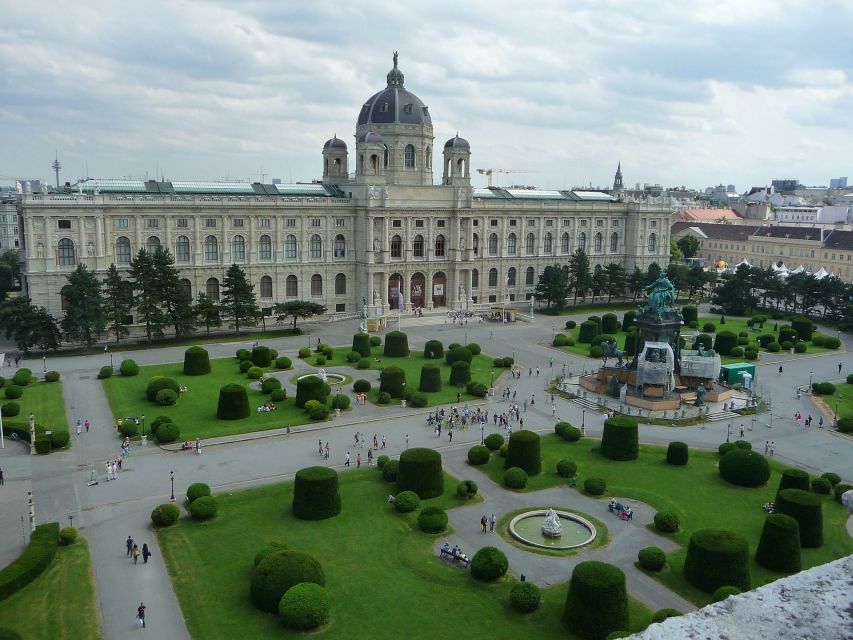
Maria-Theresien-Platz and the museum concentration in one block
Maria-Theresien-Platz is described as home to the city’s largest concentration of museums. Even if you do not plan to enter every museum, this area helps you understand what Vienna values culturally.
This stop gives you a practical planning advantage. After the walk, you can choose museum time with more confidence because you know where the clusters are. Instead of spreading your day randomly, you can group your visits and reduce travel time.
Also, museum density changes the vibe. You see the city as a place where learning and culture are not separate from daily life. They are built into the center.
Naschmarkt, Kohlmarkt and the Graben: where shopping meets street-level Vienna
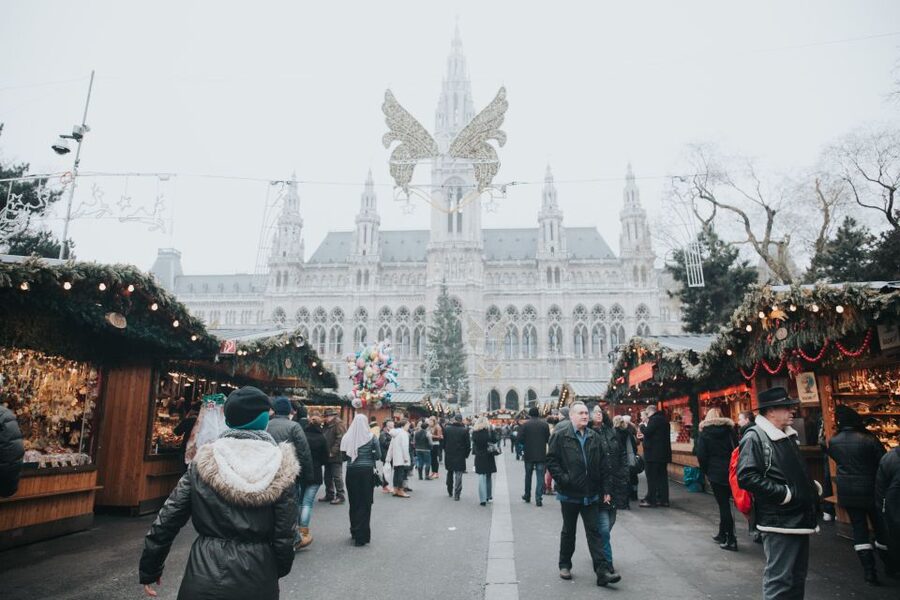
Then the walk turns to everyday Vienna. The Naschmarkt is a traditional food market where locals meet to shop and mingle, and it gives you a break from palace and cathedral gravity.
From there, the tour moves toward Kohlmarkt and the Graben, a fashionable shopping district. This area is a strong reminder that Vienna’s elegance is not only architectural. It is also a living routine, where people come to buy, snack, and stroll.
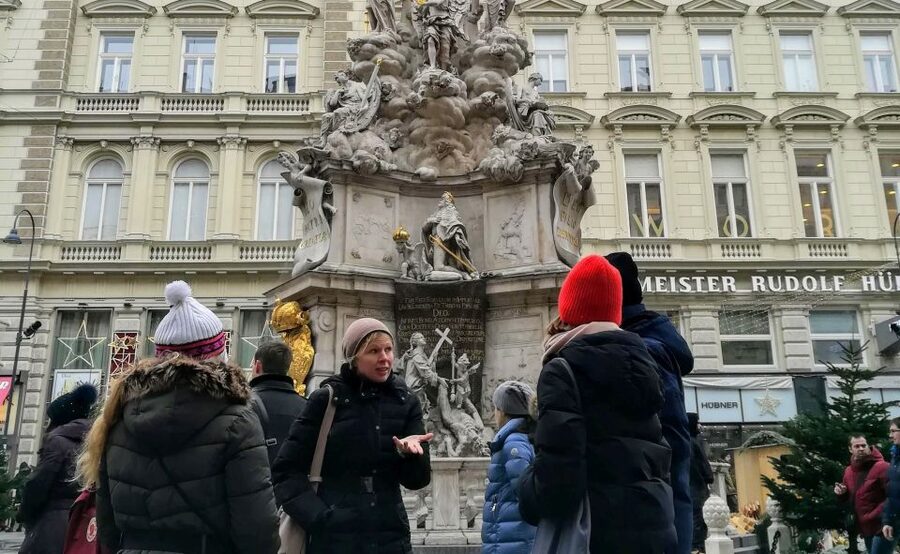
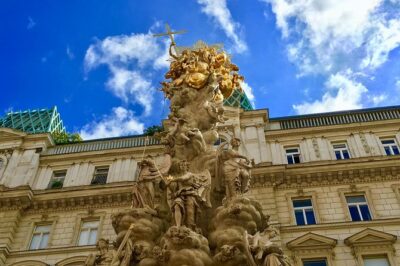
And then comes the detail I always appreciate when a guide includes it: the plague column commemorating the 17th-century bubonic plague outbreak. You will see how a city can look refined while carrying visible memory of catastrophe.
That mix is what makes this section worthwhile. You experience the public face of Vienna, then learn that beneath it, history keeps leaving marks.
How the small-group size changes the tour experience
This is built as a small-group tour, with a maximum of 6 people per booking and a maximum of 8 travelers. That does not just sound nice, it affects what you get from the guide.
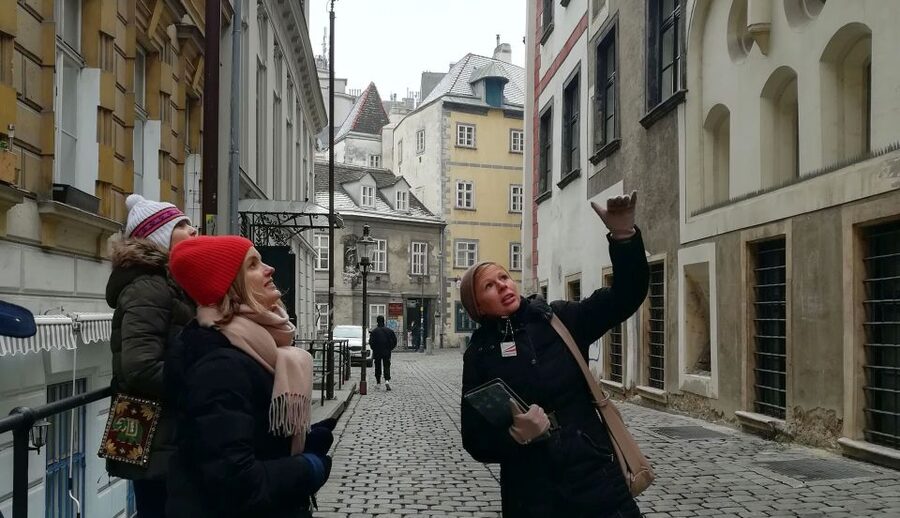
A smaller group means the guide can slow down when you ask questions. It also means the tour can feel more tailored to what you care about, not a one-size route with the same script for everyone.
In the best moments from the guide team, the tour goes beyond facts. Some guides add tiny touches that make Vienna feel alive, like playing music associated with Mozart and Haydn, or sharing Sisi candies as a sensory detail you would not find in a guidebook. Others bring in humor, and a few lean into quieter neighborhoods so the route feels less like repeating the same tourist loop.
Price and value: what you’re really paying for at about $181
At $181.02 per person for about 2.5 hours, this is not a bargain. It sits in the category where you should ask, what is the payoff?
Here is the value logic I see. You are paying for an historian guide, a small group, and a focused route that connects major sights with meaningful context. If you are only going to walk Vienna once with structure, this is how you compress a lot of understanding into one morning or afternoon.
You are also paying for time. The tour covers major landmarks that would take you extra effort to piece together on your own. Plus, the guide often shares practical food and coffee advice. One example from a guide experience included tips on where to get Sacher torte without lining up at the most famous spot, plus suggestions for schnitzel and sausages. That is not just nice to know, it can save hours.
Potential drawback: because it is a walk with a set route, you may finish wanting a couple extra official sights that are not part of the standard stops. If you have a list of must-sees like town hall or parliament buildings, treat those as separate adds, not something this exact walk guarantees.
Who should book this Vienna historian walking tour
Book this if you want:
- An overview of Vienna early in your trip, so you can explore the rest with better instincts
- A guide who connects architecture and politics without sounding like a textbook
- A paced walk that allows questions, not a sprint through photo points
- Honest storytelling that can include sad moments from Vienna’s past, not just pretty scenes
You might skip it if you already know Vienna well and only want minimal commentary, or if your priority is entering specific interiors and monuments. This tour is centered on seeing and understanding the city while walking, not on ticketed museum time or long indoor stops.
Should you book it?
Yes, I think this is a strong choice if you care about meaning, not just sights. The standout advantage is the small-group format, which keeps the tour personal and question-friendly. The other big reason is the guide approach, pairing major landmarks like Hofburg and Stephansdom with the intellectual side of Vienna at places like the Secession building and Loos House.
If you book, do it with the mindset of learning your way around. Bring your curiosity, wear comfortable shoes, and plan to eat on your own afterward. You will leave with a clearer map in your head and fewer empty hours guessing what to see next.
FAQ
How long is the Vienna walking tour?
It runs for about 2 hours 30 minutes.
What group size should I expect?
The tour is limited to a maximum of 6 people per booking, with a maximum of 8 travelers.
Is the tour in English?
Yes, it is offered in English.
Where does the tour start?
The meeting point is Café Hawelka, Dorotheergasse 6, 1010 Wien, Austria.
What’s included in the price, and what’s not?
Included is a 2.5-hour guided walk with an historian guide. Food and drinks are not included unless specified, and there is no hotel pickup or drop-off.
Can I cancel for a full refund?
Yes, you can cancel up to 24 hours in advance for a full refund. If you cancel less than 24 hours before the start time, the amount you paid will not be refunded.
Recently reviewed around Vienna
- Vienna: Mozart, Beethoven, & Strauss Private Tour★ 5.0 · 4 reviews
- Vienna: Musical Tickets ROCK ME AMADEUS – THE FALCO MUSICAL★ 4.8 · 15 reviews
- Vienna: Mozart Concert with Dinner and Carriage Ride★ 4.8 · 25 reviews
- Private Melk Hallstatt, Salzburg tour from Vienna★ 4.9 · 22 reviews
- Vienna: ‘Armenia In The Heart Of Austria’ Tour★ 5.0 · 6 reviews
- Vienna: Luxury Vintage Fashion Walking Tour★ 3.4 · 8 reviews
- Vienna: Kunsthistorisches Museum Guided Tour incl. admission★ 4.9 · 32 reviews
- Vienna: Mozart Private Guided Tour★ 5.0 · 4 reviews
Vienna Walking Tours, side by side.
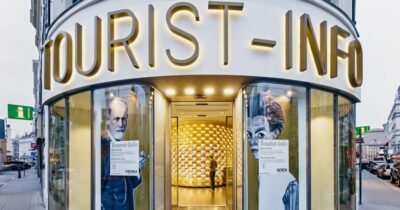
Guided Walking Tour of City Center Highlights
Read our review →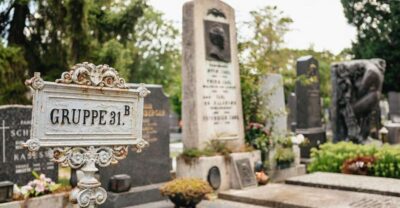
Guided Walking Tour of City Highlights & Hidden Gems
Read our review →
Vienna Historic Center Small Group Walking Tour
Read our review →
Lists this tour appears in