
Appraised · VIENNA WALKING TOURS
Introducing Vienna Walking Tour: The Capital of the Habsburgs
This tour works because it turns Vienna’s big monuments into a clear, human story you can walk through in just a couple hours. You get the context behind the palaces and squares without needing to study a textbook first, and it runs as a small group format.
My favorite part is the way the guide links the sights to the Habsburg world as you move past places like the Hofburg Imperial Palace and the formal center of government. I also like the finish at the Lindt shop near St. Stephen’s Cathedral, because it gives you a sweet, practical landing spot right where you’ll want to keep exploring.
One thing to consider: this is still a walking tour, and it is not recommended for younger children, plus tour language can vary by day, so check your ticket before you go. If you get the wrong language, the experience won’t feel worth it.
Key things that make this tour worth your time
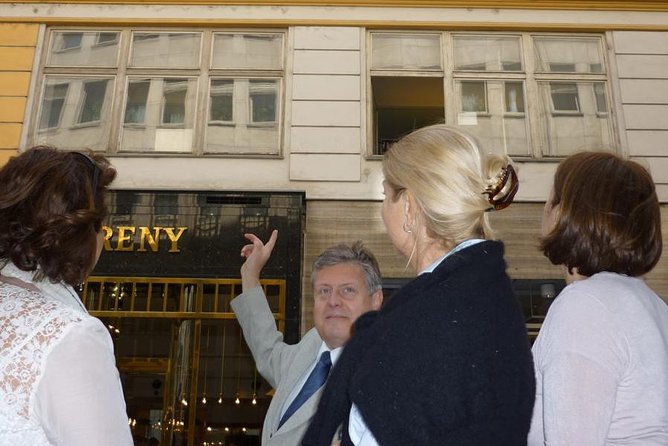
- Meeting at Michaelerplatz and ending at St. Stephen’s keeps the whole route easy to repeat later on your own.
- Habsburg storytelling tied to real landmarks helps you understand what you are actually looking at, not just where it is.
- A small group, max 15 people makes questions feel normal, not rushed.
- Stories range from imperial pageantry to dark history, including the Monument Against War and Fascism.
- Opera day-of ticket tip includes that the cheapest tickets are 3 Euros, and you learn how the day’s options work.
- A chocolate-shop finish at Lindt means you finish in a central place and not in the middle of nowhere.
Vienna in 2 hours, focused on the Habsburg story
If you want to understand Vienna fast, this is the kind of tour that gives you a mental map you can use for the rest of your trip. The route stays in central Vienna, and the time on your feet feels manageable if you are used to sightseeing walks.
At the heart of it, you are learning how the city formed around the Habsburgs. You’ll walk past major imperial and civic spaces, then connect what you see to why those powers mattered.
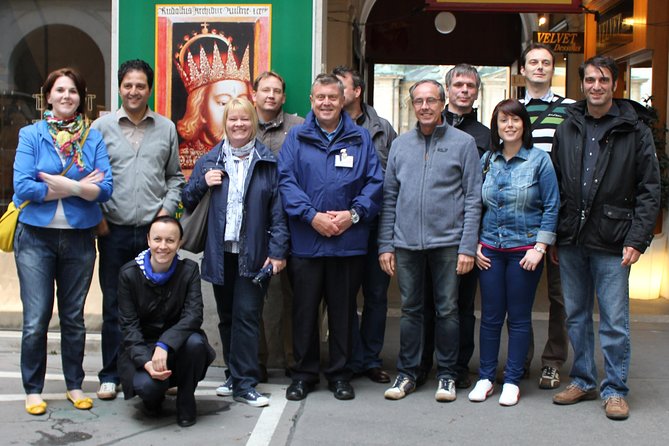
The group size matters here. With a maximum of 15 people, the pace is easier, and it is more natural to ask questions. On a standard big-bus-style tour, you often end up watching more than learning. Here, you are moving through the city while the guide explains.
More walking tours in Vienna:
- Vienna: Guided Walking Tour of City Center Highlights
★ 4.7 · 4,989 reviews - Vienna: Vienna Central Cemetery Guided Walking Tour
★ 4.8 · 3,307 reviews - Vienna: Guided Walking Tour of City Highlights & Hidden Gems
★ 4.9 · 2,180 reviews
Start at Michaelerplatz, then straighten out your Vienna map
You meet at Michaelerplatz 3, 1010 Vienna, then head into the historic center on foot. This is one of those convenient meeting points where you are already close to the core sights, not starting at some distant plaza that eats time.
Expect a route that is designed for orientation. The guide’s goal is not to cram every museum into two hours, it is to help you recognize what matters when you see it again later. Many of the stops are chosen because they anchor big themes: imperial power, architecture, and the way Vienna governed itself.
It is also an all-weather tour. That means you should dress like you actually plan to be outside the whole time, not like the tour will magically stay sunny.
St. Michael’s church area, Roman and medieval layers in one view
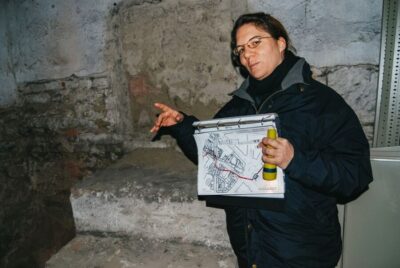
One of your first stops is St. Michael’s church, where you also encounter Roman and medieval ruins. This is a great opener because it stops Vienna from feeling like it only has one era.
Vienna often gets marketed as a city of palaces and opera, but the point of starting here is that it has older layers underneath the later grandeur. As you move along, the guide helps you connect those layers to the neighborhoods and power centers that came later.
If you like your history grounded in place, this section is a good start. You get a sense that the city didn’t just appear fully dressed. It built over time.
White stallions and what they symbolize in Vienna
As the tour continues, you get detailed information about the white stallions. This is one of those Vienna signals visitors often hear about, but it helps to learn the story while you are actually in the area.
What I like about this kind of stop is that it is not just a trivia moment. The guide uses the stallions to explain a part of Vienna’s public identity, where performance, tradition, and status all show up together.
You do not need to be a horse person to enjoy it. Even if you only know Vienna through music and empires, this adds another angle to the same theme: ceremonial culture.
A completely different kind of day, same corner of Austria:
- Vienna: Vivaldi’s Four Seasons Concert in Karlskirche
★ 4.7 · 14,951 reviews - Vienna: Schönbrunn Palace & Gardens Skip-the-Line Tour
★ 4.7 · 7,739 reviews - Vienna: Light of Creation Votive Church Immersive Light Show
★ 4.8 · 6,779 reviews - Vienna Spanish Riding School Guided Tour
★ 4.7 · 6,765 reviews
The Habsburg residence stops, where Hofburg becomes a story
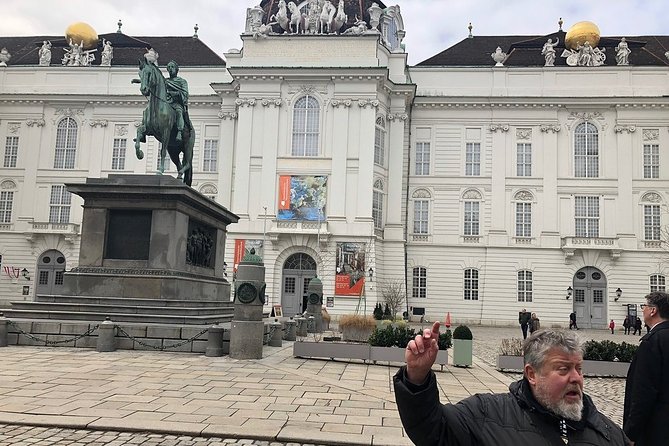
From the 12th century onward, you focus on the Habsburg dynasty’s residence. The Hofburg area is one of the big reasons Vienna feels different from other European capitals, because you are literally walking in the orbit of a long-running power system.
This portion of the tour is where the phrase capital of the Habsburgs becomes real. You learn what the complex is, why it mattered, and how the dynasty shaped the city’s institutions and image.
I like that the guide keeps the explanation anchored to what you see in front of you. Instead of giving you a list of facts, you get a sense of how political power and architecture worked together.
Hero Square and the Austrian government system, explained on foot
One stop takes you to Hero Square, and the guide explains why it is called that and what you are seeing in terms of the Austrian government system. This is one of the more useful segments for anyone who plans to keep exploring beyond the first day.
Why? Because once you understand what a place is for, you can read it better later. A huge formal square is easier to interpret when you know how it fits into civic life and national identity.
You also get connections to Europe’s history, including dramatic stories tied to myth, religion, and legitimacy. On this stop, you learn about the Holy Lance story and the crown of the Holy Roman Empire.
A quick heads-up on how to take this: treat these as the stories and symbols people used to explain power and authority. The guide frames them in a way that helps you understand why they stayed part of the culture, even when they are hard to verify.
Joseph’s Square and Maria Theresia’s reign, plus the why behind the buildings
Next comes Joseph’s Square, where you learn secrets of Maria Theresia’s reign. This is where the tour shifts from empire as a concept into rule as lived reality.
Maria Theresia is one of the biggest names in Austrian history, and the guide uses the surrounding spaces to show how her era left marks on Vienna. You are not just hearing dates. You are learning what these reforms and decisions meant for how the city functioned.
If you are the type who likes to connect history to design, this is your moment. You start to see the city as a place built for governance, ceremony, and messaging.
Albert and Maria Christina’s residence, then drawings that still matter
You then reach the residence of Albert and Maria Christina, with a key point that today it hosts the largest drawing collections worldwide. Even if you do not plan to go inside a museum, this is a strong payoff stop because it explains why Vienna’s art culture is not only about paintings and stages.
Drawings are often overlooked by casual visitors, so it’s nice to hear why they matter and why this collection is famous. It also gives you a next step. If you leave the tour thinking about art, you now know which kind of art to seek when you plan your museum time.
This stop helps the tour feel more than just royal pageantry. It reminds you Vienna’s legacy also lives in archives, collections, and scholarship.
Monument Against War and Fascism, remembering victims of all war
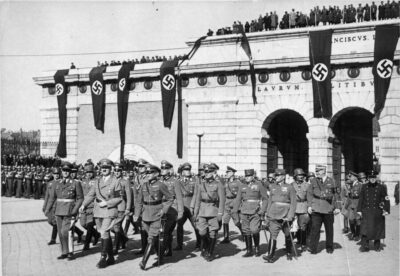
One stop is at the Monument Against War and Fascism, described as a place to remember victims of all war, including Nazi rule in Austria. This is a serious moment in an otherwise history-and-architecture focused walk.
I appreciate that the tour does not treat Vienna’s story as only glamorous. It acknowledges the modern reality of war and persecution, and it frames remembrance as a civic duty.
You do not need to be a history buff to feel the weight of this stop. It is also a useful contrast after all the imperial grandeur. Vienna holds both, and the city makes more sense when you acknowledge both.
Opera ticket tip by St. Stephen’s area, then you wrap up near the cathedral
As you move through the city center, you learn how Vienna’s opera works day to day, including that the cheapest tickets are 3 Euros. You also hear that options can change daily, which matters if you are trying to plan an opera night without overspending.
This is a practical travel tip disguised as history. If opera is on your list, you can treat this as your starting strategy rather than guessing or paying full price for the first ticket you see.
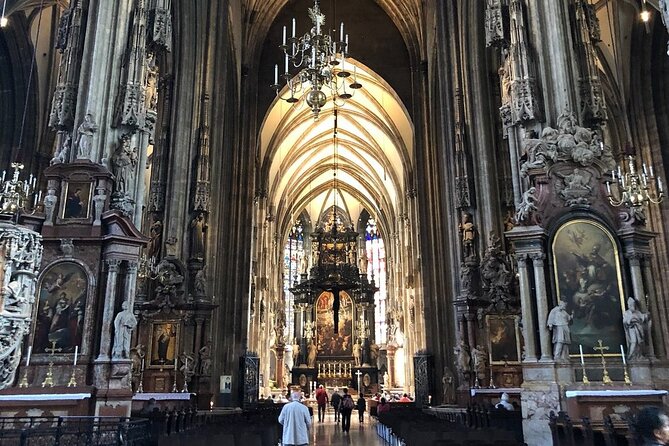
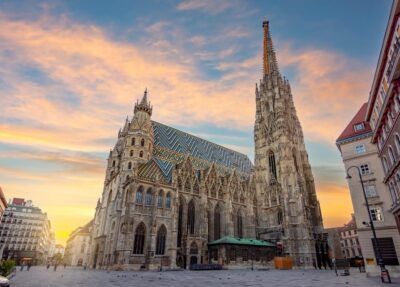
Finally, you arrive at Vienna’s center with St. Stephen’s Cathedral. The tour ends at the Lindt Chocolate Boutique near Stephansplatz, right by the transit hub that connects easily back to your hotel.
This ending is smart. You finish where your feet naturally want to go next, rather than getting dropped off far away after a short walk.
Why this tour feels like good value for the time you spend
At $35.07 per person for about two hours, this tour sits in the reasonable category for a guided walk that stays central. You are paying for a certified tourist guide, and the format limits the group to 15 people, which changes the experience.
The value is not only the guide. It is the structure. The route is designed to build context in layers, starting with older city traces, then moving into Habsburg power, and finishing with modern reminders and a practical opera strategy.
If you only have one day in Vienna, this tour is a way to avoid the common mistake of seeing sights without understanding what connects them. If you have multiple days, it becomes even more useful, because you will recognize places and names when you return to plan museum time.
Also, the mobile ticket and the fact that it operates in all weather conditions make it easy to fit. This tour is meant for real trip days, not only perfect weather fantasy days.
What you might want to know before you book
First, verify your language on your ticket. Even though the tour is offered in English, tour language can vary by day, so do not assume. If you want English specifically, double-check.
Second, plan for walking. This is not a sit-and-ride experience. The route is described as easy walking with flat terrain in feedback, but it still adds up over two hours, especially if you are doing lots of museum stairs earlier that day.
Third, it is not recommended for younger children. If you are traveling with kids, this matters. The focus is history storytelling tied to landmark stops, so younger attention spans might struggle.
Pairing ideas if you want to extend the day
Ending near St. Stephen’s Cathedral is handy. Once the tour is done, you can keep going in the center without needing a new transport plan.
If you like to add one “big landmark” right after a guided orientation, St. Stephen’s is a natural next stop. And if you enjoy the opera world, you already have the basic tip in your pocket, so you can look at options while you are still in the right area.
For the rest of the afternoon, that Lindt finish point also helps. It gives you a simple place to grab a sweet, reset, and then decide what you want to do next.
Should you book this Vienna Habsburg walking tour?
Book it if you want a tight, high-impact introduction to Vienna’s Habsburg core and you like history explained in plain language while you walk. This is especially a good choice for your first day, when you want orientation, and you need the city to start making sense fast.
Skip it or choose another style if you prefer deep museum time over street-level context, or if you are traveling with very young kids who may not handle two hours outdoors. Also be sure about English language on your ticket so you do not end up in the wrong day format.
If you want Vienna to feel like one story instead of a pile of sights, this is a solid way to start. And yes, the chocolate stop is a nice bonus at the end.
Recently reviewed around Vienna
- Vienna Private Full Day Tour – Tickets to Schönbrunn & Lunch★ 5.0 · 3 reviews
- Vienna: Private Half-Day Sightseeing Tour★ 4.1 · 9 reviews
- Vienna: Old Town Walking Tour with a Local Guide★ 4.6 · 52 reviews
- Vienna Portrait Experience: Exclusive Vienna Photo Shoot★ 5.0 · 7 reviews
- Vienna: Private 3-Hour City Highlights Van Tour★ 4.3 · 6 reviews
- Vienna: Old Town Highlights Private or Group Walking Tour★ 4.6 · 66 reviews
- Vienna Nightlife: Food, Wine, Cocktails and Rooftop Bar Tour★ 4.9 · 17 reviews
- Vienna: Old Town Professional Photowalk★ 4.7 · 33 reviews
Vienna Walking Tours, side by side.
Guided Walking Tour of City Center Highlights
Read our review →
Guided Walking Tour of City Highlights & Hidden Gems
Read our review →
Vienna Historic Center Small Group Walking Tour
Read our review →
Lists this tour appears in