Appraised · TICKETS
Day Ticket for Klosterneuburg Abbey
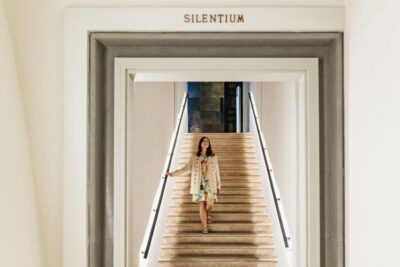
Stift Klosterneuburg is one of those Vienna-area experiences that feels like a time machine, but you can reach it without a long plan. You get a 900-year-old abbey experience just minutes from the city, plus big views over the Danube that make the visit feel special fast.
I especially love two parts: the Verdun Altar and the chance to see how the abbey connects to wine in its Baroque cellar. It is not just pretty rooms, you get art, architecture, and a real sense of how this place worked over centuries.
The main thing to watch is timing. The visit runs about 1 to 3 hours, so if you want a slow, wandering, take-it-all-in day, this may feel short.
Key highlights at a glance
- Verdun Altar: A famous church highlight you can only appreciate once you see the scale in person.
- Marble Hall + Danube views: Big interior space, then a view line that stretches toward Vienna.
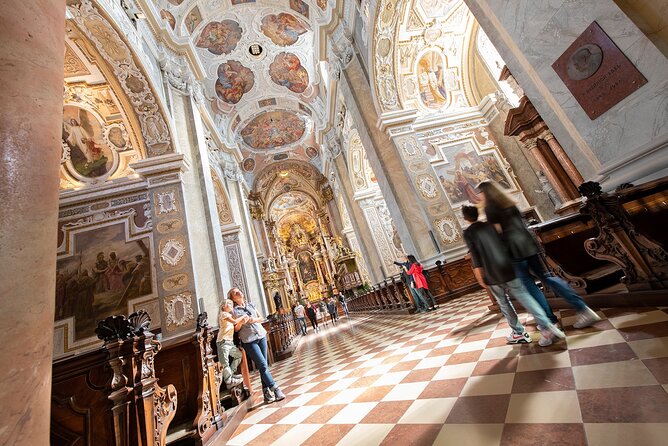
- Abbey church access: Guided entry into the core spaces that define the abbey.
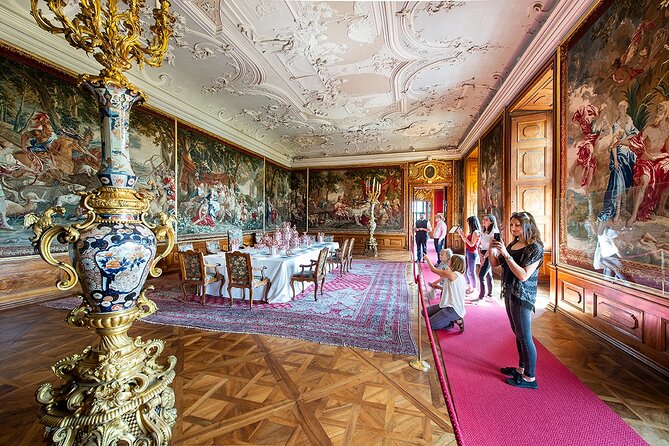
- Imperial Apartments: Historic royal-era rooms that add a different kind of story.
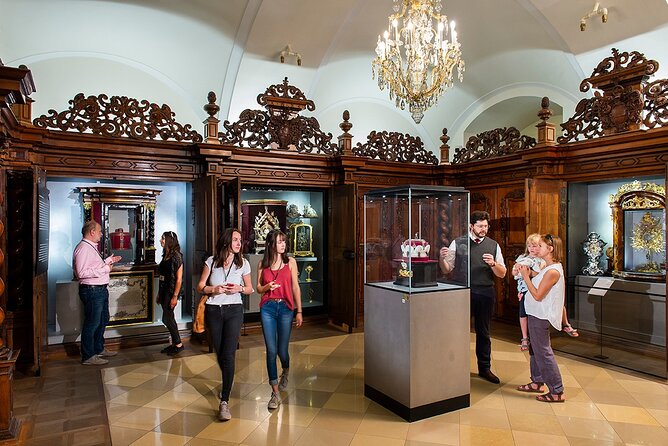
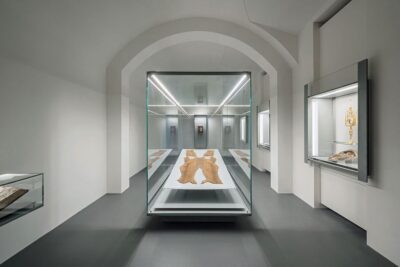
- Treasury displays: Priceless works of art presented in a museum-style setting.
- Austria’s oldest winery: A Baroque wine cellar and tasting of selected local wines.
Klosterneuburg Abbey: a 900-year stop that feels close to real life
Stift Klosterneuburg sits right by Vienna, so it scratches the “I want old Europe” itch without demanding a complicated itinerary. The abbey has been around for over 900 years, which you feel immediately once you are inside: the scale, the religious art, and the way the space was built to impress.
What makes it more than just a museum stop is the mix. You are not only moving through rooms. You are stepping through a living religious site with long ties to culture and craft, including wine production that still matters.
You will also get that classic Danube effect. From inside the abbey grounds, the view line stretches along the river toward Vienna, which helps the whole visit feel grounded in the present, not stuck in the past.
More tickets and entries in Vienna:
- Vienna: Classic Ensemble Vienna in St. Peter’s Church Ticket
★ 4.7 · 4,819 reviews - Vienna Kunsthistorisches Museum Day Admission Ticket
★ 4.6 · 3,690 reviews - Vienna: Tickets for Mozarthaus Vienna with Audio Guide
★ 4.2 · 2,344 reviews
Price and value: what $24.06 buys you in practice
At $24.06 per person, this day ticket is priced like a focused guided visit, not an all-day attraction. The key value point is that the admission ticket is included, so you are not paying extra to get into the main highlights.
The tour also adds multiple “anchor stops” in one block of time: the abbey church, the Verdun Altar, museum-like treasury displays, and the Imperial Apartments. That matters because you are saving time on how you would otherwise plan these pieces across multiple ticket lines.
Then there is the wine factor. The experience includes a wine tasting of selected local local wines, tied to the abbey’s historic winemaking. If you like tastings, that adds real value, because you are not just looking at a cellar, you are tasting what the cellar is known for.
Your guided route through Stift Klosterneuburg (and what to pay attention to)
This is designed as a highlight route. Expect to move through the abbey’s major public spaces with a guide, so you can focus on the story being told rather than trying to figure out everything alone.
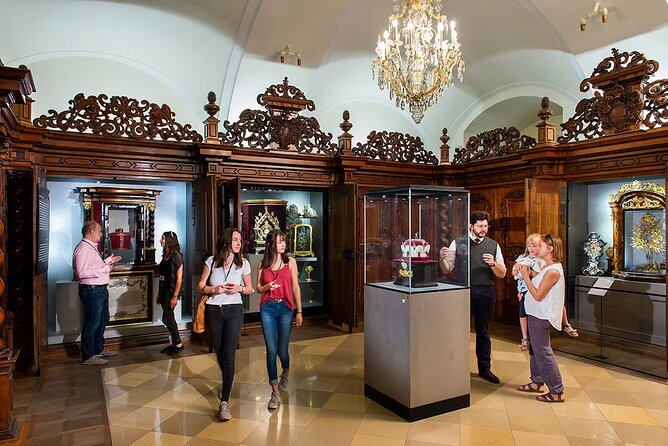
Your visit covers the core abbey landmarks, with guided access to the abbey church, the Verdun Altar, and the Imperial Apartments. Along the way you also get entry into the Treasury and time in standout interior spaces like the Marble Hall.
You should think of it as a compact “best of” route with enough context to make it click. If you go in expecting a deep, slow self-guided crawl, you may wish you had more time. If you want clarity and momentum, this format fits well.
Treasury and priceless art: why this room matters
The abbey’s Treasury is where the visit shifts from architecture to objects. Seeing priceless works of art in a setting meant for preservation helps you understand why abbeys mattered beyond worship.
Look at what you can, but also think about the purpose. Treasuries were never random collections. They were part of identity, power, and spiritual storytelling, and the way these pieces are presented makes that clear.
If you like museum pacing, the Treasury section is a good match. It is not a long detour, but it gives you something you can really study, even if your overall visit is short.
A completely different kind of day, same corner of Austria:
- Vienna: Vivaldi’s Four Seasons Concert in Karlskirche
★ 4.7 · 14,951 reviews - Vienna: Schönbrunn Palace & Gardens Skip-the-Line Tour
★ 4.7 · 7,739 reviews - Vienna: Light of Creation Votive Church Immersive Light Show
★ 4.8 · 6,779 reviews - Vienna Spanish Riding School Guided Tour
★ 4.7 · 6,765 reviews
The Marble Hall and the Danube line of sight
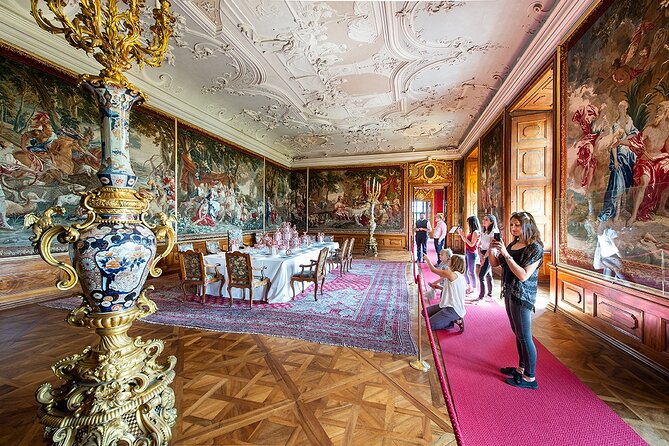
The Marble Hall is a highlight for a reason. It is a dramatic indoor space that gives you a “wow” moment, then the abbey grounds deliver the view payoff.
When you get that Danube panorama toward Vienna, it changes how you read the site. You are not only thinking about sacred space, you are seeing how the abbey connects to the wider region, with the river acting like a historical highway.
If you tend to take photos, this is your moment. Go slow inside, then give yourself a few minutes outside so you can see what your photos will not capture: the direction, the length of the river line, and the sense of distance.
Inside the abbey church and the Verdun Altar moment
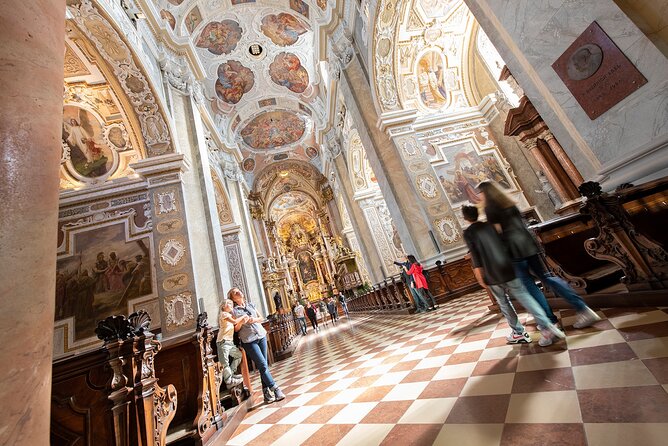
The abbey church is the emotional center. It is where the whole setting makes sense, because you can connect art and architecture to what the place was built for.
The star is the Verdun Altar. Even if you have heard of it, the real payoff comes from scale and placement. This is the sort of artwork that becomes more impressive the longer you stand and let your eyes adjust.
A good guide here makes a difference. One review noted a guide who added details beyond what was in the available English audio, which is the ideal scenario. You get the structure of the highlights, then you get extra context that helps the art land.
Practical tip: give yourself permission to pause. Do not rush to the next room right away. One focused minute at the altar often feels better than five hurried glances.
Imperial Apartments: where power history shows up in rooms
The Imperial Apartments add a different chapter to the story. They help explain how abbeys and courts overlapped, and how royal life could touch religious institutions.
This part of the visit is valuable if you like the human side of history. It moves you beyond grand religious symbolism and into how people lived and hosted within historic walls.
You do not need to be a specialist to enjoy it. The main win is contrast. After the church and altar, the Imperial Apartments shift the tone, and that balance makes the overall visit feel less repetitive.
Austria’s oldest winery: Baroque cellar and wine tasting
One of the most distinctive angles here is that the abbey is tied to winemaking. You are looking at Austria’s oldest winery, and it shows in the Baroque wine cellar experience.
The cellar format is worth your attention because it is not a generic tourist photo stop. A Baroque cellar feels built for craftsmanship and atmosphere, and seeing it as part of an abbey setting makes it even more interesting.
Then you get the tasting of selected local wines. If you like learning through taste, this is where the visit stops feeling purely visual. You are turning a historic process into something you can actually experience.
If you do not drink alcohol, you might still find the cellar and wine history interesting. The only question for you is whether the tasting component is a must. The provided details mention tasting, so plan around that expectation.
Timing, duration, and how to make the most of 1 to 3 hours
Most visits run 1 to 3 hours, which means the route is intentionally tight. You will cover key highlights without having to structure multiple stops yourself.
This is a good length if you are doing a Vienna day and want one strong side trip. It works well as:
- a half-day plan between other city sights
- a “history and art” block without committing to a full-day excursion
- a low-stress alternative to longer castle routes
To get the most out of the time, arrive with a simple mindset: pick two or three things that you care about most, then build your schedule around them. The experience includes several top attractions, but your personal priorities matter most.
Also, remember you are moving through indoor spaces and potentially uneven areas in and around historic buildings. The experience lists moderate physical fitness as a requirement, so if you have mobility concerns, keep that in mind and pace yourself.
English access, and what to do if your tour runs in German
The experience is offered in English, which is a big plus. That said, one review shared a smart workaround: when they joined a tour in German, English audio tapes were provided.
So here is the practical advice. If you book and your session ends up in German, do not panic. Look for any English audio option at the start. That combination, guided storytelling plus audio support, can work really well, especially if the guide adds extra details beyond the recorded track.
If you want the smoothest experience, aim to go in prepared to use audio if needed. It is a small adjustment, and it keeps the visit enjoyable rather than frustrating.
Getting there and what to expect on arrival
The abbey is noted as being near public transportation, which is helpful for keeping your Vienna plan simple. Since a specific meeting point is not detailed here, the best strategy is to confirm the starting details you receive at booking.
Opening hours vary by season, so check what applies to your travel dates. During Jan 1, 2026 to Apr 30, 2026, it runs 10:00 AM to 4:00 PM. During May 1, 2026 to Nov 15, 2026, it runs 9:00 AM to 6:00 PM.
Plan your arrival with a bit of buffer. A guided experience moves at a steady pace, and in historic sites, you do not want to rush.
Who this day ticket is best for
You will likely enjoy this ticket if you want a guided, high-impact abbey visit close to Vienna. It is especially good for people who:
- love church art and recognizable masterpieces like the Verdun Altar
- like museums that feel connected to a real religious site
- want a bit of royalty history with the Imperial Apartments
- enjoy wine tastings that are tied to local tradition, not just a sales pitch
If you are traveling with kids, it could still work, but the pacing may feel dense. I would think about what your child likes. If they love art and stories, great. If they get restless quickly, consider how long you can realistically handle indoors.
Solo travelers often do well here too, because a guided route gives you structure and context. Couples can enjoy it for the same reason, plus the view moments give you natural breaks.
Should you book Stift Klosterneuburg for your Vienna visit?
Book it if you want an organized abbey experience that hits the highlights without eating your whole day. For the money, you are getting included admission, guided access to the church and key artworks, museum-style Treasury displays, and a wine-tasting component in a historic Baroque cellar.
Skip it or adjust expectations if you need a long, slow, open-ended wandering visit. This experience is built to be efficient, about 1 to 3 hours, and it is best when you like guided pacing.
If you are even mildly interested in art, architecture, or wine, this is one of the easiest ways to get a very different side of Vienna while staying close to the city core.
FAQ
How long is the Day Ticket for Klosterneuburg Abbey?
The visit runs about 1 to 3 hours.
Where is Stift Klosterneuburg?
It is in Klosterneuburg, near Vienna, Austria.
What is the price per person?
The price is $24.06 per person.
Is the tour offered in English?
Yes, the experience is offered in English.
What does the admission ticket include?
An admission ticket is included.
When is it open during January 1, 2026 to April 30, 2026?
From Jan 1, 2026 to Apr 30, 2026, it is open Monday through Sunday from 10:00 AM to 4:00 PM.
When is it open during May 1, 2026 to November 15, 2026?
From May 1, 2026 to Nov 15, 2026, it is open Monday through Sunday from 9:00 AM to 6:00 PM.
Are service animals allowed?
Yes, service animals are allowed.
Is there free cancellation?
Yes. You can cancel up to 24 hours in advance for a full refund.
Do I need high physical fitness to join?
The experience says travelers should have a moderate physical fitness level.
Recently reviewed around Vienna
- Vienna: Mozart, Beethoven, & Strauss Private Tour★ 5.0 · 4 reviews
- Vienna: Musical Tickets ROCK ME AMADEUS – THE FALCO MUSICAL★ 4.8 · 15 reviews
- Vienna: Mozart Concert with Dinner and Carriage Ride★ 4.8 · 25 reviews
- Vienna: ‘Armenia In The Heart Of Austria’ Tour★ 5.0 · 6 reviews
- Private Melk Hallstatt, Salzburg tour from Vienna★ 4.9 · 22 reviews
- Vienna: Luxury Vintage Fashion Walking Tour★ 3.4 · 8 reviews
- Vienna: Kunsthistorisches Museum Guided Tour incl. admission★ 4.9 · 32 reviews
- Vienna: Mozart Private Guided Tour★ 5.0 · 4 reviews
Tickets, side by side.
Classic Ensemble Vienna in St. Peter’s Church Ticket
Read our review →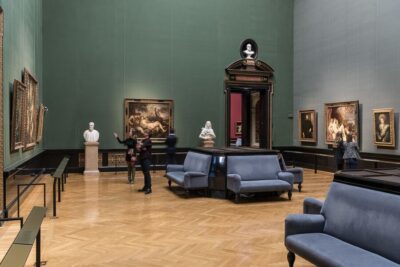
Vienna Kunsthistorisches Museum Day Admission Ticket
Read our review →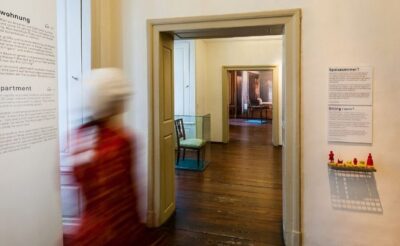
Tickets for Mozarthaus Vienna with Audio Guide
Read our review →
Skip-the-Line Entrance Ticket to the Danube Tower
Read our review →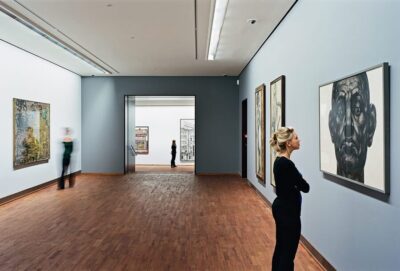
St. Stephen’s Cathedral & Dom Museum Wien Tickets
Read our review →